Daily Sabah logo

Politics
Diplomacy Legislation War On Terror EU Affairs Elections News Analysis
TÜRKİYE
Istanbul Education Investigations Minorities Expat Corner Diaspora
World
Mid-East Europe Americas Asia Pacific Africa Syrian Crisis Islamophobia
Business
Automotive Economy Energy Finance Tourism Tech Defense Transportation News Analysis
Lifestyle
Health Environment Travel Food Fashion Science Religion History Feature Expat Corner
Arts
Cinema Music Events Portrait Reviews Performing Arts
Sports
Football Basketball Motorsports Tennis
Opinion
Columns Op-Ed Reader's Corner Editorial
PHOTO GALLERY
JOBS ABOUT US RSS PRIVACY CONTACT US
© Turkuvaz Haberleşme ve Yayıncılık 2025

Daily Sabah - Latest & Breaking News from Turkey | Istanbul

  • Politics
    • Diplomacy
    • Legislation
    • War On Terror
    • EU Affairs
    • Elections
    • News Analysis
  • TÜRKİYE
    • Istanbul
    • Education
    • Investigations
    • Minorities
    • Expat Corner
    • Diaspora
  • World
    • Mid-East
    • Europe
    • Americas
    • Asia Pacific
    • Africa
    • Syrian Crisis
    • Islamophobia
  • Business
    • Automotive
    • Economy
    • Energy
    • Finance
    • Tourism
    • Tech
    • Defense
    • Transportation
    • News Analysis
  • Lifestyle
    • Health
    • Environment
    • Travel
    • Food
    • Fashion
    • Science
    • Religion
    • History
    • Feature
    • Expat Corner
  • Arts
    • Cinema
    • Music
    • Events
    • Portrait
    • Reviews
    • Performing Arts
  • Sports
    • Football
    • Basketball
    • Motorsports
    • Tennis
  • Gallery
  • Opinion
    • Columns
    • Op-Ed
    • Reader's Corner
    • Editorial
  • TV
  • Business
  • Automotive
  • Economy
  • Energy
  • Finance
  • Tourism
  • Tech
  • Defense
  • Transportation
  • News Analysis

Ukraine's farmers fear the worst after grain deal collapses

by Reuters

KYSHCHENTSI, Ukraine Jul 19, 2023 - 1:38 pm GMT+3
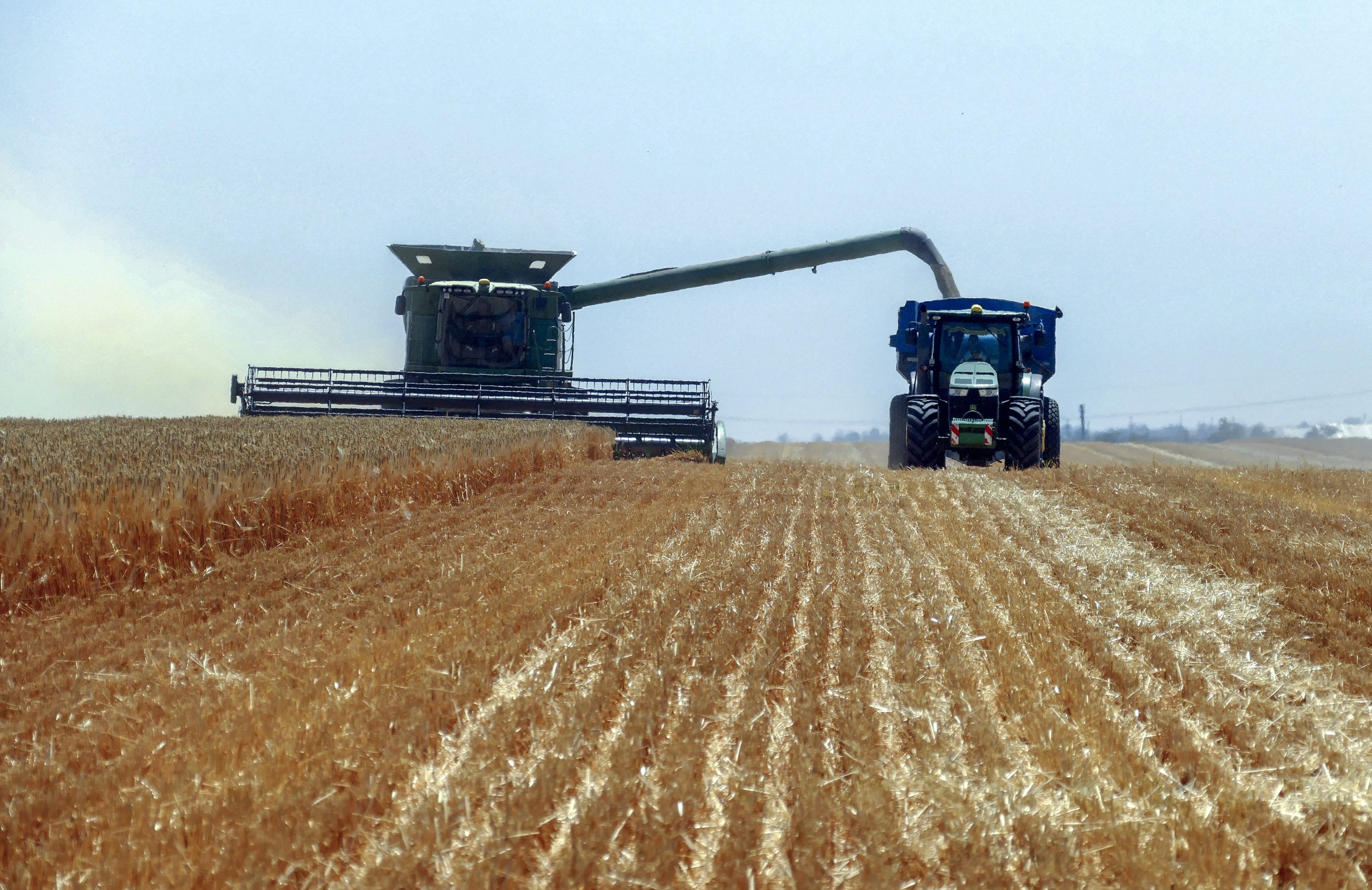
Ukrainian farmers harvest grain in the Odessa region, south Ukraine, June 23, 2023. (EPA Photo)
by Reuters Jul 19, 2023 1:38 pm

Farmers whose work on Ukraine's fertile land has long been vital to its economy fear losing their livelihoods after Russia this week quit the Turkish- and U.N.-brokered wartime deal allowing the safe Black Sea export of grain.

For Kees Huizinga, who moved from his native Netherlands to farm in central Ukraine in 2003, Moscow's refusal to extend the deal makes his finances, already squeezed by Russia's invasion last year, appear catastrophic.

"We have some reserves so we can survive for a month or so, but if we can't sell it's going to be a disaster," he told Reuters at his 15,000-hectare farm in a village in the rolling hills and green flat plains of the Cherkasy region in central Ukraine.

Ukraine is a major exporter of grains and sunflower oil, including to Middle Eastern and African nations. The deal brokered by the United Nations and Türkiye in July 2022 was designed to enable Ukraine to export grain via the Black Sea despite a Russian blockade and to combat a global food crisis.

Agricultural exports are crucial for Ukraine's economy, making up about 12% of gross domestic product (GDP) before Russia's invasion in February 2022 and about 60% of all exports.

Of the 60,000 tons of produce grown on Huizinga's land last year, 50,000 tons was sent abroad through the grain deal.

In total, Ukraine has been able to export 33 million tons of agricultural products through the deal.

Huizinga said exporting the same volume of his produce won't be possible without the Black Sea initiative which, according to an industry association, was used for up to 90% of Ukraine's prewar agricultural exports.

The Dutchman, who grows seven major crops including wheat and sunflowers, estimates war-related disruption cost his business between $3 and $6 million in 2022, and could cost it another $6 million this year.

He said he was getting about $100 a ton for his barley, half the price that western European farmers would receive, and that his transportation costs had risen sharply.

Closures feared

Huizinga, who came to Ukraine from his family's farm near the Dutch city of Groningen, has already been forced to take out loans to cover his expenditure.

"Some farmers who have more reserves will last longer, and those farmers who have less reserves will probably have to sell or close down the business, or give it to somebody else," he said.

The main remaining route for agricultural produce out of Ukraine is the Danube River, which runs along Ukraine’s southwestern border with Romania.

Some of Ukraine's western neighbors have restricted imports of Ukrainian grain under pressure from their farmers, who said they were suffering from the added competition.

Denys Marchuk, deputy head of the Ukrainian Agrarian Council, the country's largest agribusiness organization, has estimated that Ukraine's Danube ports can carry up to 3 million tons a month, nowhere near enough to cover its export potential.

Ukraine expects to harvest 44 million tons of grain this year, down from a record 86 million-ton harvest in 2021.

One of Huizinga’s farmworkers, Yuriy, recently drove a fresh harvest of barley down to storage in Izmail, a southern town where one of the river ports is situated.

He said the storage operators were stunned to see 2023 barley arriving, as they still had a huge stockpile of last year's crop which had not yet been shipped.

Both Marchuk and Huizinga believe grain shipments should continue through the Black Sea even without Russia's participation in the deal. The U.N. has said ideas are being floated to try to help get Ukrainian grain to global markets.

"I think they (Russia) are bluffing, they are playing poker on a very high level and trying to influence the Western leaders somehow, and we shouldn't let this happen," Huizinga said.


  • shortlink copied
  • KEYWORDS
    grain deal ukrainian farmers ukrainian grain russian invasion of ukraine
    The Daily Sabah Newsletter
    Keep up to date with what’s happening in Turkey, it’s region and the world.
    You can unsubscribe at any time. By signing up you are agreeing to our Terms of Use and Privacy Policy. This site is protected by reCAPTCHA and the Google Privacy Policy and Terms of Service apply.
    No Image
    Climate change fuels sinkhole crisis in Türkiye's Konya region
    PHOTOGALLERY
    • POLITICS
    • Diplomacy
    • Legislation
    • War On Terror
    • EU Affairs
    • News Analysis
    • TÜRKİYE
    • Istanbul
    • Education
    • Investigations
    • Minorities
    • Diaspora
    • World
    • Mid-East
    • Europe
    • Americas
    • Asia Pacific
    • Africa
    • Syrian Crisis
    • İslamophobia
    • Business
    • Automotive
    • Economy
    • Energy
    • Finance
    • Tourism
    • Tech
    • Defense
    • Transportation
    • News Analysis
    • Lifestyle
    • Health
    • Environment
    • Travel
    • Food
    • Fashion
    • Science
    • Religion
    • History
    • Feature
    • Expat Corner
    • Arts
    • Cinema
    • Music
    • Events
    • Portrait
    • Performing Arts
    • Reviews
    • Sports
    • Football
    • Basketball
    • Motorsports
    • Tennis
    • Opinion
    • Columns
    • Op-Ed
    • Reader's Corner
    • Editorial
    • Photo gallery
    • DS TV
    • Jobs
    • privacy
    • about us
    • contact us
    • RSS
    © Turkuvaz Haberleşme ve Yayıncılık 2021