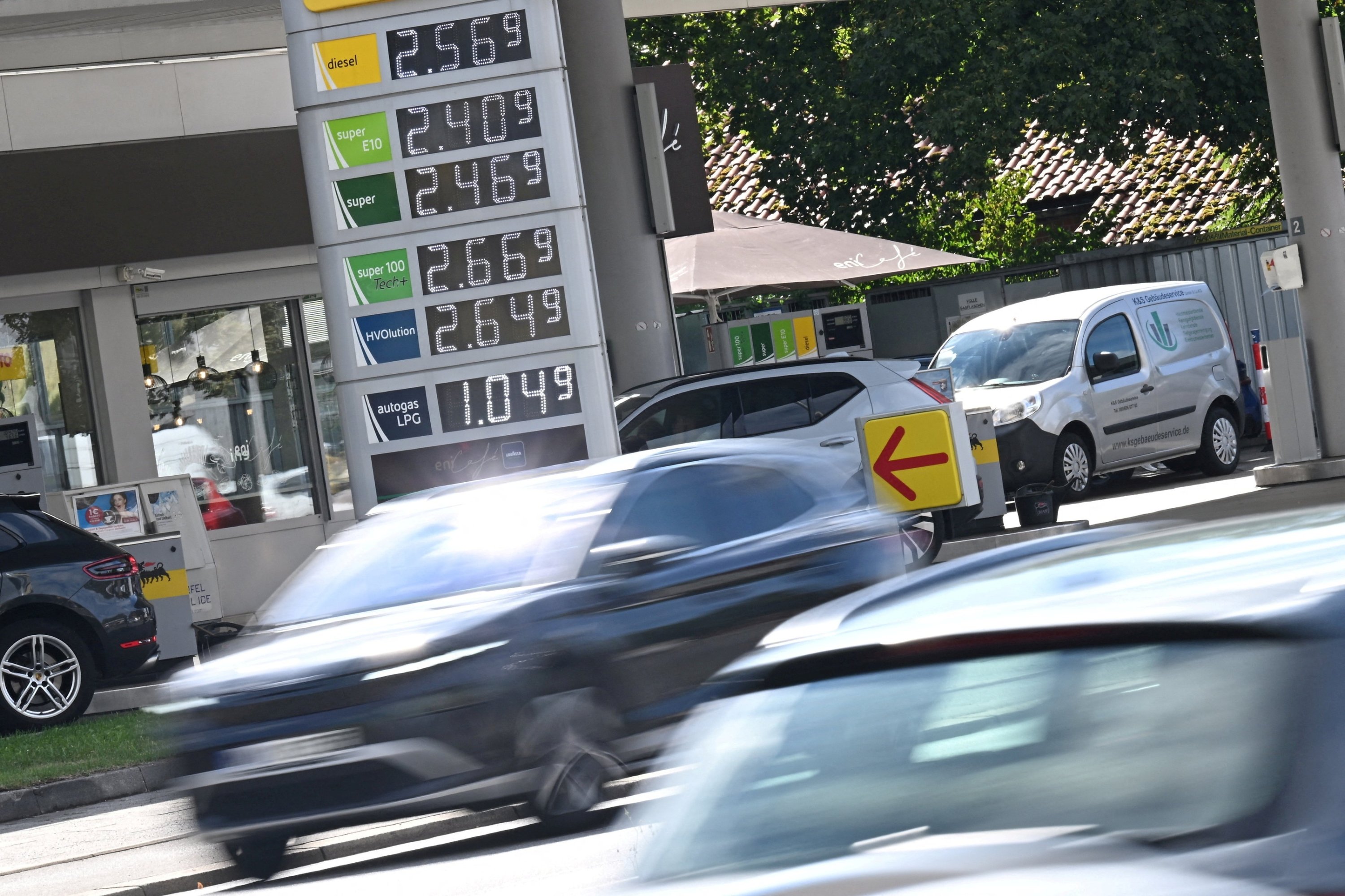
The United States on Thursday told its European allies to help lower global diesel prices by releasing strategic reserves "immediately," with EU member states due to discuss the crisis on Friday.
Reports said the Trump administration had told Germany and France in particular to draw down emergency diesel inventories to help ease soaring global fuel prices or face a potential U.S. diesel export ban.
"Our European partners should accelerate delivery on their existing commitments and make additional supplies immediately available to address ongoing disruptions," U.S. Treasury Secretary Scott Bessent said in a post on social media.
EU member states will meet with the European Commission Friday to discuss a coordinated response to soaring fuel prices, a Commission spokesperson said.
Washington is piling on pressure to get European help with fuel costs, with U.S. President Donald Trump on Wednesday floating the possibility of banning diesel exports.
High energy costs loom as a threat to Trump's Republican Party in next month's midterm elections.
Europe's relationship with Washington has soured under Trump due to tariff disputes and disagreements over military spending.
For the EU, releasing more stocks would represent a dilemma as it needs to balance the need to bring down fuel prices at home with maintaining high stocks for a possible worsening of the fuel crisis should Trump and Iran not reach a peace deal.
"It is in Europe's best interest to work with the United States as we pursue multiple pathways to boost the supply of refined products and lower costs for consumers," a U.S. official told Agence France-Presse (AFP).
At G-20 trade ministers' meeting in Milwaukee, U.S. Trade Representative Jamieson Greer struck a conciliatory tone, saying there was an "eagerness on both sides to work together" on the diesel issue.
And Trump told reporters in Texas on Thursday that he "may" ask European countries to release diesel reserves.
Europe has become increasingly dependent on U.S. fuel after banning Russian imports over Russia's invasion of Ukraine and after the U.S.-Israeli war against Iran disrupted supplies from the Middle East.
EU trade chief Maros Sefcovic told reporters Thursday that any move by the U.S. to ban diesel exports would be "unexpected for Europeans."
He spoke on the sidelines of the two-day G-20 talks, after meeting with Greer.
Sefcovic told reporters that he did not go into details with Greer on energy exports.
But the transatlantic partners "decided to stay in close touch to avoid any surprises here," he said.
"It would have very dramatic consequences for our economic performance," Sefcovic said of any potential diesel export ban.
France's minister delegate for international trade, Nicolas Forissier, told AFP in Milwaukee: "I can't imagine that there will be a ban."
He stressed the importance of diesel to the United States and European countries, adding both sides will "try to find solutions."
"In France, we'll try to find balanced solutions all over the world," Forissier added. "If not with the Americans, it will be with other countries."
U.S. Energy Secretary Chris Wright said Wednesday that the world would "hear announcements from our friends in Europe" to push diesel prices down.
Asked about a release from strategic reserves, the French presidency said no such demand had been made when Emmanuel Macron and Trump met on the sidelines of the U.N. General Assembly last week.
Macron would also soon convene a video meeting of G-7 leaders "to make progress on the various levers that can be used to address the rising fuel prices... including coordination on releasing reserves."
Macron announced on Sept. 18 a plan for such a meeting. The G-7 gathering is expected in mid-October, according to Macron's press office.
Average U.S. diesel prices have surged more than 70% to $6.39 a gallon since the start of the Iran war, according to AAA motor club data.
Fuel prices have caused living costs to soar, leaving Trump's Republican Party fearing it could lose control of Congress in November's midterm elections.