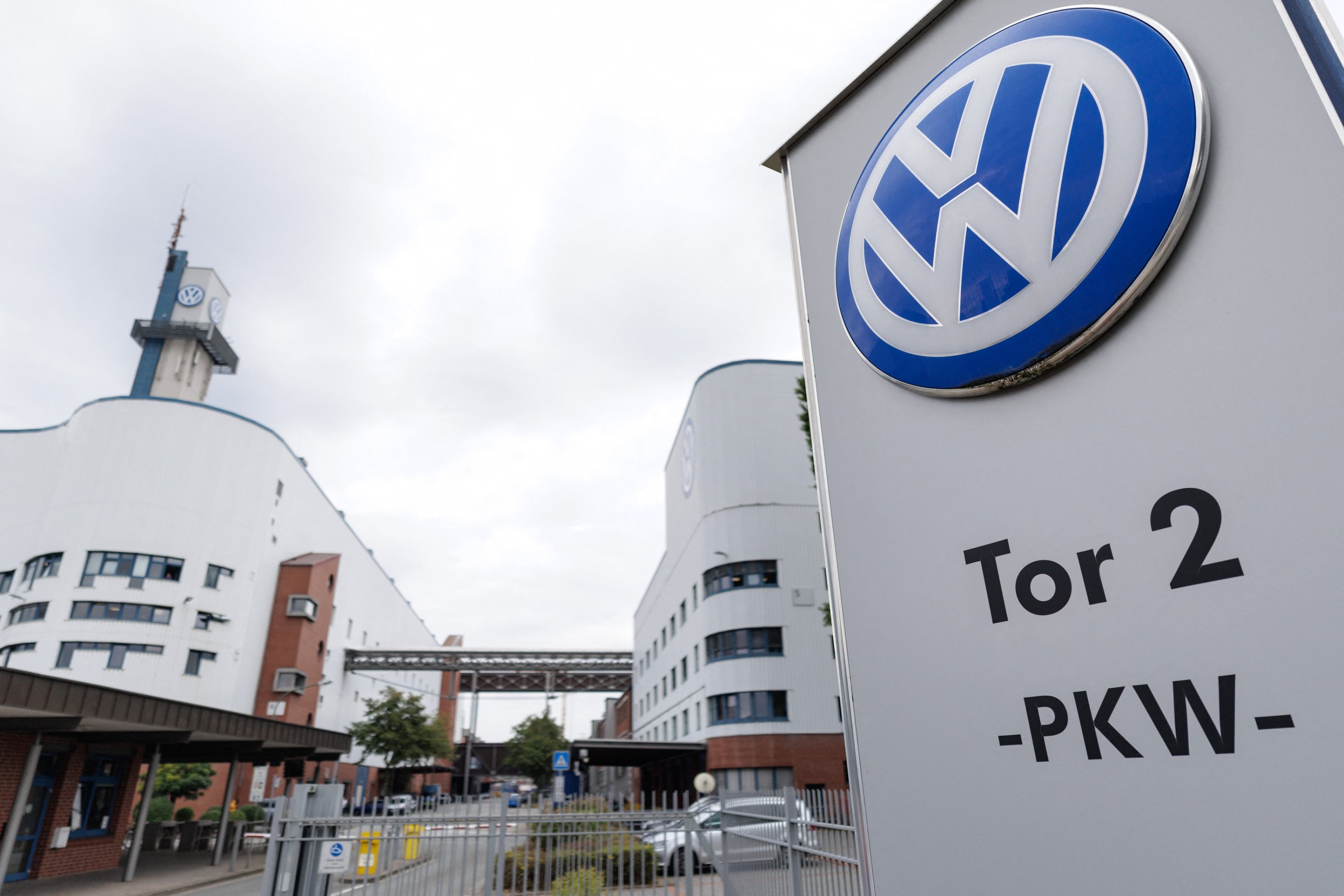
German auto giant Volkswagen announced Monday that one of its plants would be converted to make defense equipment for the Israeli group Rafael after car production ends there next year.
The struggling carmaker said it would sell the Osnabrueck plant to Tel Aviv-based Aurelius Capital as well as the German state of Lower Saxony, VW's second-largest shareholder, with an initial air defense project planned for Rafael Advanced Defense Systems.
Volkswagen has faced mounting scrutiny after reports in May suggested it could produce components for Israel's Iron Dome system.
Germany remains one of Tel Aviv's closest allies, alongside the United States, despite Israel's genocidal campaign in Gaza, the expansion of settlements in the occupied West Bank, and its actions in Lebanon and Iran.
Monday's deal offers a potential blueprint for other Volkswagen sites facing an uncertain future as Europe's largest carmaker embarks on its biggest ever restructuring.
Volkswagen has warned that up to four German plants could face closure or repurposing unless alternative uses can be found amid weak demand, high costs and growing competition from China.
"With today's agreement, we are taking an important step towards opening up a new industrial future for the site," Volkswagen CEO Oliver Blume said Monday. "Volkswagen stands by its responsibility for Osnabrueck."
The company, which is struggling with weak demand, had already decided in 2024 to end vehicle production at the site in northwest Germany by 2027.
The deal would secure around 1,400 of the plant's 1,800 jobs, Volkswagen's works council said in a separate statement.
The long-term future of four other German factories is also uncertain.
The 10-brand auto giant, whose companies range from Audi to Porsche and Seat, is battling fierce Chinese competition amid a troubled shift to electric vehicles.
The agreement comes days after Volkswagen unveiled a major revamp to cut jobs and simplify its structure, highlighting how rising defense spending in Europe could help absorb excess manufacturing capacity in the automotive sector.
Management and unions last week struck a deal to shed 50,000 more jobs across the group, taking the total number of positions set to be lost in coming years to 100,000.
Defense production is increasingly being seen as a solution for underused automotive plants, with companies including Rheinmetall and Continental pursuing similar initiatives.