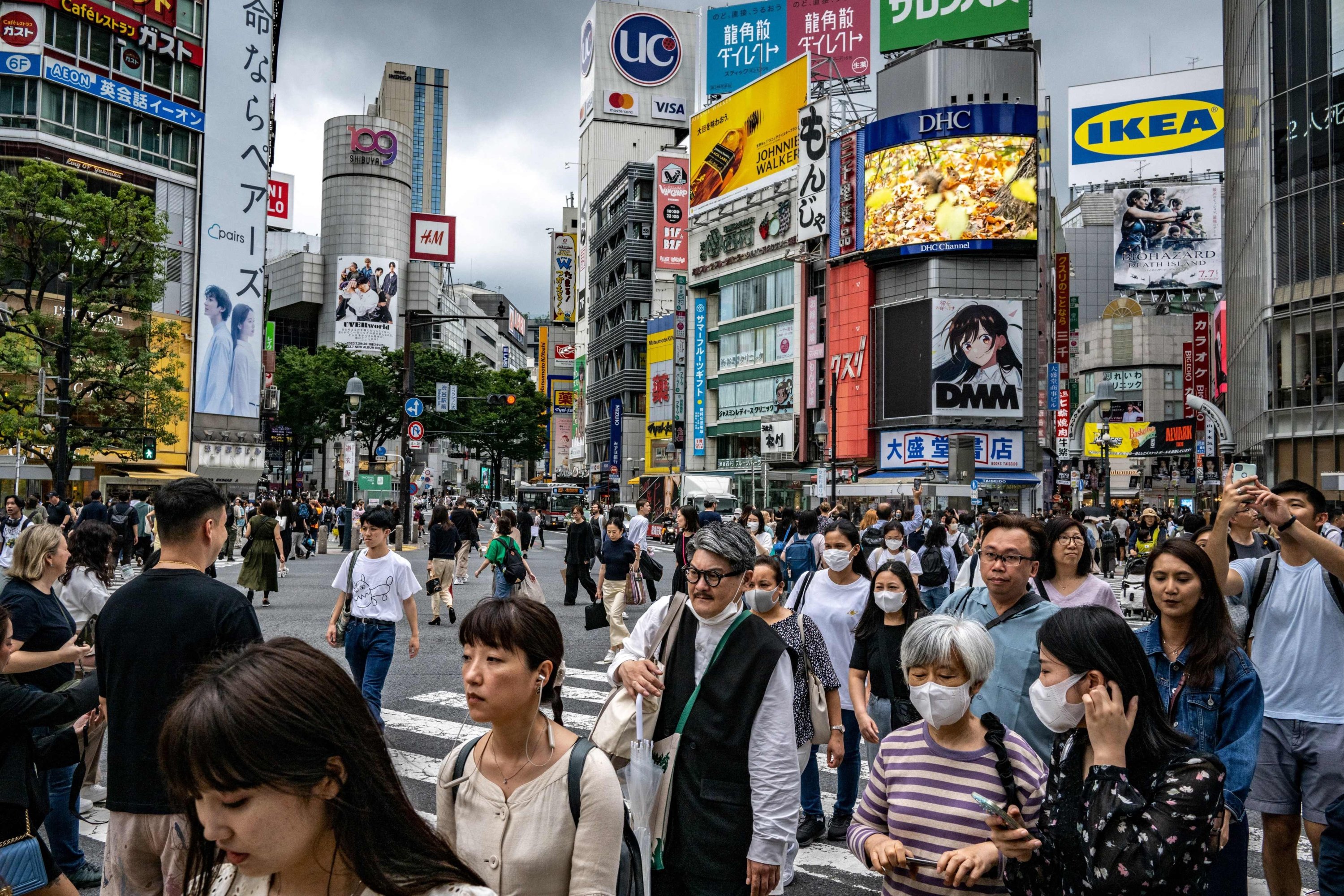
Japan is witnessing a surge in wages unseen in decades, albeit limited to certain groups of workers. Yet, so are prices, causing a growing number of people to adopt more stringent budgeting measures than ever before.
In May, the consumer price index was up 3.2% from a year earlier, well above the central bank's target of about 2%. That's great news for policymakers trying to get the world's third-largest economy out of the doldrums by keeping credit super cheap to spur demand and push prices higher.
But a government survey of companies with five or more employees found real wages, considering higher prices, fell 3% from the year earlier in April, marking the 13th straight month of declines.
Although all the major companies have raised wages this year, with large labor union members landing a 4% hike, the highest in 30 years, a quarter of small and medium-sized businesses – employers of over two-thirds of all workers – gave no pay raises, according to the think tank Tokyo Shoko Research.
"My wages haven't gone up at all," said Kyoko Sano, a salesclerk at a Tokyo department store.
Sano feels a bit of a jolt when a cashier rings up her purchases and angst when she checks out prices of her favorite cookies, potato chips, rice crackers and drinks. Prices have all jumped, and the usual discount offerings have disappeared. Her electricity bill keeps climbing.
"There's no point in buying things like body lotion in advance before their prices rise. Pretty soon you run out, and you end up having to go buy them, anyway. There's an expiration date on cosmetics," she sighed.
Japanese workers make less across the board than their counterparts in the U.S. and Europe. A graph comparing wages for the last several years shows the line for Japan going straight across from left to right. In other nations, including the U.S., they climb gradually higher.
Average pay in Japan is about three-fourths of the OECD average of about $51,000. Hourly rates for workers in many Tokyo service jobs average about 1,300 yen ($9.30) an hour, up from the previous 1,000 yen ($7.10) an hour. They're lower in most of the country.
So while a barista in New York makes about $22,500 a year, according to Intuit, one in Tokyo makes 2.19 million yen ($15,700), Economic Research Institute data show.
In theory, a vibrant economy is supposed to lead to higher prices and wages. But purchasing power has to keep up to sustain consumer demand. It's unclear that today's inflationary pressures, set off by the rising costs for oil and other commodities, will spur the sort of positive growth cycle Japan's been trying to achieve for years.
So far, the Bank of Japan has remained cautious, keeping the key interest rate that helps determine rates on mortgages and car loans at minus 0.1%, where it's stayed for the past decade.
Wages have languished since Japan's financial bubble burst in the 1990s, and the economy has stagnated. Employers held back on wage increases and risky investments but largely avoided mass layoffs, notes Hideo Hayakawa, a senior fellow at The Tokyo Foundation for Policy Research, an independent think tank.
The rigid structure of Japanese workplaces also tends to crimp efficiency and productivity, a factor driving improved incomes and profits, he said.
"The economy is gradually starting to move, but we don't know yet if things will work out so wage increases can continue into next year," Hayakawa said.
Some companies have started to raise wages, but the hefty raise new hires of Fast Retailing, which operates the Uniqlo clothing chain, got this year is relatively rare. In raising monthly pay to 300,000 yen ($2,100) a month from 255,000 yen ($1,800), the company said it hopes to retain talented workers and narrow wage gaps with employees in the U.S. and Europe.
"We believe we must transform into a highly productive company that can compete and win on a global stage," says Peichi Tung, global corporate communications manager at Fast Retailing.
Prime Minister Fumio Kishida, wants the minimum wage to rise to 1,000 yen ($7.10) this year, up from 961 yen ($6.80), a key part of his "new capitalism" program. He also advocates giving tax breaks to companies that raise wages.
"Realizing a systematic rise in wages is a government priority," Kishida said.
Wages should rise as companies compete for a shrinking pool of workers in a country where the labor force is aging fast and the population is declining. The most recent data showed 128 jobs for every 100 job seekers.
But instead, companies have sought to avoid raising costs by hiring women, students, retirees or foreigners, often on lower-paying contracts that don't include the same benefits as those given to regular employees.
Even though Japan's "lifetime employment" system has begun to fray, workers still don't job-hop as much as in the West. Stable jobs and loyalty are valued more than jockeying for higher pay or promotions.
For now, inflation remains well below levels seen in Europe, the U.S. and other parts of the world and companies have been cautious about price increases.
When Yaokin Corp. raised the price of a popular stick candy called Umaibo to 12 yen (9 cents) from 10 yen (7 cents) last year, it was the first increase in 42 years. In Tokyo, you can still get a hot bowl of ramen for about 1,200 yen ($8.50). A Big Mac costs 450 yen ($ 3), compared with about $5 in the U.S., although prices vary by state.
For tourists, the exchange rate of about 140 yen to the U.S. dollar means bargains. But companies that import raw materials and must pay higher prices for electricity and other necessities are being squeezed.
Nissin Foods Group raised the price of its Cup Noodle, citing soaring costs for wheat, palm oil, shrimp, meat and other ingredients, and for energy.
"We have been devoted to offering good products at cheap prices," said spokesperson Kazuki Tsurumaru.
But Nissin is also raising wages.
So is Kaike Grand Hotel Tensui, in western Japan's Tottori Prefecture.
Only a handful of travelers have returned to the hotel after the pandemic, while costs of ingredients for food and electricity rates have soared.
"Our hot springs and gourmet regional cuisine are the best of what we have to offer," like fresh fish and crab, said its general manager, Yoshimi Tabuchi, who says he's recruiting new workers all the time and wants to hang on to the best of them.
"So we are raising wages," he said.