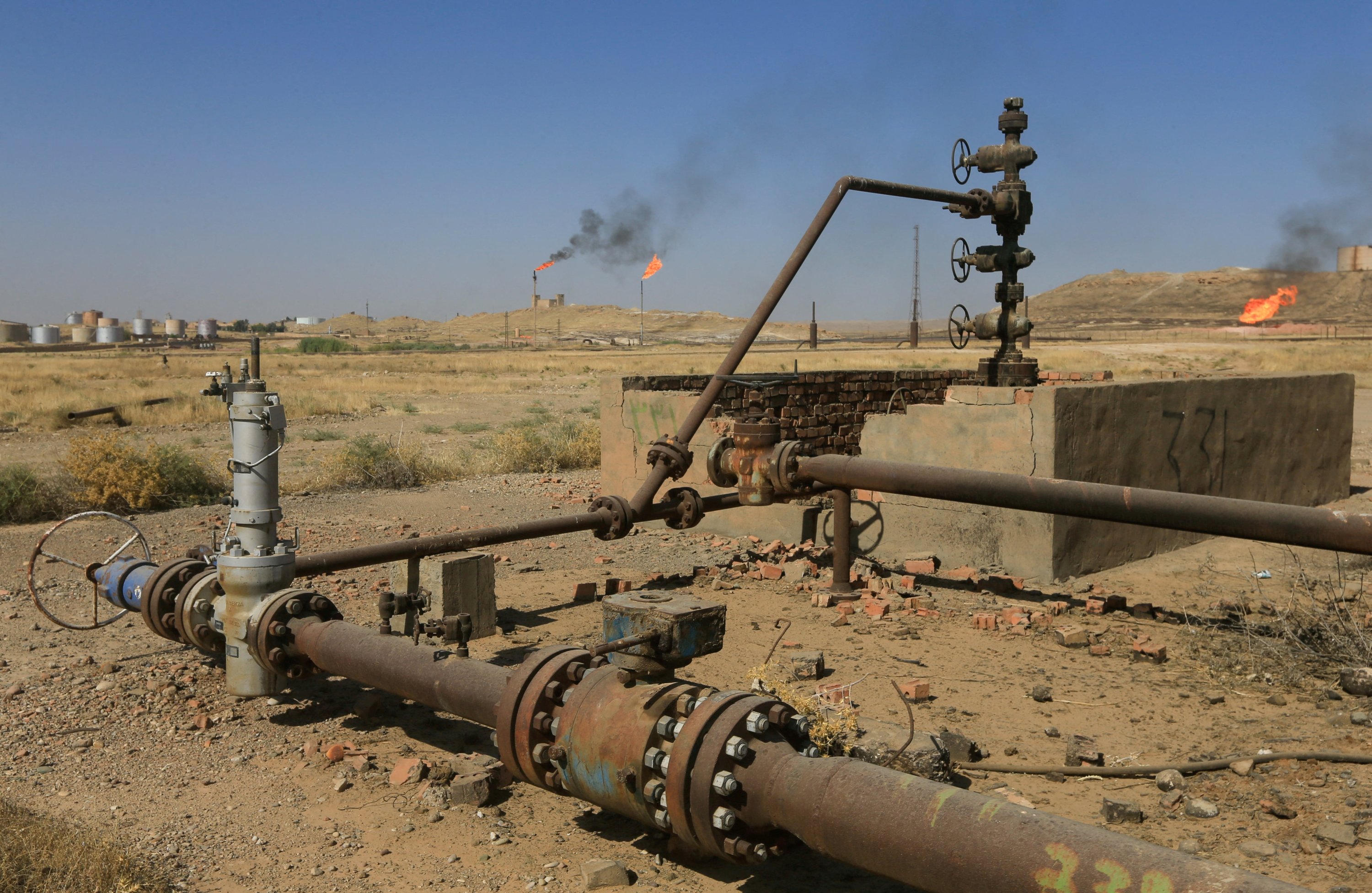
Energy giant BP is projected to invest up to $25 billion over the life span of a project to redevelop four Kirkuk oil and gas fields, according to a senior Iraqi oil official, as Baghdad looks to attract foreign investment.
Provided the deal is signed, which the official said could be over the coming weeks, it would mark a breakthrough for Iraq, where output has been constrained by years of war, corruption and sectarian tensions.
Even so, it is the second-largest oil producer in the Organization of the Petroleum Exporting Countries (OPEC), behind only Saudi Arabia.
The senior official with direct knowledge of the issue told Reuters BP would invest between $20 billion and $25 billion over a profit-sharing agreement that would last more than 25 years.
The size of the deal has not previously been made public.
BP declined to comment on the latest developments but referred to a statement issued last month, in which it said the company and the Iraqi government had made significant progress toward an agreement to support the operator of several Kirkuk oil fields in an integrated redevelopment project.
The Iraqi official requested anonymity because he was not authorized to speak publicly on the issue.
The prospective BP agreement would be the second major deal between Iraq and an international oil company in as many years after an agreement in Basra with TotalEnergies, valued at around $27 billion.
The BP deal is focused on rehabilitating facilities in four oil fields and developing natural gas to support Iraq's domestic energy needs.
The official said technical and economic negotiations were progressing well and final contracts could be signed in the first half of February and possibly by the end of this week.
Under the terms of the contract, BP would boost crude production capacity from the four oil fields in Kirkuk by 150,000 barrels per day (bpd) to raise total capacity to at least 450,000 bpd in two to three years, the official said.
That compares with a current capacity of 300,000 bpd, according to three officials from the state-run North Oil Company (NOC).
Under the profit-sharing model being discussed, the senior oil official said BP would be able to recover costs and start making profits once it has increased output beyond current levels.
BP has deep knowledge of the Kirkuk fields.
It was a member of the consortium of companies that discovered oil in Kirkuk in the 1920s and has estimated the area holds about 9 billion barrels of recoverable oil.
The oil major and the Iraqi Oil Ministry signed in 2013 a letter of intent to study developing Kirkuk, but that deal was put on hold in 2014 when the Iraqi military collapsed in the face of the terrorist group Daesh's advance in northern and western Iraq, before the Kurdistan Regional Government (KRG) took control of the Kirkuk region.
Baghdad regained full control of the deposit from the KRG in 2017 after a failed independence referendum.
BP then resumed its studies on the field, but in late 2019 it pulled out of the oil field after its 2013 service contract expired with no agreement on the field's expansion.
BP holds a 50% stake in a joint venture operating the giant Rumaila oil field in the south of the country, where it has been operating for a century.