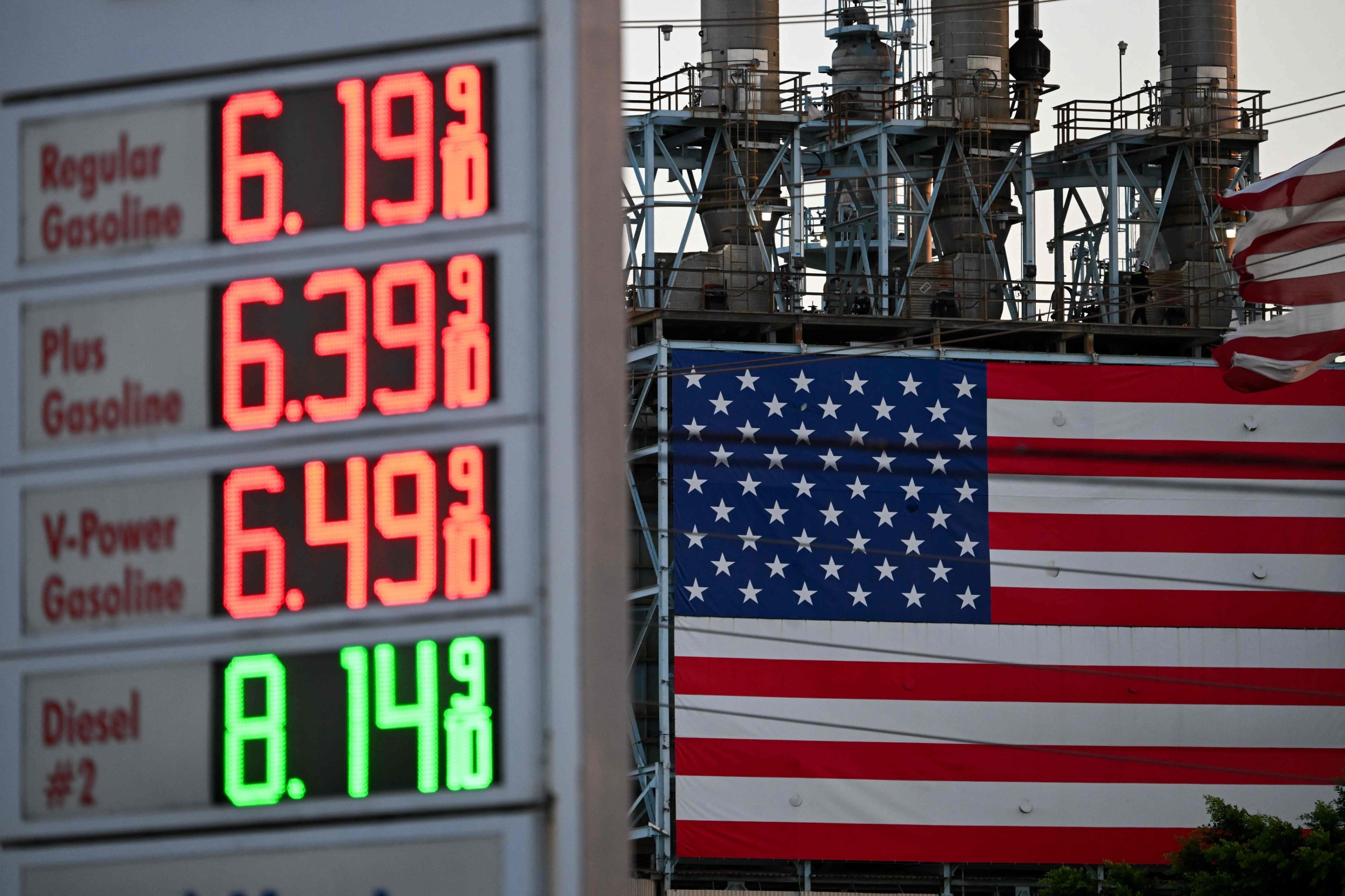
Upcoming midterm elections in the U.S. stand as a main reason behind the Trump administration's sudden announcement that Russian diesel would be released immediately to American and global markets, analysts and critics say.
On Friday, U.S. President Donald Trump said he concluded a "highly successful discussion" with Russian President Vladimir Putin and noted it was agreed that Russia would "immediately" supply over 300,000 tons of diesel fuel to the American and global marketplace.
"Another 500,000 Tons during the month of November, and 1,000,000 Tons immediately therafter," he wrote in a post shared on his Truth Social.
Separately, the U.S. Treasury Department has shared a notice and issued a temporary exemption from sanctions against Russia, permitting the sale, supply, unloading and import of Russian diesel until April 7, 2027.
Russian Deputy Prime Minister Alexander Novak also announced the immediate lifting of Russia's ban on diesel exports, according to the state news agency Tass.
The prices of diesel reached record highs in the U.S., and many advanced economies, including the U.K., France and Germany, in recent weeks amid the ongoing war between the U.S. and Iran in the Middle East and Ukraine's attacks on Russian energy infrastructure.
U.S. national average diesel prices reached $6.27 per gallon as of October, according to AAA Fuel Prices.
However, with the midterm elections next month, critics argue that the amount of supply volume shared by Trump is insufficient, also suggesting that Russia is likely unable to produce as much at its refineries impacted by Ukrainian attacks.
Before the reported lift on the ban, Russian authorities had recently extended the ban on exports of diesel untill end of October amid the domestic crunch in supplies – a rare case for the country, which before the invasion of Ukraine was one of the top global energy suppliers.
The U.S.-Russia deal, which has led to a rebuke by Ukraine and its European allies, such as Germany, raised a question: could it actually help alleviate the recent cost pressures the customers across Europe and the U.S. have been facing?
Following Trump's announcement, diesel futures in fact dropped, trading about 4.5% lower at $4.67 per gallon. Data from the NY Harbor chart, displaying costs of futures on Oct. 9, showed that the November price dropped by 4.1% to $4.68.
Still, it is unclear how it would reflect on crude oil prices, with tensions in the Middle East and lately between Saudi Arabia and Houthi rebels also weighing on the outlook.
Diesel is a refined product, and additional shipments do not automatically increase crude production.
WTI price settled Friday at $91.85 per barrel, up 0.39%, while Brent crude closed at $104.72, gaining 0.42%. Both benchmarks finished higher despite the initial reaction to Trump’s announcement.
But since diesel is used in logistics and agriculture and coupled with the recent G-7 decision to release additional emergency stockpiles, any drop in prices would be welcomed by farmers and companies, which have voiced dissatisfaction with the current level of prices.
The U.S.-Russia deal was also criticized by Ukrainian President Volodymyr Zelenskyy, after which Trump said the war-torn country needed a new president.
"Allowing Russia to sell petroleum products is an investment in the war, which must be ended, not prolonged," Zelenskyy wrote on Telegram on Friday evening.
German Education Minister Karin Prien on Sunday also criticized Trump over his call for a new Ukrainian president amid the recent U.S.-Russia diesel agreement.
"For a few liters of diesel. What a moral bankruptcy," Prien said on X in response to Trump's remarks.
Trump on Saturday called for Ukraine to "get a new president," accusing Zelenskyy of repeatedly failing to reach a deal to end the war with Russia.
"I suggest they get a new leader who can make a deal, because he could have made many deals that, for some reason, he never does," Trump said.
Meanwhile, Germany reaffirmed its commitment to sanctions against Russia on Saturday following the Trump-Putin agreement, according to German media.