Daily Sabah logo

Politics
Diplomacy Legislation War On Terror EU Affairs Elections News Analysis
TÜRKİYE
Istanbul Education Investigations Minorities Expat Corner Diaspora
World
Mid-East Europe Americas Asia Pacific Africa Syrian Crisis Islamophobia
Business
Automotive Economy Energy Finance Tourism Tech Defense Transportation News Analysis
Lifestyle
Health Environment Travel Food Fashion Science Religion History Feature Expat Corner
Arts
Cinema Music Events Portrait Reviews Performing Arts
Sports
Football Basketball Motorsports Tennis
Opinion
Columns Op-Ed Reader's Corner Editorial
PHOTO GALLERY
JOBS ABOUT US RSS PRIVACY CONTACT US
© Turkuvaz Haberleşme ve Yayıncılık 2025

Daily Sabah - Latest & Breaking News from Turkey | Istanbul

  • Politics
    • Diplomacy
    • Legislation
    • War On Terror
    • EU Affairs
    • Elections
    • News Analysis
  • TÜRKİYE
    • Istanbul
    • Education
    • Investigations
    • Minorities
    • Expat Corner
    • Diaspora
  • World
    • Mid-East
    • Europe
    • Americas
    • Asia Pacific
    • Africa
    • Syrian Crisis
    • Islamophobia
  • Business
    • Automotive
    • Economy
    • Energy
    • Finance
    • Tourism
    • Tech
    • Defense
    • Transportation
    • News Analysis
  • Lifestyle
    • Health
    • Environment
    • Travel
    • Food
    • Fashion
    • Science
    • Religion
    • History
    • Feature
    • Expat Corner
  • Arts
    • Cinema
    • Music
    • Events
    • Portrait
    • Reviews
    • Performing Arts
  • Sports
    • Football
    • Basketball
    • Motorsports
    • Tennis
  • Gallery
  • Opinion
    • Columns
    • Op-Ed
    • Reader's Corner
    • Editorial
  • TV
  • Business
  • Automotive
  • Economy
  • Energy
  • Finance
  • Tourism
  • Tech
  • Defense
  • Transportation
  • News Analysis

China's power paradox: World's record renewables, coal boom

by Agence France-Presse - AFP

BANGKOK, Thailand Oct 19, 2025 - 11:34 am GMT+3
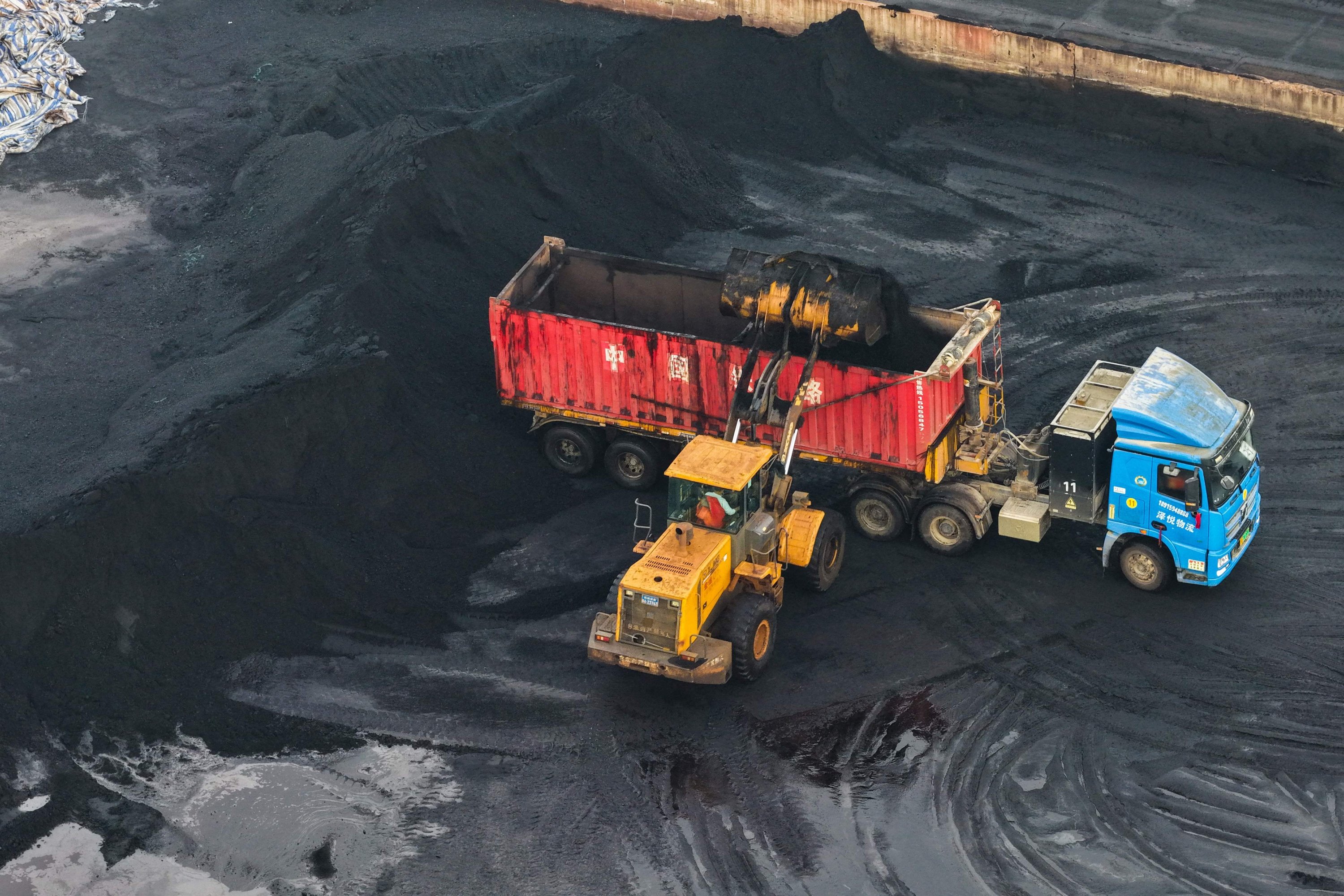
A truck is loaded with coal at a coal storage facility beside the Yangtse River in Nanjing, eastern Jiangsu province, China, Oct. 6, 2025. (AFP Photo)
by Agence France-Presse - AFP Oct 19, 2025 11:34 am

Call it simply the China power paradox. While Beijing leads the world in renewable energy expansion and scaling its solar and wind projects at an unprecedented pace, its coal projects are booming too.

As the top emitter of greenhouse gases, China will largely determine whether the world avoids the worst effects of climate change.

On the one hand, the picture looks positive. Gleaming solar farms now sprawl across Chinese deserts as China has installed more renewables last year than all existing U.S. capacity and Chinese President Xi Jinping has made the country's first emissions reduction pledges.

Yet in the first half of this year, coal power capacity also grew, with new or revived proposals hitting a decade high.

China accounted for 93% of new global coal construction in 2024, the Center for Research on Energy and Clear Air (CREA) found.

One reason is China's "build before breaking" approach, said Muyi Yang, senior energy analyst at think tank Ember.

Officials are wary of abandoning the old system before renewables are considered fully operational, Yang said.

"Think of it like a child learning to walk," he told Agence France-Presse (AFP).

"There will be stumbles – like supply interruptions, price spikes – and if you don't manage those, you risk undermining public support."

Policymakers remain scarred by 2021-2022 power shortages tied to pricing, demand, grid issues and extreme weather.

While grid reform and storage would prevent a repeat, officials are hedging with new coal capacity, even if it sits idle, experts said.

"There's the basic bureaucratic impulse to make sure that you don't get blamed," said Lauri Myllyvirta, CREA co-founder and lead analyst.

"They want to make sure that they don't block one possible solution."

Grid and transmission

There's also an economic rationale, said David Fishman, a China power expert at Lantau Group, a consultancy.

China's electricity demand has increased faster than even record-breaking renewable installations.

That may have shifted in 2025, when renewables finally met demand growth in the first half of the year. But slower demand played a role and many firms see coal remaining profitable.

Grid and transmission issues also make coal attractive.

Large-scale renewables are often in energy-rich, sparsely populated regions far from consumers.
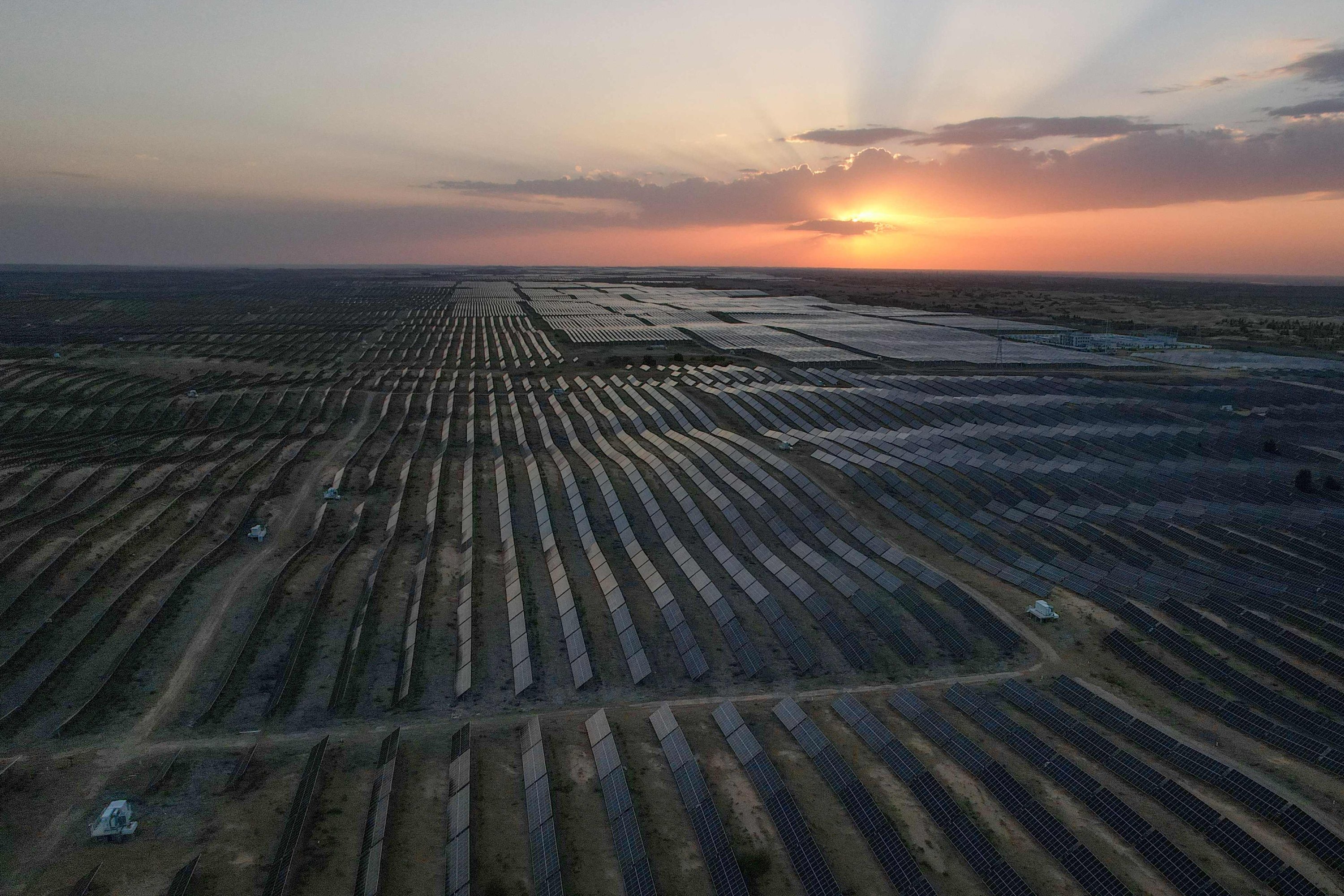
The sun sets over solar panels deployed at the Kubuqi Photovoltaic Desert Control Project, near Ordos, in the northern Inner Mongolia region, China, Aug. 11, 2025. (AFP Photo)

Sending that power over long distances raises the cost and "incentivizes build-out of local energy capacity," Fishman told AFP.

China is improving its infrastructure for long-distance power trading, "but it's definitely not where it needs to be," he added.

Coal also benefits from being a "dispatchable resource" – easily ramped up or down – unlike solar and wind, which depend on weather.

To increase renewables, "you have to make the coal plants operate more flexibly... and make space for variable renewables," Myllyvirta said.

China's grid remains "very rigid," and coal-fired power plants are "the beneficiaries," he added.

'Instrumental' economic driver

Other challenges loom. The end of feed-in tariffs means new renewable projects must compete on the open market.

Fishman argues that "green power demand is insufficient to keep capacity expansion high," though the government has policy levers to tip the balance, including requiring companies to use more renewables.

China wants 3,600 gigawatts (GW) of wind and solar by 2035, but that may not meet future demand, risking further coal increases.

Still, coal additions do not always equal coal emissions – China's fleet currently runs at only 50% capacity.

And the "clean energy" sector – including solar, wind, nuclear, hydropower, storage and EVs – is a major economic driver.

CREA estimates it contributed a record 10% to China's gross domestic product (GDP) last year, and drove a quarter of growth.

"It has become completely instrumental to meeting economic targets," said Myllyvirta.

"That's the main reason I'm cautiously optimistic in spite of these challenges."

  • shortlink copied
  • Last Update: Oct 19, 2025 2:24 pm
    KEYWORDS
    china energy sector renewable energy coal coal production climate change gas emissions
    The Daily Sabah Newsletter
    Keep up to date with what’s happening in Turkey, it’s region and the world.
    You can unsubscribe at any time. By signing up you are agreeing to our Terms of Use and Privacy Policy. This site is protected by reCAPTCHA and the Google Privacy Policy and Terms of Service apply.
    No Image
    TCG Kınalıada in Tokyo for 100th anniversary of Turkish-Japanese relations
    PHOTOGALLERY
    • POLITICS
    • Diplomacy
    • Legislation
    • War On Terror
    • EU Affairs
    • News Analysis
    • TÜRKİYE
    • Istanbul
    • Education
    • Investigations
    • Minorities
    • Diaspora
    • World
    • Mid-East
    • Europe
    • Americas
    • Asia Pacific
    • Africa
    • Syrian Crisis
    • İslamophobia
    • Business
    • Automotive
    • Economy
    • Energy
    • Finance
    • Tourism
    • Tech
    • Defense
    • Transportation
    • News Analysis
    • Lifestyle
    • Health
    • Environment
    • Travel
    • Food
    • Fashion
    • Science
    • Religion
    • History
    • Feature
    • Expat Corner
    • Arts
    • Cinema
    • Music
    • Events
    • Portrait
    • Performing Arts
    • Reviews
    • Sports
    • Football
    • Basketball
    • Motorsports
    • Tennis
    • Opinion
    • Columns
    • Op-Ed
    • Reader's Corner
    • Editorial
    • Photo gallery
    • DS TV
    • Jobs
    • privacy
    • about us
    • contact us
    • RSS
    © Turkuvaz Haberleşme ve Yayıncılık 2021