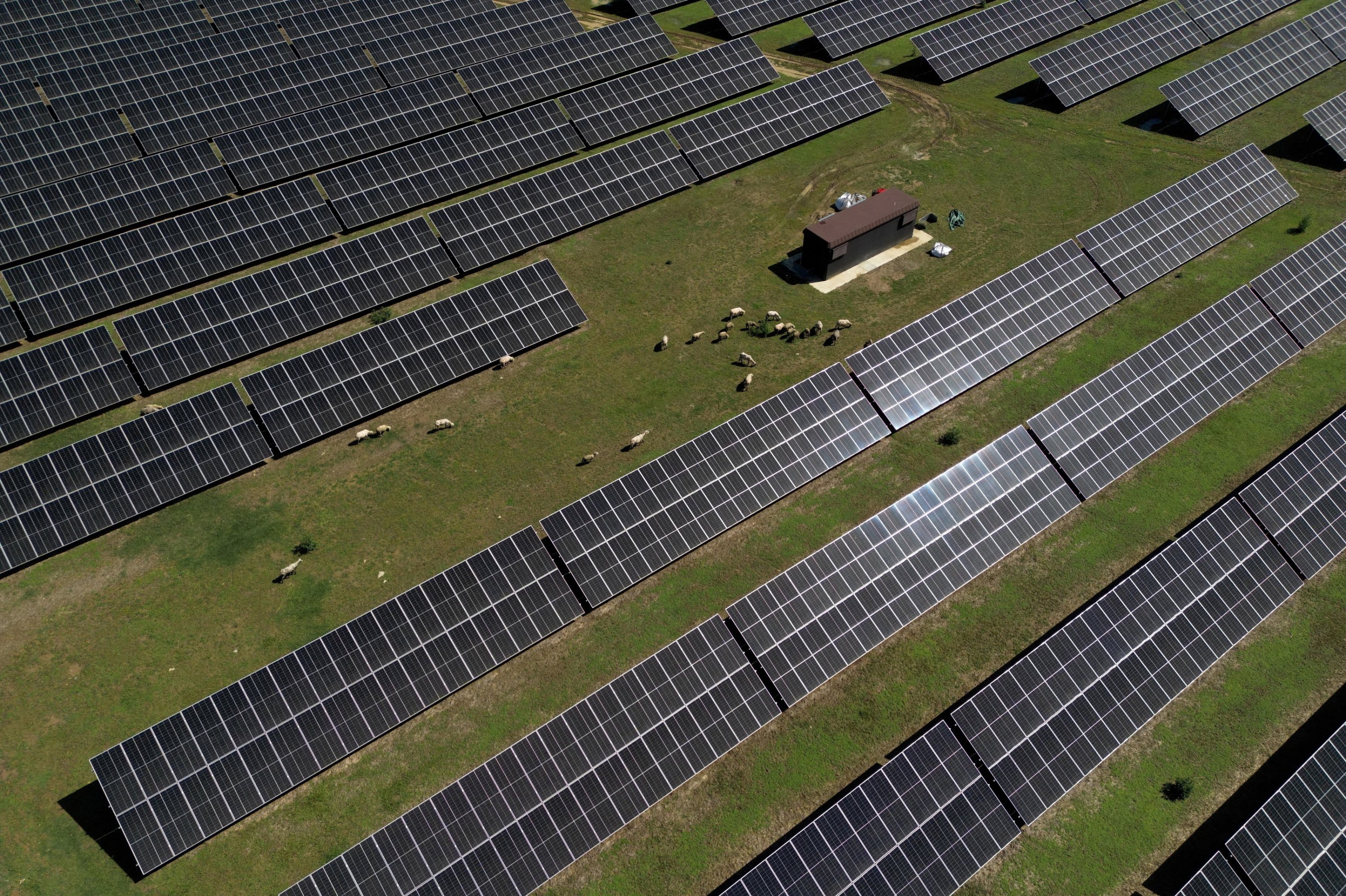
The supply and price shock following the start of the U.S.-Iran war has reshaped energy security policies in Europe and Asia, increasing the importance of investments in renewable energy and storage for countries mostly dependent on energy imports.
Disruptions in the Strait of Hormuz have once again revealed the vulnerability of the countries that rely on imported oil and gas.
Natural gas prices, which stood at 31.96 euros ($37.08) per megawatt-hour (MWh) on Feb. 27, before the war, rose to a peak of 80.82 euros per megawatt-hour on Sept. 11.
Brent crude oil, meanwhile, rose from $76.30 per barrel on Feb. 27 to as high as $126.41 on April 30.
West Texas Intermediate (WTI) crude reached $117.63 per barrel on April 7. As of Sept. 11, Brent was trading at $105.62 per barrel and WTI at $100.87.
The surge in energy prices has strengthened policies aimed at accelerating investment in domestic and renewable energy sources in countries seeking to reduce their dependence on fossil fuels and diversify energy supplies.
The war is expected to further increase the economic and strategic appeal of renewable energy, storage and electrification investments.
According to data from the International Energy Agency (IEA), measures adopted by countries in response to the impact of the war on energy markets include increasing renewable energy capacity and improving energy efficiency.
Europe has entered a new phase in energy security following the shock to natural gas supplies after Russia's invasion of Ukraine, with the U.S.-Iran war adding further pressure to the region's energy markets.
The conflict in the Middle East has increased pressure on Europe's oil and gas markets, bringing policies aimed at reducing the continent's dependence on imported fossil fuels back into focus.
The European Investment Bank (EIB) has said the clean energy transition can reduce Europe's dependence on energy imports and strengthen the economy's resilience to global energy shocks.
The impact of this transition is also visible in electricity generation.
Europe added 8.8 gigawatts (GW) of new wind power capacity in the first half of this year, according to Brussels-based WindEurope.
The figure represents an increase of about 33% from the same period last year.
Installations in Germany and the connection of offshore wind projects to the grid contributed to the increase in new capacity. In Germany, renewable energy sources accounted for a record 58% of electricity consumption in the first half of the year.
In the U.K., increased wind power generation has also helped mitigate the impact of the war on energy markets.
Wind-generated electricity rose 31% year-over-year in the first quarter, while wind power's share of electricity generation reached 42% in the U.K. The increase in wind generation allowed power companies to reduce the use of gas-fired power plants.
Rising energy prices have also encouraged consumers to generate their own electricity, both to reduce power bills and to protect themselves against volatility in energy markets.
Interest in rooftop solar power has increased across Europe during the ongoing conflict in the Middle East.
Rooftop solar can be installed more quickly than large-scale power plants and enables electricity to be generated at the point of consumption.
Future energy security discussions in Europe are expected to increasingly focus on electrification, energy storage, grid investment and renewable energy.
The war has also put energy security and supply diversification policies at the forefront in Asian countries, which are highly dependent on energy imports, increasing the strategic importance of investments in solar and wind power as well as energy storage.
India's Ministry of New and Renewable Energy is increasing investment in energy storage to enable greater integration of renewable sources into the electricity system.
The ministry estimates that India's energy storage requirement will reach 411.4 gigawatt-hours (GWh) by 2032. The Central Electricity Authority has also recommended that energy storage systems be developed alongside solar power projects.
South Korea is focusing on strengthening its electricity grid while expanding renewable energy capacity. The country aims to reach 100 GW of renewable energy capacity by 2030 and is working to develop grid infrastructure to integrate increasing amounts of renewable generation into the system.
The Department of Energy in the Philippines is targeting an additional 25 GW of renewable energy capacity by 2035. The department's Power Development Plan projects that renewable sources will account for 35% of electricity generation by 2030 and 50% by 2040.
It also plans to add a combined 1,471 MW of capacity from renewable energy and energy storage projects to the grid this year.
In Thailand, the energy system's heavy dependence on natural gas has made the development of solar and other renewable sources increasingly important for diversifying energy supplies.
In China, energy security and the development of a new energy system are being addressed together, with investment in solar and wind power, energy storage and electricity grids forming key components of the country's energy transition.
Developments in Asia and Europe show that renewable energy investments are increasingly being linked not only to emissions reductions and climate goals, but also to energy security, reduced dependence on external supplies and greater resilience to price volatility.