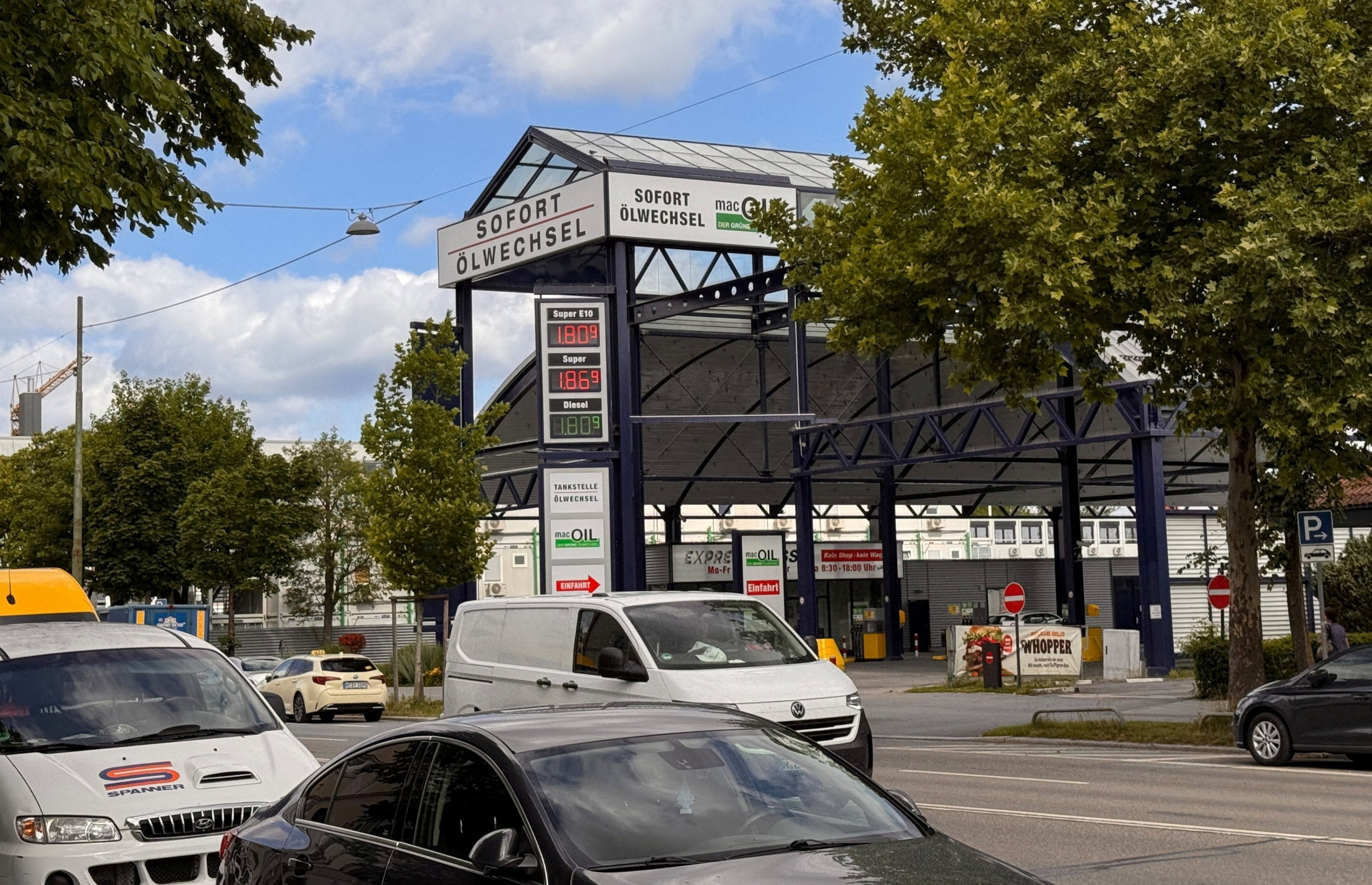
The price of petrol in Germany has climbed to a record high following the renewed escalation in conflict between the U.S. and Iran, the ADAC motoring association said on Thursday.
The nationwide daily average price for a liter of E10 petrol rose to 2.215 euros ($2.57) on Wednesday, surpassing the previous record of 2.203 euros set in March 2022, the ADAC said.
The figure represents a nominal record. Adjusted for inflation, petrol has been more expensive in the past, such as in 2012.
The U.S. resumed attacks on Iran several days ago, prompting retaliatory strikes. The renewed escalation has pushed crude oil prices higher.
Low water levels on the Rhine River have also contributed to higher fuel prices by increasing transport costs.
E10 is the cheapest commonly available grade of petrol in Germany. It is generally 5 to 6 cents per liter cheaper than Super E5, which is permitted to contain a lower proportion of biofuel.
High fuel prices frequently lead to calls for government relief for motorists. From the beginning of May until the end of June, a fuel tax rebate worth 16.7 cents per litre was in effect, costing the federal government an estimated 1.6 billion euros, according to the Finance Ministry.
The government has so far rejected calls to reintroduce the measure. Germany's public finances are already in deficit due to its debt-financed investment package.
Nominal price records also do not reflect how much of their income consumers actually have to spend on energy, food and other goods, as both prices and wages rise over time. Official inflation figures therefore take changes in prices into account.
Germany's inflation rate climbed back to 2.9% in August, partly as a result of the war with Iran.