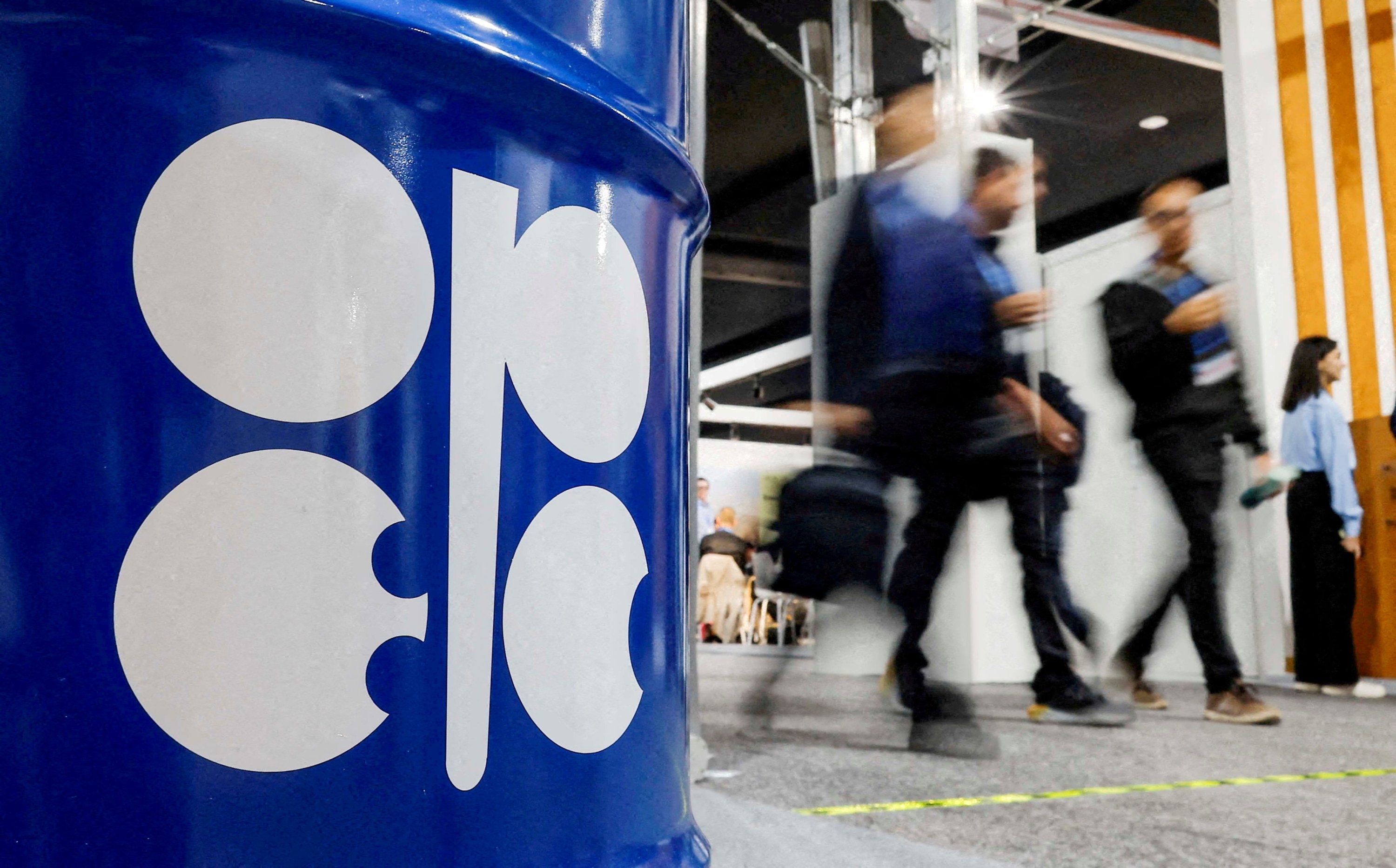
Oil prices were little changed on Monday despite news that OPEC+ plans to pause its supply increases early next year, as the market was weighed down by fears of an oil supply glut and weak factory data in Asia.
Brent crude futures were down 1 cent, or 0.02%, at $64.76 a barrel by 09:59 GMT. U.S. West Texas Intermediate crude was down 3 cents, or 0.05%, at $60.95.
The Organization of the Petroleum Exporting Countries (OPEC) and its allies, known as OPEC+, agreed on Sunday to raise output by 137,000 barrels per day (bpd) in December, the same as for October and November.
"Beyond December, due to seasonality, the eight countries also decided to pause the production increments in January, February, and March 2026," the group said in a statement.
ING's Head of Commodities Research, Warren Patterson, said the decision appears to be an acknowledgment of the large surplus that the market faces, particularly through early next year.
"Obviously, still plenty of uncertainty over the scale of the surplus, which will be dependent on how disruptive U.S. sanctions will be to Russian oil flows," he added.
RBC Capital's Head of Commodities Strategy, Helima Croft, also noted that Russia remains a key supply wildcard in the wake of the U.S. imposing sanctions on top Russian producers Rosneft and Lukoil, as well as the ongoing strikes on the country's energy infrastructure as part of the Ukraine war.
"There is ample ground for a cautious approach given the uncertainty over the Q1 supply picture and the anticipated demand softness," she said.
A Ukrainian drone attack struck Tuapse on Sunday, one of Russia's main Black Sea oil ports, causing a fire and damaging at least one ship.
Brent and WTI both fell more than 2% in October, down for a third straight month, hitting a five-month low on Oct. 20 on the supply glut fears and economic concerns about U.S. tariffs.
Analysts are keeping their oil price forecasts largely unchanged as rising OPEC+ output and lackluster demand offset geopolitical risks to supply, a Reuters poll showed. Estimates of oil market surplus ranged anywhere from 190,000 to 3 million bpd.
The Energy Information Administration reported on Friday that U.S. crude oil output rose 86,000 bpd to a record 13.8 million bpd in August.
Headwinds for Asia's big manufacturing hubs persisted in October, business surveys showed on Monday, as weak U.S. demand and tariffs under President Donald Trump hit factory orders across the region. Asia is the world's biggest oil-consuming region.
On Friday, Trump denied he was considering strikes inside OPEC member Venezuela amid intensifying expectations that Washington may expand its operations there.