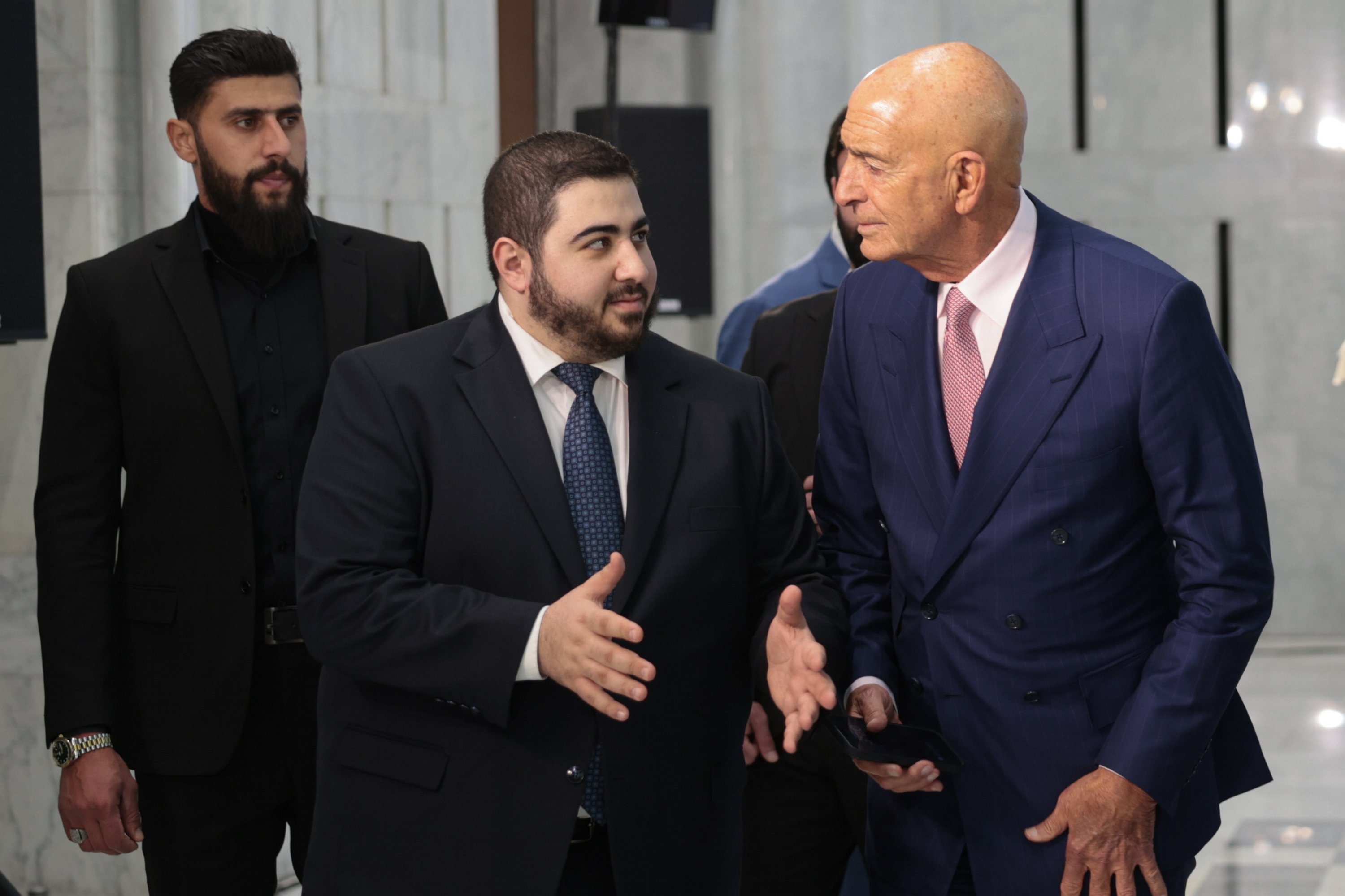
The state-run Syrian Petroleum Company has signed a memorandum of understanding with Chevron International and a Qatari firm to begin developing Syria’s first offshore oil and gas field, state media said Wednesday.
The signing ceremony took place at the Presidential Palace in Damascus. The contract, which in addition to Chevron is with the Power International Holding company, covers preliminary work on an offshore energy field in the Mediterranean, the state news agency SANA reported.
The MoU will remain in effect for two months, after which formal contracts and operational work are expected to follow.
Syrian officials said the agreement is intended to strengthen strategic partnerships in the energy sector, support development and investment, and advance offshore exploration and drilling.
Syrian government sources told dpa that the MoU represents the first formal step toward offshore oil and gas exploration in Syria’s waters.
Speaking at the ceremony, Youssef Qablawi, chief executive of the Syrian Petroleum Company, said, "the importance of these agreements lies in their role in strengthening the national economy.”
He said a dedicated technical team has been assigned to support the agreement and work toward converting it into a binding contract.
Qablawi also noted that many oil wells had previously been damaged by acts of sabotage before the state regained control.
Frank Mork, a representative of Chevron, described the deal as an opening for future cooperation.
"We have an investment opportunity in Syria, and we look forward to better energy opportunities,” he said.
U.S. special envoy to Syria Thomas Barrack, who attended the signing, said the partnership could help reshape Syria’s future.
"This partnership represents a transformative step toward shaping a new image for Syria after years of suffering,” Barrack said, adding that investment in energy could create jobs and support recovery and stability.
The agreement comes after the Syrian government regained control in late January over major oil and gas fields previously held by the terrorist YPG-led Syrian Democratic Forces (SDF).
Syria continues to face fuel shortages and high prices, relying heavily on imports despite estimated production of around 385,000 barrels per day, a figure some sources say understates actual output.