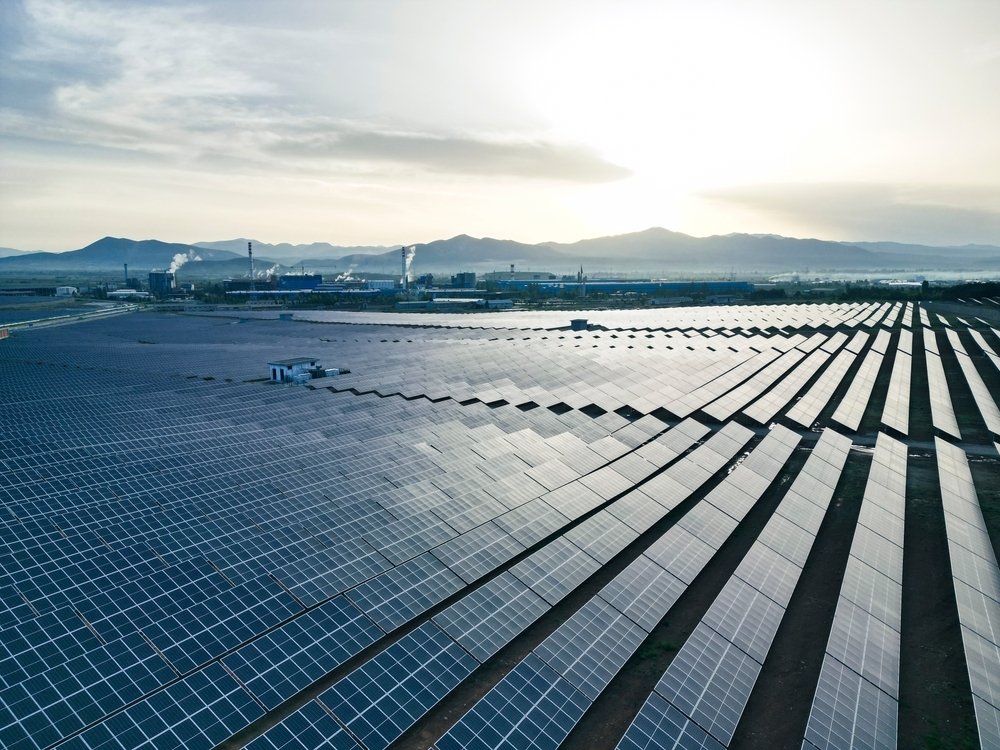
Türkiye has bolstered its resilience against global crises thanks to increased use of renewable resources in the energy sector, infrastructure investments that strengthen supply security, and scenario-based planning, according to the CEO of a major Turkish company operating in the sector on Monday.
Ihsan Erbil Bayçöl, CEO of Enerjisa Üretim, said in an interview with Anadolu Agency that the energy policies Türkiye has developed since the 2000s have demonstrated their effectiveness in the face of global crises in recent years.
Bayçöl also stated that the energy transition process is progressing with proper planning and investments.
Noting that the COVID-19 pandemic, the war between Russia and Ukraine, and developments in the Middle East have tested Türkiye's energy strategies, the executive went on to say that "we have seen the benefits of scenario-based approaches."
"We implemented the right investments in a timely manner," he added.
Bayçöl also expressed the country's ambitious goals in renewable energy and aims for significant increases in wind and solar capacity.
In October 2024, Türkiye unveiled its Renewable Energy Roadmap for 2035, outlining ambitious plans to quadruple its wind and solar capacity by 2035. Accordingly, it aims to lift installed solar and wind capacity to 120,000 megawatts (MW).
Moreover, Bayçöl also noted that the simplification of investment processes has allowed projects to advance more quickly and that stronger growth is expected in the sector in the next five years.
However, he also suggested that the current capacity can be significantly increased.
"Türkiye still has not fully realized its own potential in wind and solar. There is a tremendous opportunity ahead," he noted.
"Because, with the renewable energy investments made worldwide, the costs of implementing such investments have become more economical. We currently have an installed wind power capacity of just over 15,000 megawatts. It is possible to increase this capacity to 40,000 megawatts," he added.
Bayçöl stated that they foresee similar growth in solar energy. "We are talking about a solar capacity exceeding 30,000 megawatts. In this area, it is expected that levels of 60,000, 80,000, or even 100,000 megawatts may be seen," he pointed out.
The top executive of Enerjisa Üretim, Türkiye's largest private-sector power generation company, also said that battery technologies play an important role in the energy transition, adding that advances in this field will increase system efficiency, enable a more effective operational structure daily and annually, and make Türkiye's energy system more resilient against global crises.
Bayçöl explained that, to clarify planning and manage investments more efficiently, they have identified three main priorities in energy infrastructure: energy supply security, efficiency and sustainability, and digitalization.
Emphasizing that one of the most important elements is energy supply security and system robustness, Bayçöl concluded his remarks by saying: "Therefore, in the new tariff period, our first focus will be on this. We will direct our investments to ensure supply security and provide services with a more robust network in all distribution networks for which we are responsible."