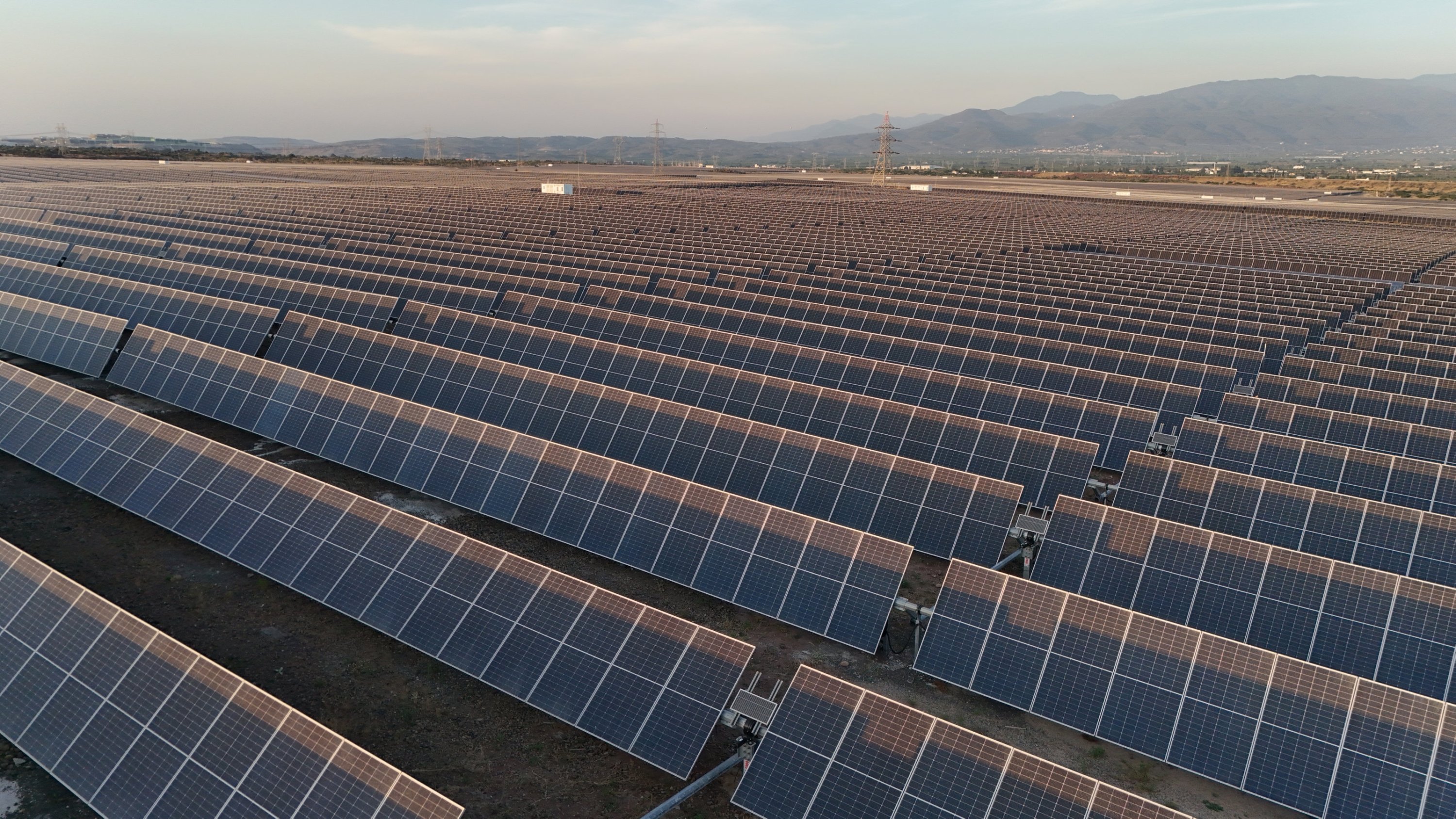
Türkiye could bypass grid bottlenecks and make solar its primary source of power by tapping into 8 gigawatts (GW) of hybrid capacity without new infrastructure, London-based think tank Ember said in a report on Wednesday.
Between February 2024 and April 2025, 65% of grid connection applications at the transmission level in Türkiye were rejected due to grid constraints, Ember said in a statement.
With no new capacity made available for transmission-level connections since September 2024, grid connection constraints have emerged as one of the most significant barriers to solar power growth in Türkiye, it said.
However, this barrier could be overcome by installing solar panels at existing hydroelectric and wind power sites, known as hybrid solar systems, which do not require additional grid infrastructure.
Ember's report estimates Türkiye's available hybrid solar potential at 8 gigawatts – a capacity that could boost the country's installed solar power by 35%. If financing conditions improve, the potential could rise to as much as 25.6 gigawatts, it added.
According to the report, deploying even 8 gigawatts of hybrid potential could raise Türkiye's total installed solar capacity to 30 gigawatts, making solar the country's largest source of installed power.
Nearly 46% of Türkiye's 8 gigawatts of hybrid solar potential is concentrated at hydroelectric dams in high-solar areas, making hybrid systems a strong tool to address drought-related energy challenges, the report noted.
The report also highlights how hybrid solar systems can help overcome meteorological and geographical challenges, including drought.
According to the report, hybrid systems increased output by 14% at 25 wind and hydropower plants in 2024, boosting their average capacity factor by 5 percentage points to 32% and up to 7.3 percentage points during the summer months.
Commenting on the report, an energy analyst at Ember, Çağlar Çeliköz, said that Türkiye's energy transition, currently slowed by grid capacity limits, could gain new momentum if hybrid projects were evaluated independently of new infrastructure.
"Hybrid solar power plants – whose contribution to generation has already been proven – can help use the connection capacity of existing wind and hydropower plants more efficiently, increasing the share of renewables in total power generation," Çeliköz added.
With simple regulatory changes such as removing the requirement for on-site integration of the primary source and lifting capacity limits, Türkiye "could quickly unlock this significant potential," he added.
Elvan Tuğsuz Güven, chairperson of the Turkish Hydroelectric Power Plants Industrialists Association (HESIAD), noted that climate-induced drought has lowered hydropower production in recent years.
Despite these declines, hydropower plants remain the backbone of Türkiye's energy supply, she added.
Hybrid solar is key to addressing drought-related challenges at hydropower plants and resolving capacity allocation issues is vital to maintain generation and ensure supply security, she said.