As Türkiye takes another step toward nuclear power with a new financing agreement with South Korea, the country’s growing nuclear ambitions trace back to a vision shaped by Berat Albayrak during his tenure as energy and natural resources minister, built on the conviction that Türkiye could not afford to remain a mere spectator in one of the world’s most critical technologies.
The memorandum of understanding on nuclear power plant financing, signed between Türkiye Nuclear Energy Inc. and the Korea Electric Power Corporation (KEPCO), was announced during a joint press conference between President Recep Tayyip Erdoğan and South Korean President Lee Jae Myung.
“The memorandum of understanding signed between Türkiye Nuclear Energy Inc. and the Korea Electric Power Corporation constitutes an important foundation for our cooperation,” Erdoğan said.
The deal comes as the importance of nuclear investments becomes increasingly clear for Türkiye, which aims to achieve energy independence, strengthen supply security and emerge as a key player in the global energy landscape.
Behind these historic steps lies the roadmap Albayrak drew up as energy minister, when he set a target of bringing three nuclear power plants online by 2030.
“Nuclear energy will play a very important role in Türkiye’s supply security in terms of both capacity and efficiency,” Albayrak said at the time. “Thanks to nuclear power plants, we will generate uninterrupted electricity 24/7, regardless of climate or seasonal conditions.”
Albayrak, who later served as treasury and finance minister, detailed the critical moves that opened the way for Türkiye’s energy independence in his book “Burası Çok Önemli” (“This Is Very Important”). In a chapter titled “A 65-Year Dream: Nuclear Energy,” he laid out his firm stance on the issue.
He wrote that Türkiye’s nuclear journey, which began under late Prime Minister Adnan Menderes in 1956, had been repeatedly blocked and postponed in the face of strong resistance, even as the rest of the world had been building such projects for 70 years. “If a technology that has been deemed acceptable for everyone for years is considered forbidden for Türkiye, then something is wrong,” he wrote.
Pointing to France, which generates nearly 80% of its electricity from nuclear power, Albayrak argued that Türkiye must have nuclear energy regardless of what various lobbies say. “We cannot reduce our country to a mere spectator in such an important technology through populist rhetoric,” he wrote.
He also challenged those who organized protests over safety concerns, asking why they remained silent about Armenia’s Metsamor plant, located just 16 kilometers (10 miles) from the Turkish border. Built in 1977 with outdated technology, the facility is still operating despite completing its technical lifespan in 2005, posing a serious threat to the region and the world, according to Albayrak.
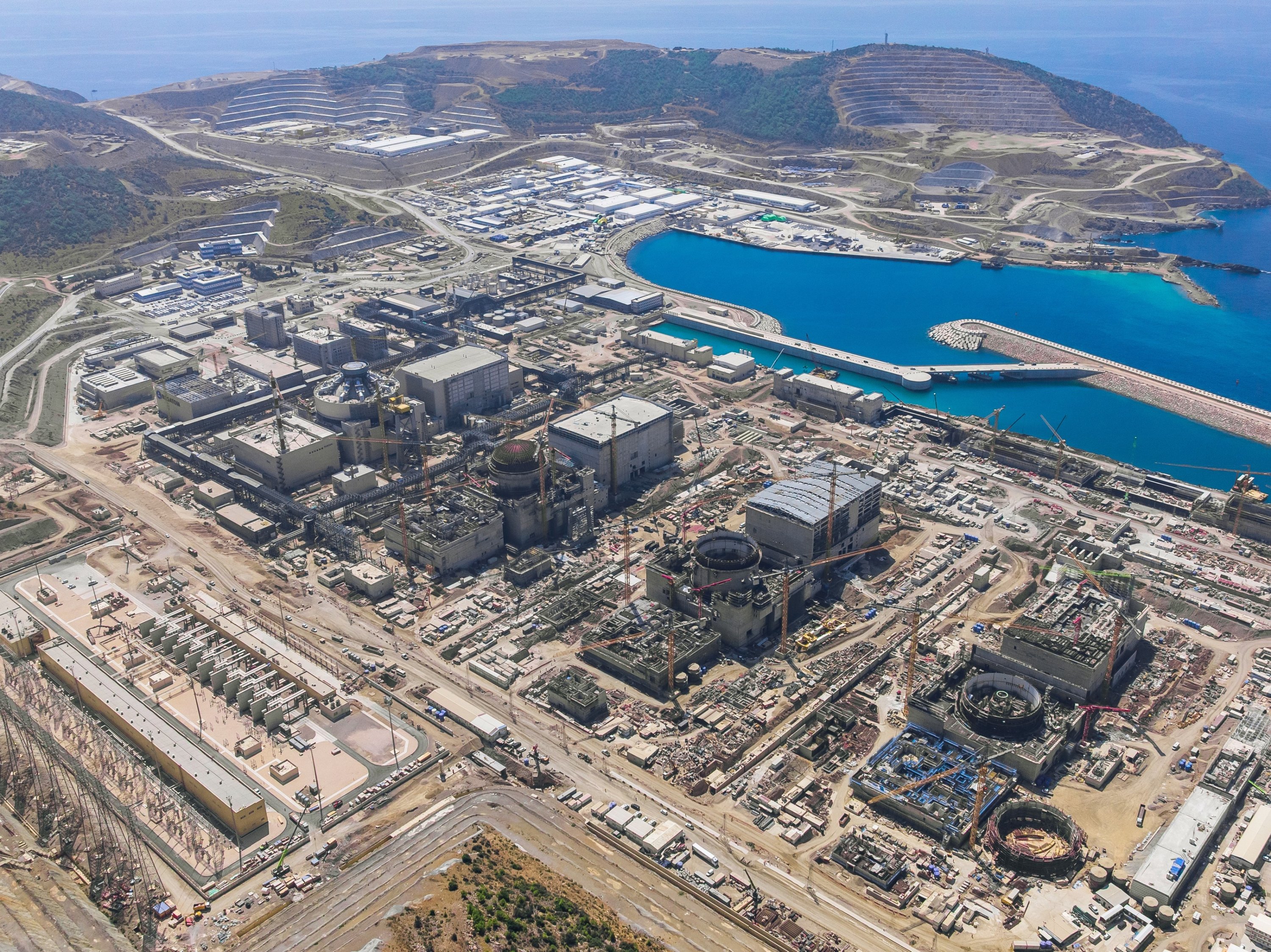
The Akkuyu project first emerged in the 1970s. The site in Mersin province’s Gülnar district was deemed suitable for a nuclear plant in 1974, but the project remained on hold for decades due to numerous obstacles. Türkiye and Russia finally signed an agreement for its construction in 2010.
Albayrak wrote that his ministry accelerated the process by putting the legal and organizational framework in place and swiftly completing approvals and bureaucratic procedures, without making any concessions. The plant received its electricity generation license in June 2017 and its construction permit in October that year, removing barriers that had stood in the way for decades.
In April 2018, the groundbreaking ceremony for Akkuyu’s first power unit was held with the participation of the leaders of Türkiye and Russia. “The 65-year dream has come true,” Albayrak wrote.
With an installed capacity of 4,800 megawatts, the plant is set to generate 35 billion kilowatt-hours of electricity annually, meeting about 10% of Türkiye’s electricity needs on its own. With an investment value of $20 billion, it is set to become the largest project in the history of the Turkish Republic, one Albayrak said would meet the energy needs of both today and future generations.
Akkuyu is among 53 nuclear reactors under construction in 17 countries, while 441 reactors are in operation across 32 countries. Nuclear power accounts for roughly 10% of global electricity supply.
The project recently reached another milestone with the completion of hydrostatic tests on the secondary circuit equipment of the plant’s first power unit, conducted to verify the equipment’s durability.
Energy and Natural Resources Minister Alparslan Bayraktar said electricity from Akkuyu will be used in Türkiye starting in 2027.
Bayraktar also said electrification will be at the heart of the National Energy 2040 Vision, set to be unveiled on Nov. 5.
“We are heading toward a period in which electricity will be used more intensively across all areas of Türkiye’s economy,” he said. “We will announce a very comprehensive plan that sets out how Türkiye will achieve energy independence.”