Türkiye is ramping up oil and gas explorations as it faces demand expected to triple over the next three decades, while accelerating efforts to develop its vast rare earth reserve in western Anatolia, Energy and Natural Resources Minister Alparslan Bayraktar said on Wednesday.
The plan is to drill shale oil wells across four sites in southeastern Diyarbakır province in the coming period, according to Bayraktar, who added that a similar exploration model could be applied for natural gas in the Thrace region.
This March, Türkiye signed agreements with U.S.-based Continental Resources and TransAtlantic Petroleum to develop shale oil in the Diyarbakır Basin and shale gas in the Thrace region. Preliminary assessments by the Energy and Natural Resources Ministry and Continental Resources indicate the basin could hold 6.1 billion barrels of oil.
"In Diyarbakır, 24 wells will be drilled across four fields for shale oil. We are also considering implementing a similar method for gas exploration in Thrace," Bayraktar told the private broadcaster Ülke TV.
The agreement with Continental Resources covers four fields totaling 600 square kilometers (230 square miles) north of Bismil in Diyarbakır.
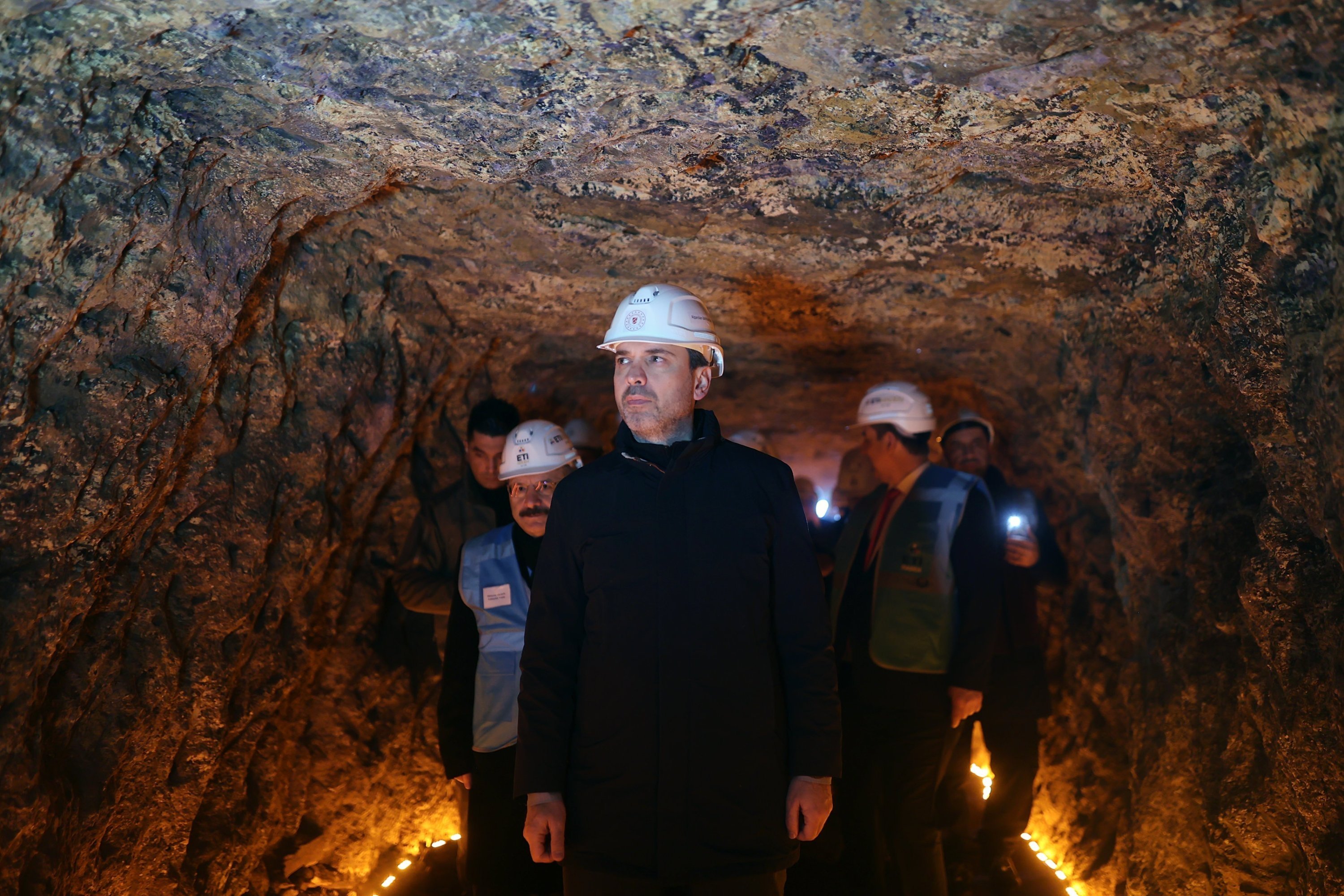
Türkiye is also preparing to lay the foundation next year for an industrial-scale facility to process what Bayraktar described as the world's second-largest rare earth reserve, located in the Beylikova district of central Eskişehir province.
The facility will be brought online within two years, said Bayraktar.
The deposits, including cerium, praseodymium and neodymium, were first discovered years ago by the General Directorate of Mineral Research and Exploration (MTA) during thorium-focused studies. The site was later transferred to state-owned Eti Maden, which has conducted about 125 kilometers of drilling over the past decade.
Following the discovery, a pilot facility was established in 2020 and became operational in 2023. Production is still ongoing at the pilot plant, Bayraktar said.
"We are now moving into the second phase, which involves transforming it into a large-scale industrial facility," he noted.
Bayraktar dismissed recent reports claiming Türkiye sold rare earth elements to the United States, saying the agreement signed with Washington last month was related to nuclear cooperation.
"The agreement we signed with the U.S. was related to nuclear cooperation, not rare earth elements. If we had made such a deal, both sides would have publicly announced it," he noted.
Other recent reports alleged Türkiye and the U.S. were exploring a potential partnership to develop the Beylikova field.
U.S. and European nations have stepped up efforts to curb China's dominance in the production and processing of rare earths. China currently processes more than 90% of global output and has recently tightened export controls.
The latest restrictions prompted U.S. President Donald Trump to propose 100% tariffs on Chinese imports, which are due to take effect on Nov. 1. Trump is set to meet Chinese President Xi Jinping in South Korea on Thursday.
Bayraktar said Türkiye continues rare earth exploration in other provinces, including Isparta, Malatya and Sivas.
The minister also outlined Türkiye’s growing international oil and gas portfolio, citing progress in Libya, Azerbaijan, Kazakhstan and Pakistan.
"In Azerbaijan, we acquired a 30% stake in new fields this year, including the Shafag-Asiman offshore block," Bayraktar said.
The Shafag-Asiman block has long been viewed as a promising site for hydrocarbon exploration. It is 125 kilometers southeast of Baku and at a depth of 650-800 meters. The first exploration well was drilled in 2020.
"We are deeply engaged with Kazakhstan, where we have ongoing operations. In Pakistan, we have become a partner in an offshore field, and we are now preparing for new tenders. We are exploring partnership opportunities in both offshore and onshore fields there," said Bayraktar.
Bayraktar added that Türkiye currently produces about 15,000 barrels of oil per day in Iraq, emphasizing that the goal is to increase this output tenfold through expanded operations in Basra, Kirkuk and northern Iraq.