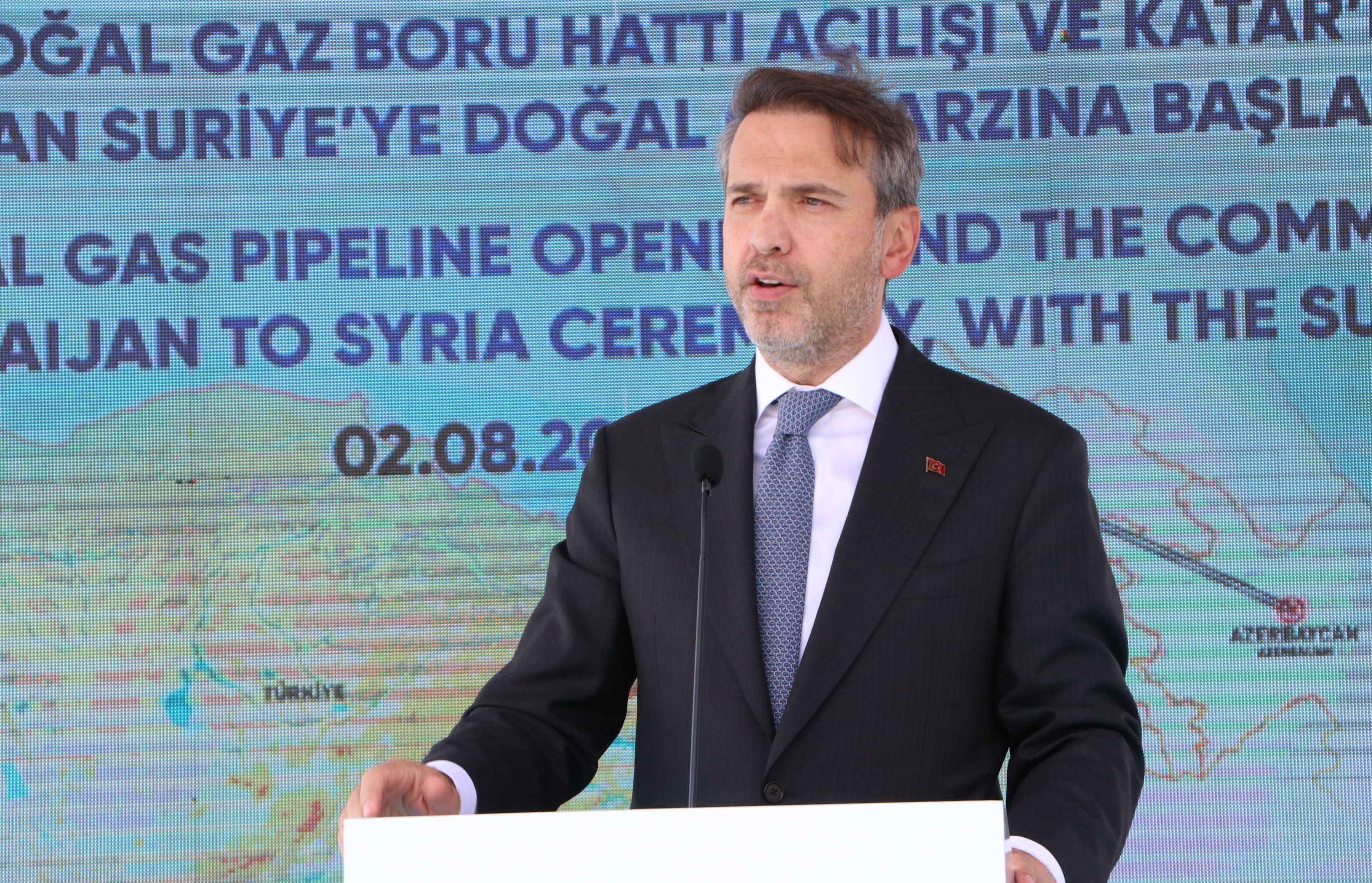
Türkiye could start drilling its first test well in southeastern Diyarbakır province within a few weeks to explore shale oil potential, with plans to drill 24 wells over the next three years, Energy and Natural Resources Minister Alparslan Bayraktar announced on Friday.
In March, Türkiye signed agreements with U.S.-based Continental Resources and TransAtlantic Petroleum to develop shale oil in the Diyarbakır Basin and shale gas in the Thrace region.
Preliminary assessments by the Energy and Natural Resources Ministry and Continental Resources indicate the basin could hold 6.1 billion barrels of oil.
"We are focusing on how much of this resource we can produce and by what methods," Bayraktar told broadcaster A Haber on Friday.
"We may have clearer results by the end of this year and early next year through horizontal drilling. We aim to begin the first vertical drilling in a few weeks."
The agreement with Continental Resources covers four fields totaling 600 square kilometers (230 square miles) north of Bismil in Diyarbakır. Bayraktar said they estimate the Diyarbakır Basin spans around 7,000 square kilometers and announced that they plan to drill 24 wells over three years as part of the horizontal drilling program.
"If we can truly unlock this potential, the region could become a very significant oil production center," the minister noted.
Bayraktar also announced that construction of a second floating production platform for the Sakarya Gas Field in the Black Sea is underway and would be completed in China by the end of 2027.
The platform is expected to be delivered to Türkiye in June 2028, he said.
The Sakarya Gas Field is estimated to contain 710 billion cubic meters (bcm) of gas. The reserve was gradually discovered between 2020 and 2022. It will meet approximately 30% of the nation's annual gas needs once the production reaches total capacity.
In mid-May, Türkiye announced the discovery of a new reserve of 75 bcm in the Black Sea.
Türkiye has completed the first phase with a daily production of 9.5 million cubic meters (mcm) from the Sakarya field, supplying gas to about 4 million households.
It intends to double output from 10 million to 20 million cubic meters per day with the first floating production, storage and offloading (FPSO) platform that it had acquired in 2023 and that is expected to become operational next year.
The second platform will enable production at the Sakarya Gas Field to enter its third phase, with daily output projected to reach 40 million cubic meters, said Bayraktar.
"We're adding a new floating production platform," he said. "Our goal is to deploy it to Sakarya (field) by June 2028."
As it seeks to boost hydrocarbon production and exploration efforts, Türkiye last month announced it had purchased two new seventh-generation deepwater drilling vessels.
The new additions will bring the number of Türkiye's drillships from four to six, which will make the country the fourth in the world in terms of deep-sea energy fleet.
The first of two will arrive in Türkiye in September and be deployed in the Black Sea for Sakarya field drilling and exploration, increasing the number of deepwater drilling ships there to five, the minister noted.
The second vessel may be used in exploration projects abroad, according to Bayraktar, including in countries such as Libya and Somalia, with which Türkiye has exploration agreements.
Türkiye, which imports over 90% of its energy needs, is pushing to cut its import bill and boost supply security by developing domestic resources and expanding international partnerships in oil and gas exploration.