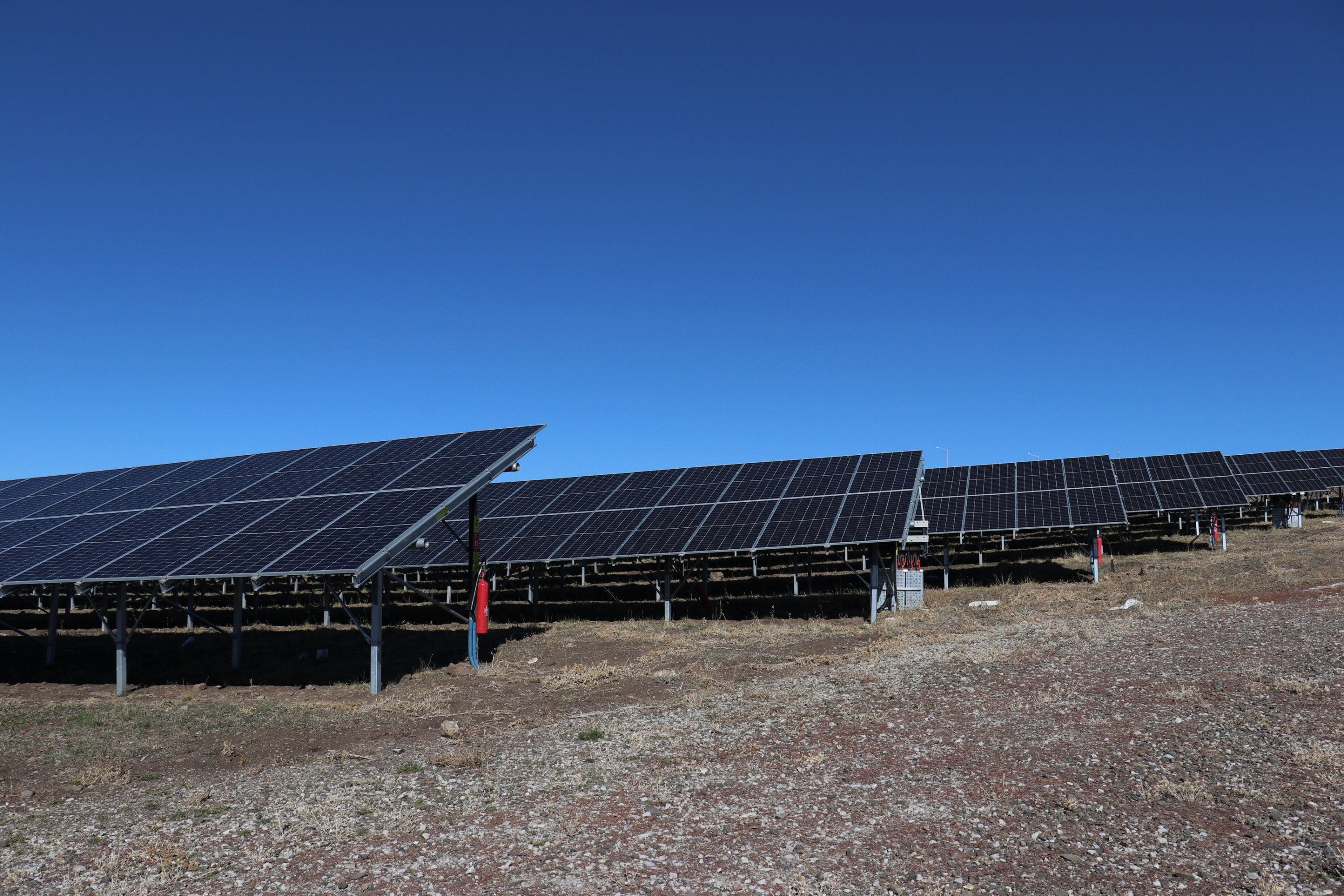
Türkiye has completed solar power plant tenders to allocate 650 megawatts (MW) of capacity, Energy and Natural Resources Minister Alparslan Bayraktar said on Tuesday, highlighting strong participation from the sector.
The competitions under the Renewable Energy Resource Zone (YEKA) auction mechanism are part of Türkiye's push to expand clean energy capacity and accelerate progress toward national renewable targets.
"Across eight different regions, we successfully finalized our YEKA GES-2025 tenders with intense interest from the industry," Bayraktar said in a post on the social media platform X.
According to the minister, 38 companies submitted 77 bids for the tenders. Türkiye had initially announced tenders for 10 solar plants totaling 850 megawatts for 2025, but two were canceled earlier this month.
The tenders on Tuesday resulted in a 3.25 euro-cent per kilowatt-hour floor price and a total contribution fee of 101 million euros, which Bayraktar said will help reduce electricity generation costs while expanding the country's renewable energy portfolio.
Electricity generated from these plants will be able to be sold on the free market for 60 months following the contract signing. Once this period concludes, a 20-year power purchase guarantee will go into effect.
Once the projects are commissioned, they are expected to meet the electricity needs of 500,000 households, reduce annual carbon emissions by 800,000 tons, and cut Türkiye's natural gas imports, supporting the current account balance.
Bayraktar added that the process also includes the commissioning of Türkiye's first floating solar power plant, located on the Demirköprü Dam in the western province of Manisa.
The first round of tenders in January and February awarded 1,200 MW for wind and 800 MW for solar projects.
Türkiye currently boasts 38,000 MW of combined solar and wind capacity and aims to raise this figure to 120,000 MW by 2035.
The Energy and Natural Resources Ministry is also preparing for wind energy tenders. Applications for six new wind power plants are scheduled to be collected on Dec. 2.
Türkiye has limited oil and natural gas resources and suffers from a high current account deficit due to vast energy imports. It has been incentivizing private sector investments in renewable power plants since 2005 to reduce its high import bill and insulate itself from geopolitical risks.
While Türkiye's electricity consumption has tripled in the last two decades, it is expected to increase even faster in the coming years due to the long-term energy transformation.
The YEKA scheme was introduced in 2016 to facilitate land allocation for investors, ease the deployment of large projects and encourage the domestic production of renewable energy technologies.
The government later unveiled updates to the model to draw greater investor interest. Key enhancements included simplifying post-tender permitting procedures and introducing financial incentives like exemptions from transmission fees.