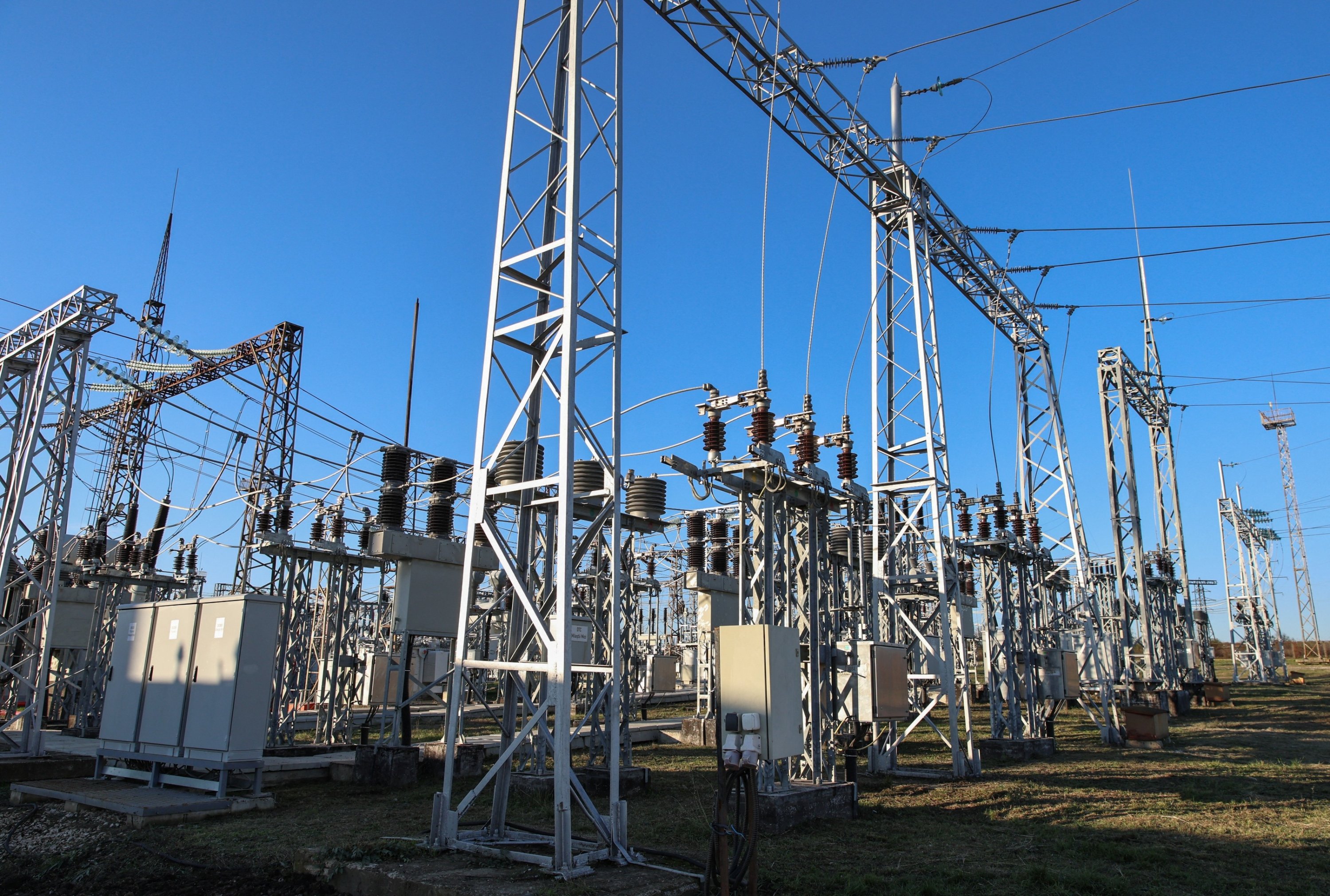
Outdated power grids stand as a major hurdle in the transition to renewable energy, since older systems often can't absorb all the electricity from new, cleaner sources.
This threatens global efforts to curb climate change by reducing fossil fuels and switching to renewable energy such as solar and wind.
At U.N. climate talks kicking off this week, host Türkiye and Australia, which leads negotiations, want more ambitious goals to slash fossil fuels, install renewables and upgrade grids.
Grid concerns are gaining urgency this year as nations race to improve their energy security following the Iran war. The U.N. recently launched a new initiative to rally funding for grid upgrades in Africa and Southeast Asia.
"There needs to be a massive, massive, massive scaling up of investments into grids if we are going to get close to meeting our climate, energy and development goals," Selwin Hart, special adviser to the U.N. secretary-general on climate action, said.
At the U.N. climate talks, hosted in the Turkish resort city of Antalya, organizers describe modern and reliable electric grids as "the backbone of the clean energy system.”
But billions of dollars are needed to upgrade out-of-date grids. These steep costs could hinder further renewable energy installations.
During the U.N. General Assembly in September, the global body launched a Global Grids Accelerator to speed up international funding for electricity infrastructure in Africa and Southeast Asia.
"We’re very confident that the long-term trend is an acceleration of the pace of the energy transition, but we need the infrastructure, grids and storage, to really keep pace," Hart said.
Annual investment in electricity generation, such as building new power plants, has risen by almost 70% since 2015, reaching $1 trillion a year, according to the International Energy Agency (IEA). Yet the agency noted annual grid spending has risen at less than half that pace.
To meet electricity demand through 2030, the IEA calculates annual grid investment must increase by about 50% from today’s $400 billion per year. Any delays will substantially increase global emissions by prolonging reliance on fossil fuels, the IEA warns.
"Power grids have not been readied enough for the scale-up of renewable electricity generation," said Jan Rosenow, a professor of energy and climate policy at Oxford University. "We have been complacent in the past, and now the grid has become a real bottleneck.”
Power grids deliver electricity from power plants to homes through a network of transmission and distribution lines, substations and transformers.
Originally designed around large, centralized power plants, many of today's power grids were built like one-way roads, with producers sending electricity to consumers. These older one-directional grids are being overwhelmed by demand surges and a boom in renewables.
Grids have a maximum capacity of electricity that they can safely store, transport and distribute. If a grid is already at capacity, solar and wind farms can be instructed to limit their electricity output, a process known as curtailment.
China and India, which have installed impressive amounts of renewables, can't take full advantage of the massive buildout for this reason.
China curtailed 360 terawatt-hours (TWh) – close to the equivalent of the United Kingdom's annual electricity demand – of wind and solar electricity in the first half of 2026, according to Global Energy Monitor and the Center for Research on Energy and Clean Air.
India curtailed 11 terawatt-hours of solar generation – enough electricity to power about 10 million homes – over the course of 15 months spanning 2025 and 2026 because of insufficient transmission and storage capacity, according to the energy think tank Ember.
Curtailing solar and wind generation while fossil fuels continue to supply electricity is a blow to climate efforts, especially since China and India are among the world's largest emitters, said James Abraham, with the New Delhi-based Council on Energy, Environment and Water.
To transition away from fossil fuels, he said, "you need a grid changeover. You need a grid transformation."
Upgrading existing grids to be more flexible could increase efficiency by allowing electricity flows to adjust to supply and demand. It could help areas with excess solar and wind energy send it to places with higher electricity demand and fewer energy resources.
Newer, more flexible grids could also make it easier for utility companies to exchange electricity with households that have solar panels or battery storage.
But many countries can't afford to take these steps, or at least not quickly enough, according to Abraham, who said, "The need is now. It’s a time tension rather than anything else."
The Iran war's energy shock built up momentum for the energy transition, especially in hard-hit regions like Southeast Asia, but investment in renewables is outpacing grid development, said Gahee Han, with the Seoul-based nonprofit Solutions for Our Climate.
"Unless we upgrade our power grid in Asia, Asia will have no choice but to rely on conventional power plants, like gas or coal,” she said. "It’s nonsense to rely on those power plants, especially considering the energy crisis.”
One of the solutions being promoted by the Association of Southeast Asian Nations (ASEAN) is an interconnected power grid that would allow countries to trade power more easily, adding a safeguard against future shocks.
Interest in the ambitious plan, which is still in its infancy, is growing, according to Abdul Razib Dawood, executive director of the ASEAN Center for Energy.
"We have this crisis that will unify the region. You need your neighbors," he said. "This is an opportunity for us to really strengthen the cooperation."