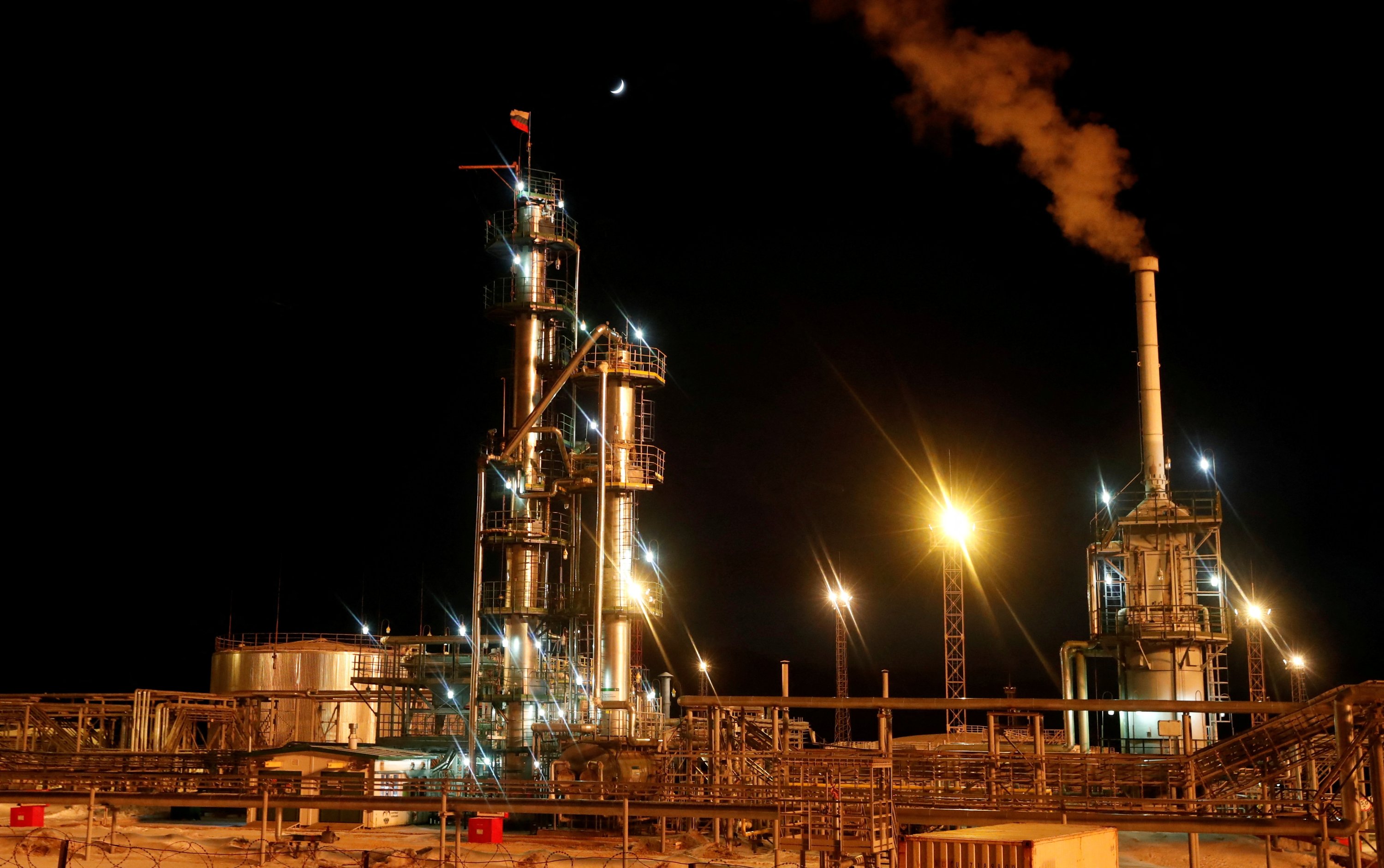
As the war in Ukraine highlights the perils of relying on Russian fossil fuels, France has been fast-tracking efforts to wean households off oil-fired heating, insulate their homes better and swap petrol and diesel cars for electric ones.
Climate policy discussions in recent years have focused on phasing out coal – the most carbon-polluting fuel – but the Ukraine crisis is pushing some governments to confront their ongoing addiction to oil and natural gas, too.
"Whatever the obstacles before us, the transition to a world without fossil fuels is more than ever the safest and most effective way to guarantee our future and our energy sovereignty," French ecological transition minister, Barbara Pompili, told reporters last week.
With energy shipments disrupted and prices skyrocketing, the war has made switching away from oil and gas even more urgent, Pompili said at the launch of a 10-point plan to cut oil use from the International Energy Agency (IEA).
France aims to end the use of oil to heat buildings by 2030, boosting subsidies to make choosing heat pumps or biomass boilers a more affordable choice for lower-income families.
But as countries hurry to shore up their energy supplies in uncertain times, U.N. Secretary-General Antonio Guterres warned that some might be tempted to "neglect or knee-cap policies to cut fossil fuel use."
That would be "madness," he said on Monday, adding that short-term measures could create long-term fossil fuel dependency and shut the small window for limiting global warming to 1.5 degrees Celsius (2.7 degrees Fahrenheit), the most ambitious international goal.
Guterres wants wealthy governments to put an end to coal production and use by 2030, with less-developed countries following suit by 2040.
But global deadlines for phasing out oil and gas have yet to receive much attention, in the interests of richer nations that want to keep powering their economies with those fuels, climate scientist Kevin Anderson told the Thomson Reuters Foundation.
A new report co-authored by Anderson, energy and climate change professor at Britain's University of Manchester, says there is no room for any nation to boost oil and gas output if the world is to have a 50% chance of staying below 1.5 degrees Celsius of warming.
The effort required to cut production must be shared fairly, the report says, with poorer countries given longer to replace the income they receive from oil and gas, in line with its greater importance to their economies.
The report, released on Tuesday, calculates that rich countries – including the United States, Britain, Norway, Canada, Australia and the United Arab Emirates (UAE) – must end oil and gas production by 2034 and cut it by about three-quarters by 2030, to stay on track for the 1.5 degrees Celsius target.
Those least able to make a so-called "just transition" away from fossil fuels, such as Iraq, Libya, Angola and South Sudan, should be given until 2050 to end output, as doing so abruptly could threaten their political and economic stability.
The research was completed before Russia invaded Ukraine on Feb. 24, but soaring oil and gas prices linked to the war strengthen the case for ditching the fuels, Anderson said.
"Had we spent the last 20 years establishing an efficient and sensible use of energy alongside a massive roll-out of renewables, we would not now be scrabbling around for alternative oil and gas supplies and facing the impacts of volatile prices," he said in a statement.
Reducing demand for oil and gas should be central to policy efforts, according to climate and energy analysts.
Besides making homes more energy-efficient and boosting the market for electric vehicles, that could involve lowering speed limits, reducing private car use or simply turning down heating thermostats by 1 degree Celsius.
In the meantime, higher costs mean more consumers are being pushed into energy poverty, which will require governments to offer financial support to ease the pain, said researchers with the U.S.-based World Resources Institute, a research nonprofit.
The European Union is now paying the price for dependence on overseas fossil fuels, said the institute's regional director for Europe, Stientje van Veldhoven.
Russia accounts for about 45% of EU gas imports, a quarter of incoming oil shipments and 45% of coal purchases.
EU foreign ministers disagreed on Monday on whether and how to put sanctions on Russia's energy sector, with Germany saying the bloc was too dependent on Russian oil to decide an embargo.
The best solution is to boost investment in renewable energy sources such as solar and wind, said van Veldhoven, with the current crisis likely to mobilize more money for new projects.
"In the short-term, we need to solve Europe's problems for the next winter – and it's uncertain how that will play out. It might also depend on how much energy savings Europe is actually able to realize," she told reporters.
As countries consider winding down oil and gas production, wealthy governments will need to boost funding for poorer nations to leapfrog high-carbon economic growth and adopt clean technologies, said Anderson.
The world's richest people should also sacrifice luxury habits such as frequent flying and lavish consumer spending, enabling a fairer distribution of limited energy resources and freeing up the labor needed to build green economies, he added.
Retrofitting homes to use less and cleaner power, constructing renewable energy infrastructure and expanding public transport systems would all provide decent employment opportunities, he noted.
"That's a fantastic jobs agenda for two or three generations to do all of that and improve air quality as well," said Anderson.
"It's win-win-win for the majority."