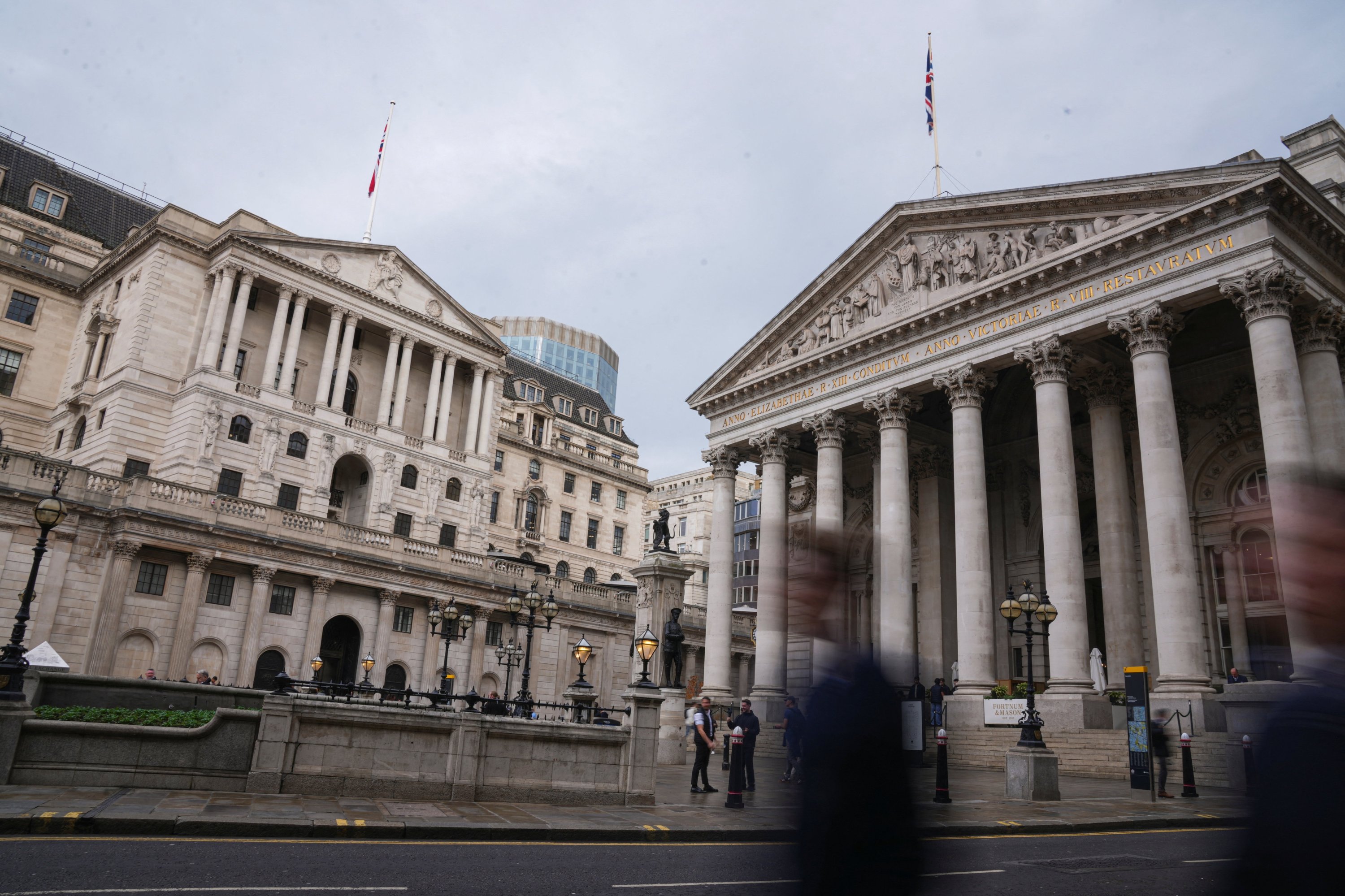
The Bank of England (BoE) kept its key interest rate at 4.0% on Thursday, opting against a cut in a divided vote which came ahead of the government's annual budget later this month, which seems all set to include tax hikes.
"We still think rates are on a gradual path downwards, but we need to be sure that inflation is on track to return to our 2% target before we cut them again," BoE Governor Andrew Bailey said in a statement following the decision.
In a close vote, policymakers, including Bailey, voted 5-4 to maintain the rate. Four members of the Monetary Policy Committee (MPC) called for a cut to 3.75%.
While U.K. annual inflation sits at 3.8%, the country's economic growth has stagnated.
A cut to interest rates would likely have eased pressure on Prime Minister Keir Starmer's Labour government after Treasury chief Rachel Reeves on Tuesday paved the way for controversial tax hikes in her Nov. 26 budget.
The chancellor of the exchequer warned of "necessary choices" as Britain struggles with high debt and inflation.
"As I take my decisions on both tax and spend, I will do what is necessary to protect families from high inflation and interest rates," Reeves said in a speech.
Britain's retail banks tend to pass on BoE rate cuts to their customers, easing the cost of mortgages and business loans.
The BoE last cut in August amid concerns over the impact of U.S. tariffs on the U.K. economy.
It was the bank's fifth reduction since the BoE began a trimming cycle in August 2024, one month after Labour won a general election.