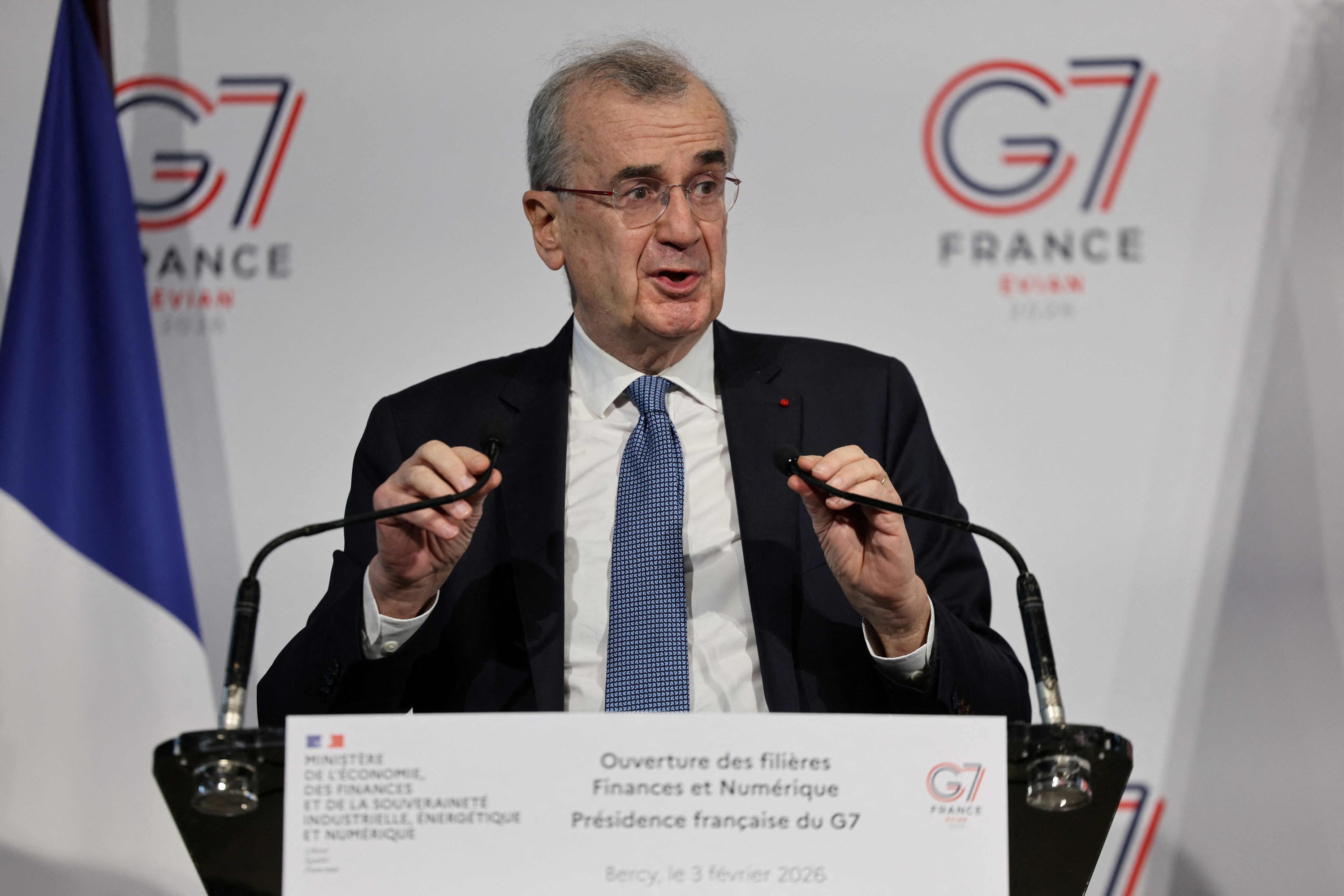
Bank of France Governor Francois Villeroy de Galhau announced he will step down in June, more than a year before the end of his term, allowing President Emmanuel Macron to name his replacement before a 2027 presidential election that the far-right party might win.
Villeroy, 66, has been a consistent voice for lower interest rates in the European Central Bank's (ECB) governing council, although analysts expect for his successor to adopt a similar stance.
Villeroy announced his departure in a letter to the central bank's staff, saying he was leaving to lead a Catholic foundation supporting vulnerable youth and families. He had been due to stand down in October 2027.
A source familiar with the matter said the timing of his departure was deliberate, aimed at ensuring continuity at the central bank and heading off any market jitters that could arise if a successor had to be chosen under a far-right presidency.
Polls show either eurosceptic far-right leader Marine Le Pen or her protege Jordan Bardella could win the next presidential election in spring 2027.
"I made this important decision naturally and independently," Villeroy told central bank staff. "The time between now and the beginning of June is sufficient to organize my succession in peace."
And he told Les Echos that nobody had told him to do anything. "If I had been asked, I would have refused. It’s a strictly personal decision."
Macron's office did not immediately reply to a request for comment.
Villeroy's successor would have a six-year term, renewable once, and must be approved by the finance commissions of the National Assembly and Senate.
Their term of office may be terminated early only if they become incapable of performing their duties or are guilty of serious misconduct, according to French law.
Lawmaker Jean-Philippe Tanguy from the far-right Rassemblement National (RN) told Reuters the move was aimed at putting in place anti-RN allies in case there is a change of power and said it was "another step towards illiberalism under Macron's regime."
With Villeroy's departure, the ECB will lose one of its most outspoken policy doves. Villeroy has been consistently warning for months about the downside risks to inflation, most recently due to the euro's strength.
"The victory over inflation has been won, and even though international uncertainties remain high, of course, monetary policy is in a good position with the ECB," he told staff.
French Finance Minister Roland Lescure said Villeroy's actions "have always been guided by rigour, independence and concern for the public interest."
Governors of the Bank of France usually have previously spent time at the Treasury, which deals with many of the most sensitive issues within the French Finance Ministry.
Two sources said that its current director, Bertrand Dumont, or past head Emmanuel Moulin, would be good candidates, as well as Bank of France deputy governor Agnes Benassy-Quere or former ECB policymaker Benoit Coeure, both of whom have had positions in the Treasury.
Former OECD Chief Economist Laurence Boone, currently at Spanish bank Santander, is also seen as a possible candidate to replace Villeroy, both sources said.
While Coeure tended to support an accommodative monetary policy when he was at the ECB, little is known about where the other possible contenders stand.
However, French policymakers tend to lean dovish, a stance that could prove useful as France grapples with a growing public debt burden.