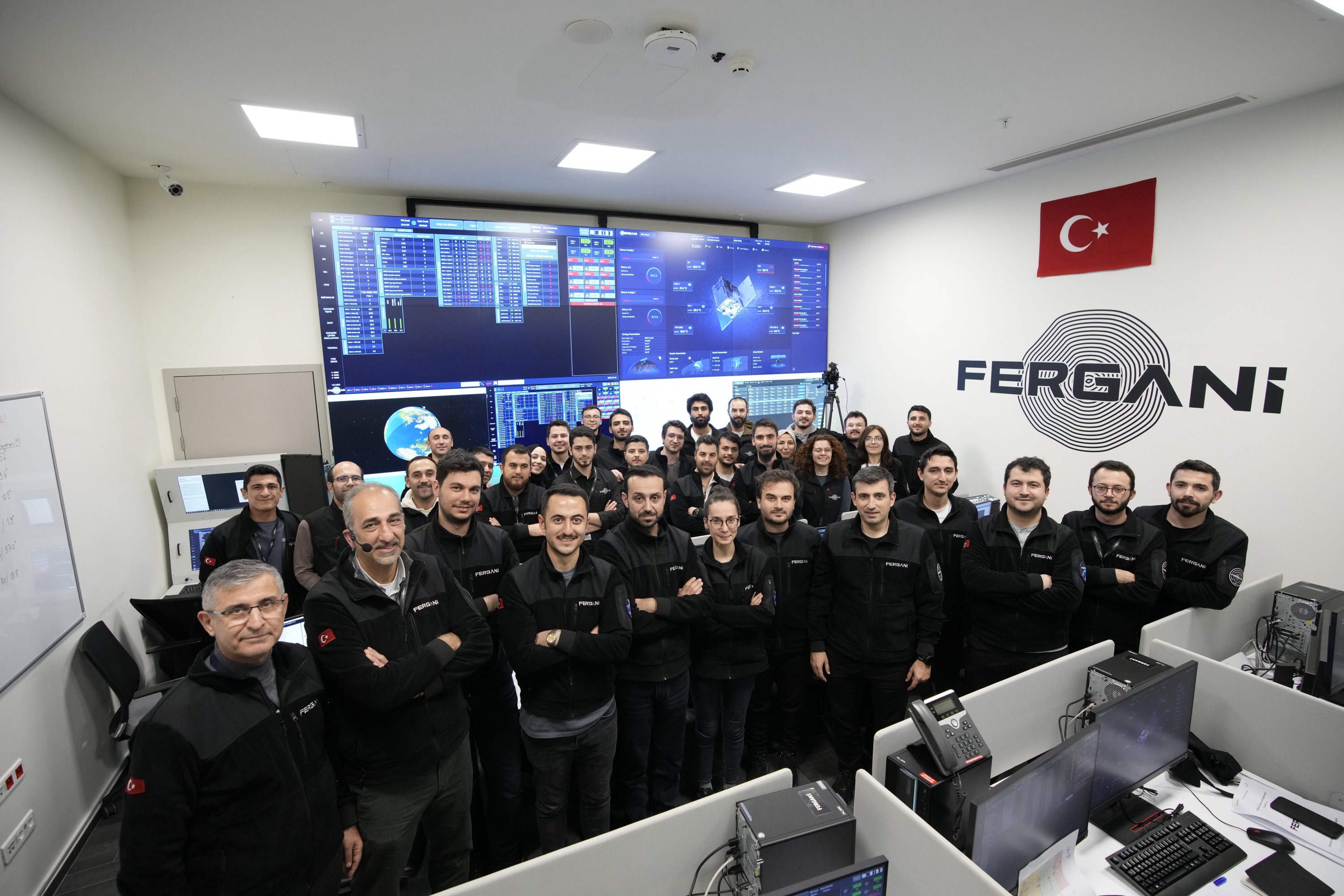
Turkish space firm Fergani Space, established by Baykar's chair Selçuk Bayraktar, launched its first satellite into space, the firm announced late on Tuesday on social media platform X.
The Turkish Space Agency (TUA) also confirmed that SpaceX's Falcon 9 rocket launched the "FGN-100-d1" satellite into space, ushering in a new era in the Small Geostationary Satellite (SGEO) category.
"The satellite, which will offer global coverage in the field of communication and geo-positioning, will pioneer the technologies of the future," the agency said on X.
The Transporter-12 mission, launched from Vandenberg Space Force Base in the U.S., carried 131 payloads, including cube satellites, microsatellites, orbital transfer vehicles and Fergani's FGN-100-d1.
Established in 2022, Fergani Space is a technology company operating in the space sector with commercial satellites, satellite components, payloads and orbit transfer vehicles (OTVs) powered by original propulsion technology.
"FGN-100-d1, the largest satellite ever built by a private Turkish company, was developed indigenously by Fergani Space and successfully launched into space, where it has now entered its designated orbit," the company said separately in a statement shared on Wednesday.

It further said that the satellite was launched into space at 10:09 p.m. GMT on Jan. 14 from the Vandenberg Space Force Base in the United States. "This successful launch marks a significant first step for Fergani Space in completing its Positioning Satellite Constellation Project," it added.
Approximately 62 minutes after launch, Türkiye’s indigenous satellite system separated from the launch vehicle and successfully entered its designated orbit, the company noted.
Fergani Space CEO Bayraktar, the chairperson and CTO of Turkish drone pioneer Baykar, shared details about the launch in a video on X.
Calling it a "first step into space," he said they closely monitored the FGN-100-d1 satellite, "developed by Fergani Space team with their own resources, as it advanced toward the first milestone of our space mission."
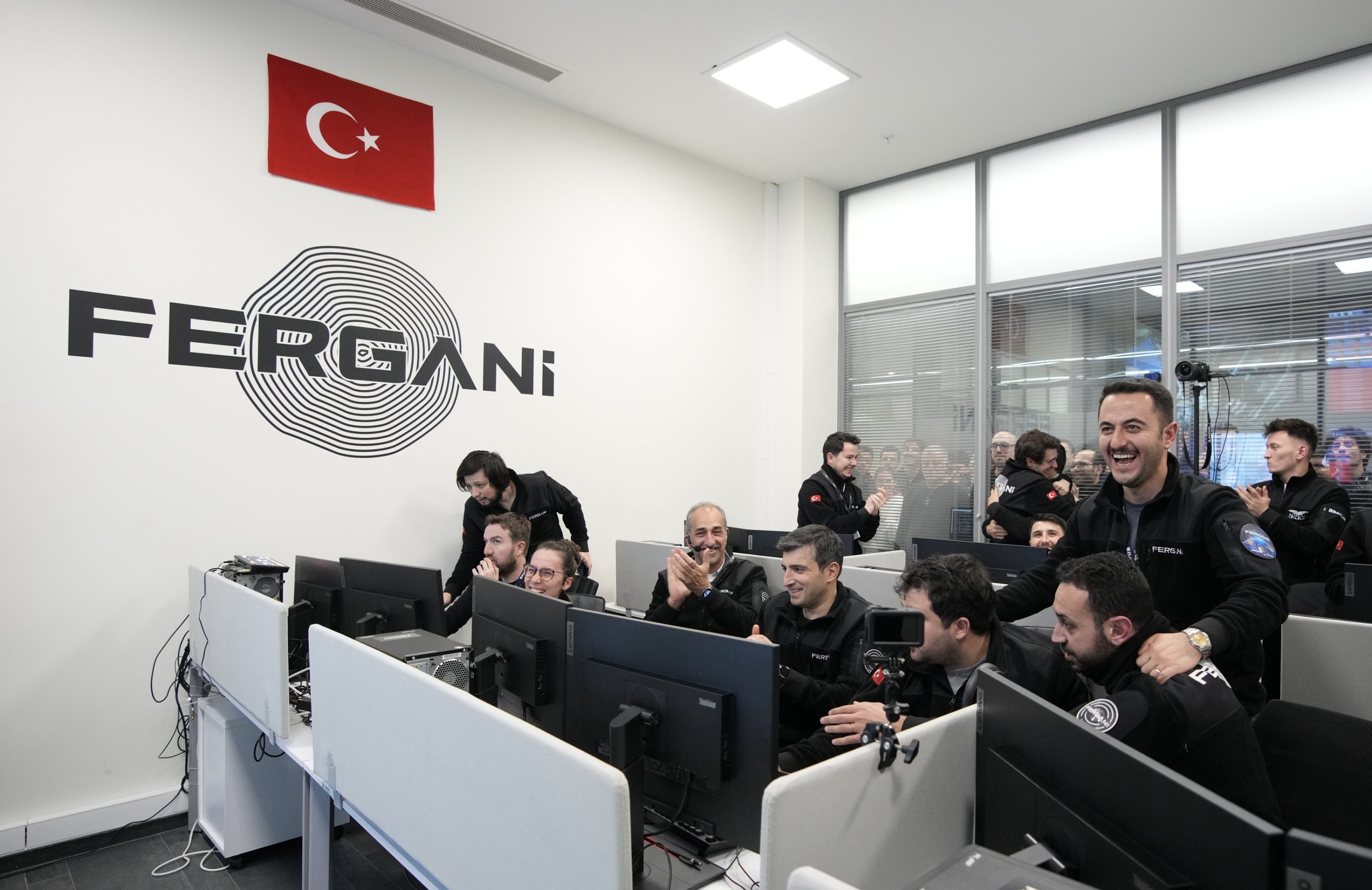
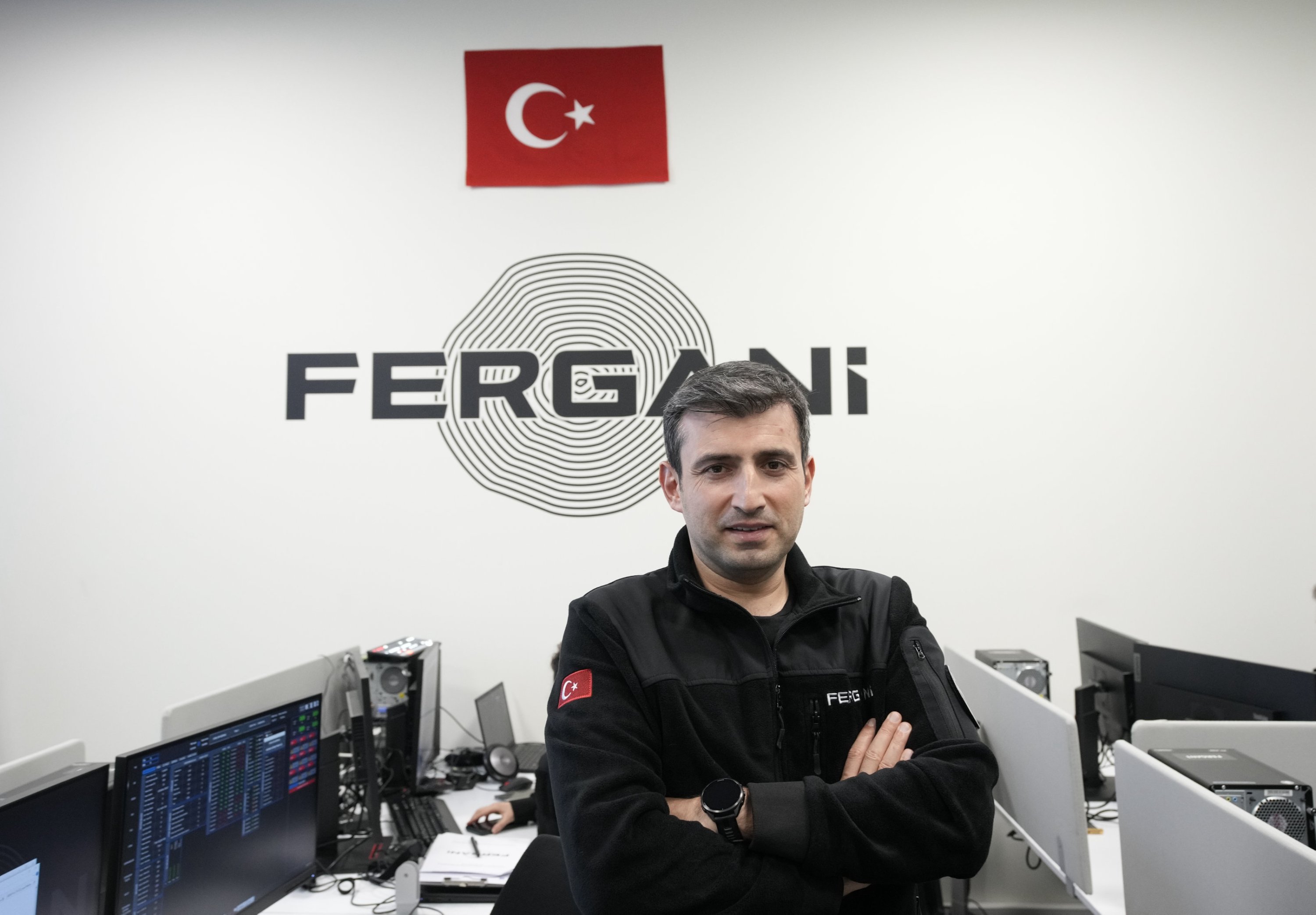
"I wholeheartedly congratulate the Fergani family for their pivotal role in this historic achievement. May it bring great success to our homeland and nation," he added.
The launch of a 102-kilogram satellite marked a milestone for the firm, with Bayraktar announcing plans to launch as many as 100 satellites "to develop the Uluğ Bey global positioning system."
"The Fergani Space venture, which we launched in 2022, continues to grow as a large family with 106 members. Today, we have placed our first satellite into orbit. Our satellites will serve as a low-orbit constellation for positioning and communication purposes. We carried out this project with our own resources. At this moment, our satellite has reached an altitude of 500 kilometers (310 miles) and completed its initial maneuvers," he said.
“Within the next five years, we will launch 100 satellites to develop the Uluğ Bey global positioning system with our own resources, and we aim to share it with all friendly and brotherly nations," he added.
The firing test of the Fergani satellite's hydrogen peroxide space engine was successfully carried out in May last year.
At the same time, the satellites of Plan-S, another Turkish space firm, were also launched by the same mission.
The space agency said Plan-S continues to develop global solutions in IoT and 6G NTN communication technologies with its new commercial satellites. To date, the company has successfully launched nine satellites into space and continues to expand its IoT satellite network target, the agency added.
Industry and Technology Minister Mehmet Fatih Kacır congratulated both companies in a post shared on X.
"I congratulate our Turkish initiatives, Fergani Space and Plan-S, who launched the satellites they developed into space today. Fergani's first satellite FGN-100-d1 and Plan- S's 4 Connecta IoT satellites (Connecta IOT-5, 6, 7 and 8) are launching into space today with the SpaceX Transporter-12 mission," Kacır wrote on X.
"Our space ecosystem will grow stronger every day in line with our National Space Program goals!" he added.