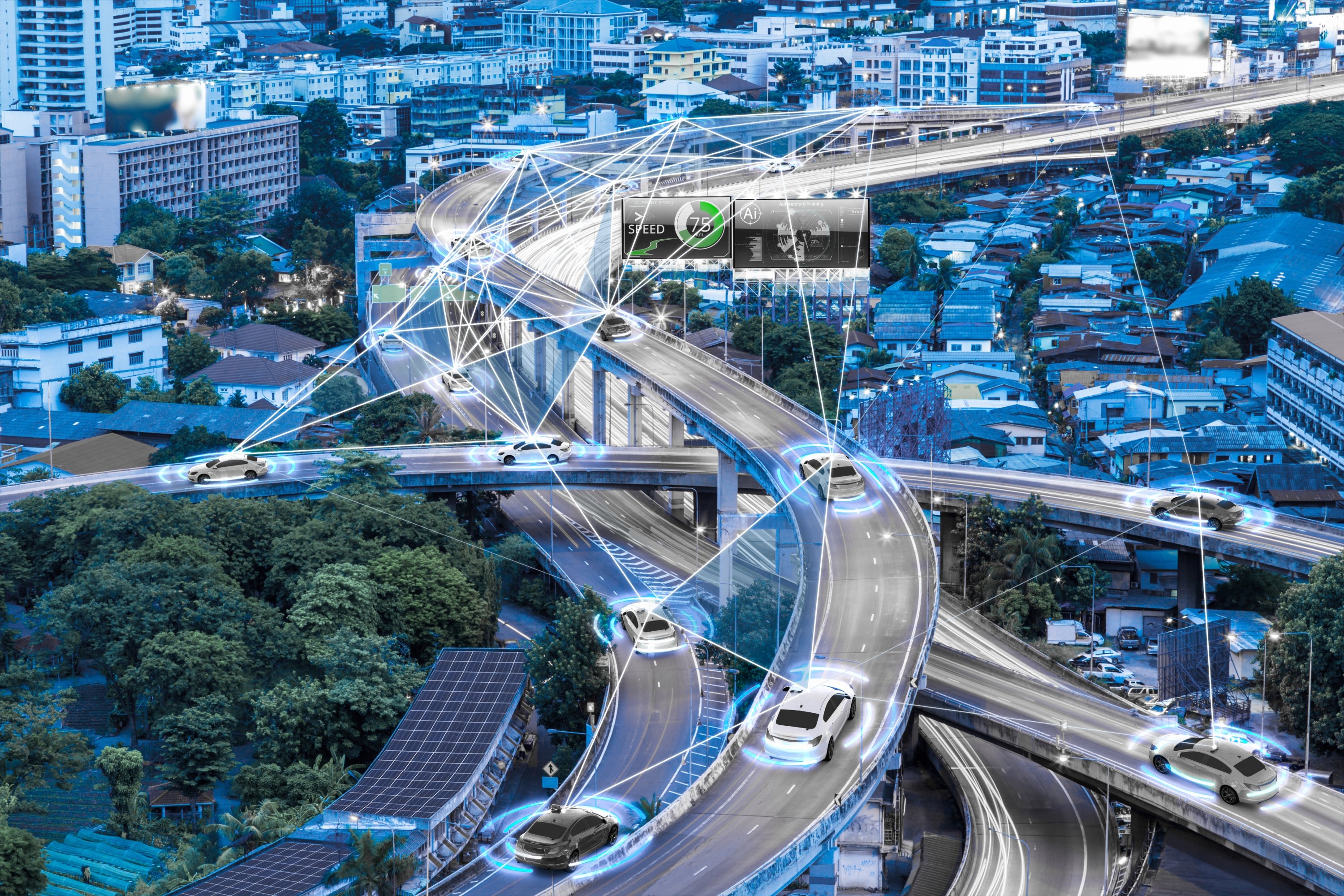
Everyone knows that autonomous vehicles and robots will eventually become part of our daily lives. What is far less understood, however, is how this transformation will unfold through communication and intelligent network technologies.
To explore this, we spoke with Bülent Kaytaz, a globally recognized technology leader with more than 35 years of research and development (R&D) experience and patents in telecommunications and intelligent network technologies.
Throughout his career, Kaytaz has played pioneering roles in fixed-network virtualization, cloudification, network orchestration and artificial intelligence-driven transformation projects.
A member of the GSMA CEO & CTO board, he currently serves as founder and executive of Teasol Technology, one of the emerging ventures specializing in next-generation network technologies.
Our discussion with Bülent Kaytaz revolved around what he describes as the United States' strategic response to China, centered on open source, hardware independence, cloud technologies and AI inference capabilities.
This strategy is explained through the Open Network Foundation (ONF) initiative, developed as a counter to China's (and Chinese companies') cost advantage and market dominance in telecom hardware manufacturing.
To make this transformation easier to grasp, we used AI to structure Kaytaz's insights into a three-act narrative.
Before 3G and earlier generations, U.S. and European telecom giants such as Motorola, Ericsson, Nortel, Alcatel and Nokia ruled vast network empires.
As Kaytaz explains, these empires were built on expensive, closed-box hardware systems, kingdoms that eventually fell into the hands of Chinese manufacturers. Recognizing that this shift was inevitable, the United States fueled a rebellion based on "Open Source" and "White Box" technologies.
Hardware, in this new paradigm, became merely a carrier. The soul, software, was separated from the body and ascended into the cloud. Base stations turned into "dumb antennas," while intelligence remained centralized. Seeing where this transformation was headed, U.S. technology leaders focused on cloud computing, open-source software and ecosystem building.
Kaytaz describes today's data traffic as fundamentally chaotic:
"Stadiums fill up instantly. Autonomous vehicles cannot tolerate even millisecond-level latency. Satellites such as Starlink are simply too far away to manage delay effectively.
This is where the "invisible brain," the Radio Access Network (RAN) Exchange, comes into play. This brain operates like a stockbroker. It aggregates idle capacity, predicts where and when MVNOs and private networks, used by autonomous factories, drone fleets, or autonomous vehicles, will need bandwidth before events occur, and sells that capacity by "slicing" it accordingly.
"As a result, existing telecom capacity is used far more efficiently by operators. Through cloud-based scenarios, network capacity is dynamically monetized rather than left idle."
At this point, the startup ecosystems forming around operators in each country appear set to significantly improve revenue generation from 5G and beyond.
Once the network is in place, the spotlight shifts away from "general-purpose" robots toward "subject matter expert" machines. One robot pulls cables, another repairs servers, while another fixes boilers. But these robots do not operate alone.
Through "distributed intelligence," a repair technique learned by a robot in Istanbul can be transmitted within seconds to a robot in New York. Robots no longer merely analyze; they act through "inference." In short, according to Kaytaz, the future does not belong to robots that do everything poorly, but to robots certified as experts in their specific fields, sharing their expertise through the cloud.
Now imagine robots laying cables across both sides of the Bosporus under this scenario. Future robots will not be general-purpose machines but entities specialized in specific domains. As Kaytaz explains:
"Robots will emerge that specialize in laying cables across the Bosphorus, repairing servers, replacing circuit boards, or mastering construction and agriculture. Through Distributed Intelligence, robots will share their knowledge and experience via the cloud, creating a collective intelligence. Skills learned by one robot will become transferable to others."
One of the most critical technological insights from our conversation with Kaytaz is the evolution of AI compute power from pure analysis to "inference."
Kaytaz highlights the growing importance of Graphics Processing Units (GPUs) and next-generation Intelligence Processing Units (IPUs). He defines inference as the ability to arrive at conclusions, not just process data.
Technologies such as Groq, he notes, are designed not merely to process ingredients (preparation or cooking), but to turn them into a finished, meaningful dish; this is inference. This capability prevents AI from becoming a mere data generator and enables it to produce efficient, actionable outcomes.
In summary, according to Kaytaz's vision, the future will be built on hardware-independent, cloud-based networks that manage capacity in real time using AI, connected to expert robots operating through a shared cloud intelligence.
The success of the U.S. strategy against China depends on the success of this cloud-driven, software-centric transformation.
Capacity exchange:
Idle capacity is allocated to those in need, such as MVNOs and private network operators, at the optimal time and price, using an exchange-like model.
AI-driven forecasting:
AI analyzes demand spikes, such as increased data usage during a stadium match or user mobility patterns, enabling operators to plan capacity in advance.
Access cloud:
For autonomous vehicles, drones, and robots requiring ultralow latency, satellite internet (e.g., Starlink) is insufficient. This makes Access Cloud architectures and base-station-level slicing technologies essential.
One of Türkiye's leading telecommunications and technology companies, Türk Telekom is leaving behind a year marked by strong infrastructure investments, pioneering 5G initiatives and a vision centered on technology production.
Now, the company is decisively pursuing strategic steps to make 2026 the year of transformation in communications through 5G.
Assuming a leadership role in digital transformation with a strong sense of national responsibility, Türk Telekom continues to connect every corner of Türkiye with next-generation infrastructure while developing domestic and nationally produced products and projects.
Sharing his assessments related to the new year, Türk Telekom CEO Ebubekir Şahin stated that the company completed 2025 with robust infrastructure investments and will move forward in 2026 with the vision of making 5G the driver of a communications transformation.
"As Türk Telekom, drawing strength from our deep-rooted history, we continue to shape Türkiye's digital transformation while serving as a locomotive of national development with the goal of a Türkiye that produces and exports technology," Şahin said.
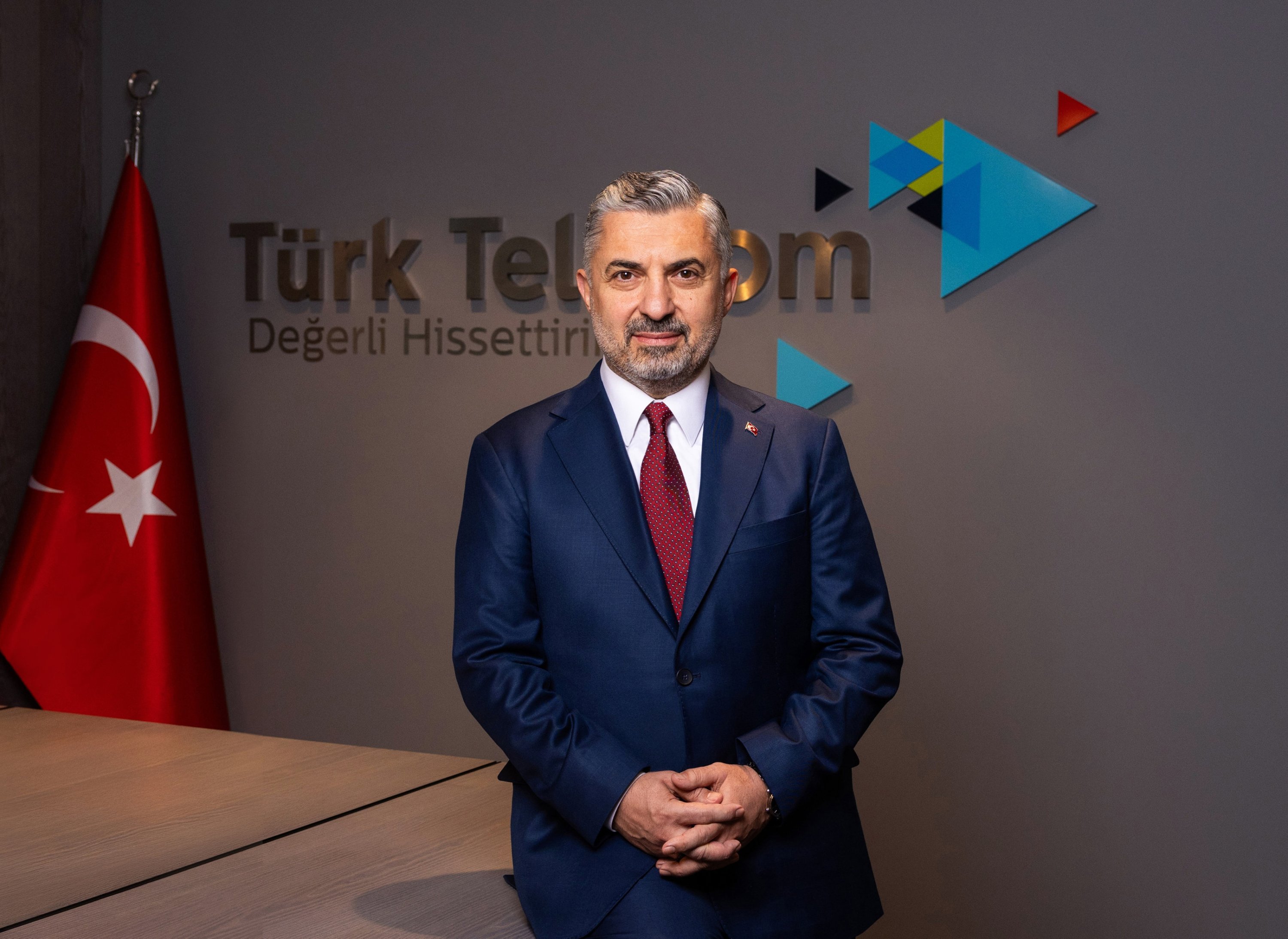
"While 2025 marked a year in which critical thresholds were crossed for our country's digital future, we took a strategic step in August by extending our fixed-line services concession, set to expire in February 2026, through to 2050."
Şahin stated that Türk Telekom aims to expand fiber access to 37 million households by 2030, increase the number of fiber subscribers to 17 million, and boost connection speeds sevenfold.
"In addition to the $20 billion in direct contributions we will provide to the Turkish economy over the course of the concession period, the multiplier effect of these investments across all technology-based industries will be felt on a much larger scale," he said.
Since 2005, the company's investments in Türkiye's digitalization journey have exceeded $22 billion, according to Şahin.
"Today, our end-to-end fiber infrastructure spanning all 81 provinces has reached 535,000 kilometers (around 332,430 miles) and covers 34.3 million households (FFTH/B and FTTH/C). By increasing the share of fiber-connected base stations to 58%, we have already surpassed global targets set for 2030," he noted.
"Our strong infrastructure and fiber-connected stations form the digital backbone of Türkiye's transition to 5G."
Şahin emphasized that 5G does not only mean faster internet but a strategic transformation that will enhance efficiency across production, health care, education, and all aspects of daily life.
"While maintaining our leadership position in the Mobile Number Portability market, we strengthened our position as the operator with the highest capacity per subscriber by securing the frequencies we targeted in the 5G spectrum auction," he said.
"With the comprehensive spectrum we acquired, we will deliver an additional contribution of over $1 billion to the national economy. Leveraging this strong position and our fiber-connected base station ratio, critical for 5G, we aim to offer the most comprehensive mobile experience across Türkiye starting in April 2026."
Şahin added that Türk Telekom is working to position Türkiye among the leading countries in 5G through its domestic technologies and research and development (R&D) capabilities.
"Through years of field tests and pilot deployments, and guided by our vision of producing domestic and national technologies, we have developed solutions aimed at reducing external dependence within the 5G ecosystem," he said.
The company's subsidiaries Argela and Netsia hold more than 70 international patents through the innovative solutions they have developed, according to Şahin.
"By bringing new technologies to the global market, we generate added value for the national economy. With advanced technologies such as SEBA and RIC developed by our Silicon Valley-based company Netsia, we are contributing to Türkiye's vision of producing and exporting technology," he added.
Türk Telekom, Şahin says, will continue on its path in 2026 by expanding fiber investments, accelerating the integration of 5G into daily life, and advancing the goal of transforming Türkiye into a digital powerhouse that produces and exports its own technologies.