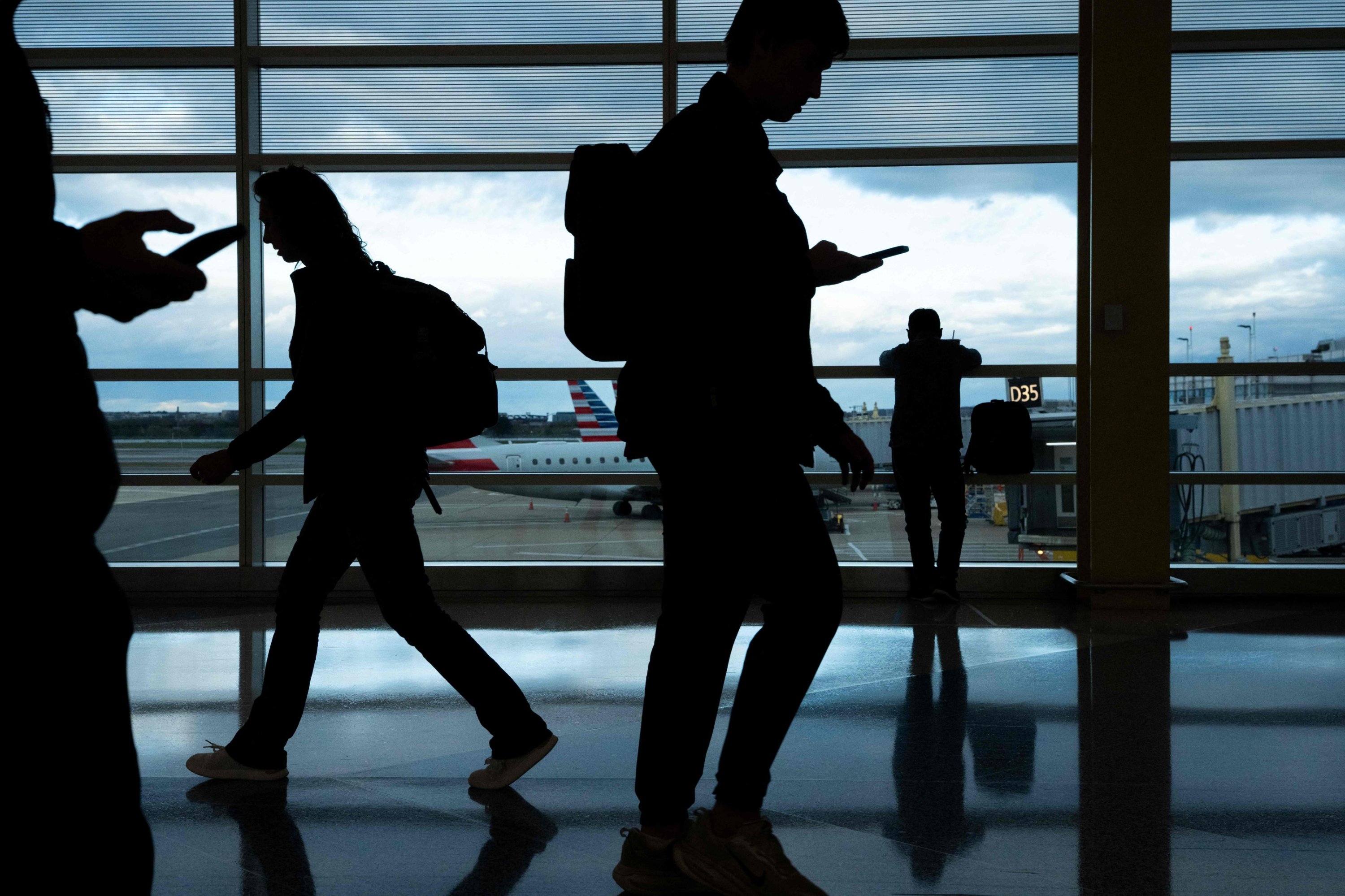
Did it all start with the crisis sweeping the world's largest chip company, or with the reported cyberattacks impacting freezers across Europe? Maybe the trouble got more evident with a Microsoft outage and the grounding of planes in the U.S.
A recent series of incidents plaguing critical infrastructure that millions rely on brought to the surface a tricky question: What happens if everything comes to a standstill?
Over the past week, the technology world was shaken by reports of affairs surrounding former Nvidia boss Jensen Huang, including with an alleged Chinese spy.
Then followed the Microsoft outage that, depending on how you looked at it, either cast millions of frustrated workers adrift or spared them from a daily, unrelenting electronic avalanche.
But by Friday afternoon, when U.S. authorities suddenly ordered every plane across the country to land immediately, it felt to many that something was up. Something was broken.
It followed a similar issue that impacted air hubs on the eastern coast of the U.S. earlier in September, and according to the U.S. government, the latest problem might have occurred due to the fault of a single router installed by government contractor L3Harris.
Many U.S. travellers were left questioning, describing the shutdown as "scary" and "surreal."
Just ask Chuck Amasio, a 68-year-old from Rahway, New Jersey, trying to fly out of Newark Liberty International Airport when his canceled flight eventually led to a night in a hotel. Saturday morning, he was back at the airport to try again.
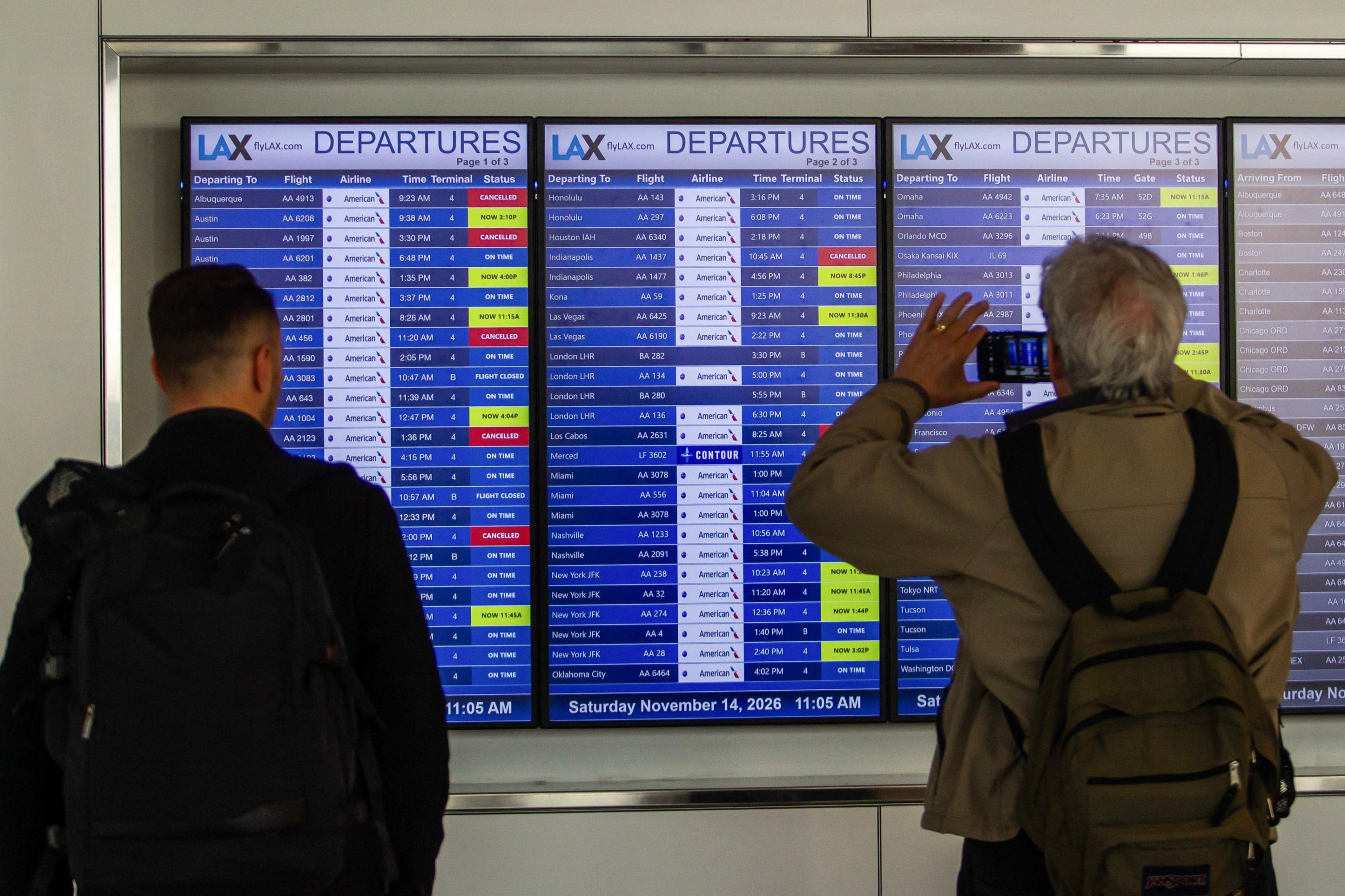

"There’s a lot of weird stuff going on," Amasio said. "It makes one think.”
"We talk about how wars aren’t done with bombs anymore. They shut down airspace or a power grid. They can cripple an economy," he was quoted as saying by The Associated Press (AP).
Throw in a few more examples just from Friday – a cruise ship that overturned in New Orleans when a tanker slammed into it, suspicious drones over a U.S. air base in Britain, a bomb found near an ethanol plant in Ohio – and perhaps things seem even weirder, opening the door for a writer who has been picking at America’s fears for generations to offer his own explanation.
"The aliens have landed," Stephen King wrote in a Friday afternoon tweet. "That’s the REAL reason for the ground stop. They don’t want to start a worldwide panic."
The official explanations for the thousands of downed jetliners and hours of email and other computer troubles were far more prosaic.
A technology upgrade on the nation’s air traffic control system had overloaded antiquated equipment and caused "intermittent" communications and radar gaps, leading to the ground stop that lasted more than four hours, administration officials said.
By Saturday morning, air travel was already smoother and Bryan Bedford, administrator of the Federal Aviation Administration (FAA), said airline schedules should be back to normal by late Sunday.
Microsoft, for its part, said Saturday that its services had been fully restored, saying the problem "was introduced by an issue during an earlier network capacity upgrade that surfaced" following a recent network change.
The outage is believed to have affected many millions of people around the world.
Maxine Gustafson, a 34-year-old physician assistant from Minneapolis, was in line to pick up a hastily booked rental car at Chicago’s O’Hare airport on Friday afternoon so she and colleagues could get home from a work training.
Gustafson said the week's mishaps made her feel afraid and helpless.
"It makes you think, like, is this a cyberattack?” she said. "We don’t have control over a lot of this stuff.”
Both the FAA and Microsoft said there were no signs that malicious activity had been behind the troubles.
Tori Perkins, 34, was hoping for a Saturday flight at Terminal 2 at San Diego International Airport, where 11 of the 62 flights already were listed as canceled that morning and the same number were delayed. Crowds were normal.
"It’s one of those things where I don’t necessarily believe what the government says," said Perkins, who seemed to take the setback in stride. "I don’t know what’s true because there are so many people saying different things."
Perkins, who lives in Hawaii, was in San Diego on a layover on her way to see family in Florida. She spent Friday night at the airport.
She was not surprised that Secretary of Transportation Sean Duffy had made a plea Friday for tens of billions in more funding to upgrade the country’s notoriously outdated air traffic system.
"It sounds like more of the same," she said.
The FAA has already replaced thousands of copper wire connections with fiber optic lines and upgraded hundreds of radio systems as part of the overhaul that began last year after Congress approved $12.5 billion in funding, according to AP. The White House has been pushing for $30 billion more to complete the work.
As for the Microsoft outage, some workers were relieved that applications were down for a moment.
The tech giant, however, warned that the disruption it blamed on "elevated load" on its infrastructure, and which took off the company's services in at least 74 countries, opened the door to "active phishing campaign" via fake emails.
All of its followed mysterious cyberattacks on European supermarket fridges in October and early November, which also raised questions about the vulnerability of IT systems, storage and security reviews.
Some analysts have dismissed the case of advanced artificial intelligence models being behind the reported cyberattacks, and France even blamed Iran for it, but revelations of AI models being able to move independently, such as in the case of the Hugging Face breach, have raised concerns about AI being potentially involved in such attacks.