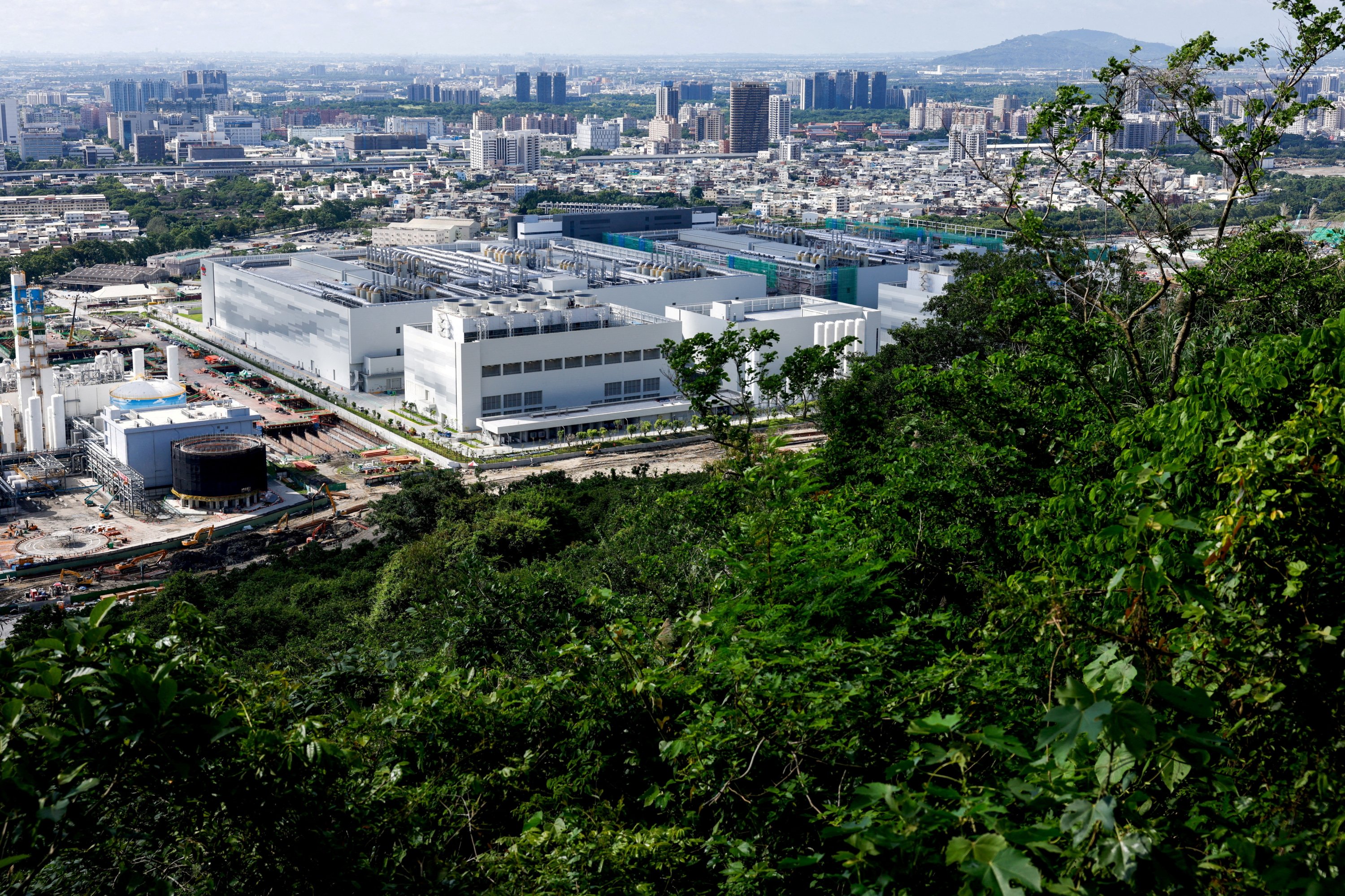
Taiwan "will not agree" to making 50% of its semiconductors in the U.S., the lead tariff negotiator of the self-ruled island said Wednesday, as Washington pressures Taipei to produce more chips on U.S. soil.
Vice Premier Cheng Li-chiun's remarks followed U.S. Secretary of Commerce Howard Lutnick's said that he had proposed a 50-50 split in chip production to Taiwan.
"I want to clarify that this is the U.S.' idea. Our negotiation team has never made a 50-50 commitment to a chip split," Cheng told reporters in Taipei.
"Please be rest assured that we did not discuss this issue this time and we will not agree to such a condition," she said.
Cheng spoke after returning from Washington, where she said negotiations over U.S. tariffs on Taiwanese shipments "made some progress."
Taiwan is struggling to finalize a tariff deal with Washington, after U.S. President Donald Trump's administration imposed a temporary 20% levy that has alarmed the island's manufacturers.
Trump has also threatened to impose a "fairly substantial tariff" on semiconductors entering the country.
Soaring demand for AI-related technology has fuelled Taiwan's trade surplus with the U.S. – and put it in Trump's crosshairs.
More than 70% of the island's exports to the U.S. are information and communications technology, which includes chips, according to a statement released by the Cabinet on Wednesday.
In a bid to avoid the tariffs, Taipei has pledged to increase investment in the U.S., purchase more of its energy, and increase its own defense spending to more than 3% of its gross domestic product (GDP).
Taiwan produces more than half of the world's semiconductors and nearly all of the high-end ones.
The concentration of chip manufacturing in Taiwan has long been seen as a "silicon shield" protecting it from an invasion or blockade by China, which claims it as part of its territory – and an incentive for the United States to defend it.
In an interview with NewsNation broadcast over the weekend, Lutnick said having 50% of Taiwan's chip production in the U.S. would ensure "we have the capacity to do what we need to do if we need to do it."
"That has been the conversation we've had with Taiwan, that you have to understand that it's vital for you to have us produce 50%," he said.
"Our goal is to get to 40% market share, and maybe 50% market share, of producing the chips and the wafers, you know, the semiconductors we need for American consumption, that's our objective."