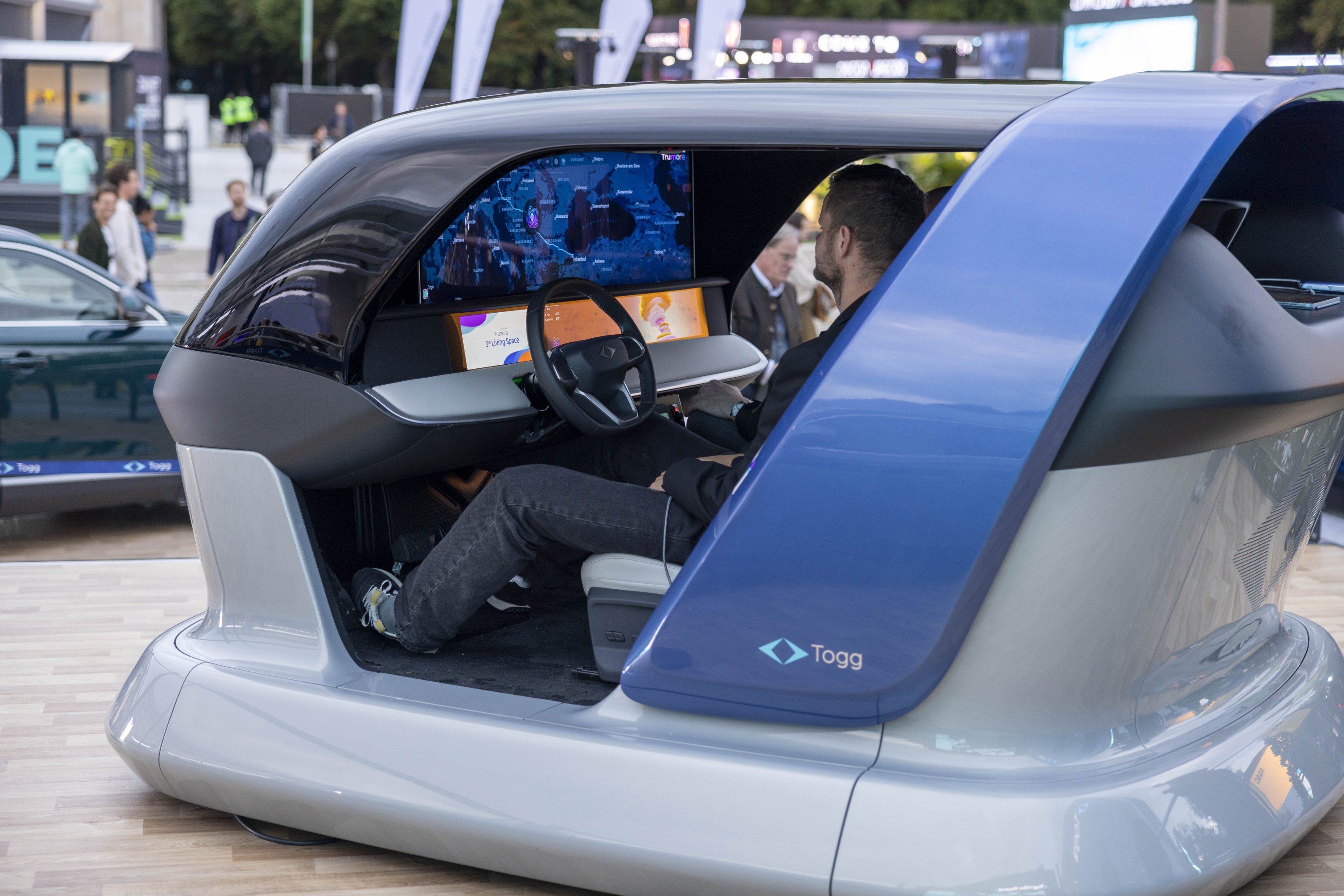
Togg used Europe's biggest auto show this week to showcase its artificial intelligence-powered platform, signaling the Turkish homegrown electric vehicle manufacturer's ambition to position AI not as an add-on feature, but as the backbone of its smart device strategy.
AI appears to be increasingly becoming a priority not only for tech giants but also for auto manufacturers like Togg, which has partnered with Microsoft Türkiye to develop Can.ai, which is dubbed more than just another voice assistant.
At the IAA Mobility 2025 in Munich, Togg showcased its products, design philosophy and technologies, introducing global visitors to Can.ai.
Visitors at its "Trumore Zone" booth experienced how Can.ai enables services such as smart charging route optimization, voice-activated in-car controls and media and health scenarios that operate without a traditional user interface.
Since its founding, Togg has positioned AI not as a feature, but at the center of its digital architecture, having built one of Türkiye's largest GPU-supported AI training infrastructures since 2020 and adopting a microservices-based system design.
This visionary approach laid the foundation for Togg's agentic AI framework.
Developed jointly by Togg and Microsoft Türkiye engineers, Can.ai runs on Microsoft Azure Cloud and is powered by OpenAI technologies.
The platform represents a leap forward in contextual interaction, analyzing multilayered data such as user intent, timing, location, vehicle status and behavioral history to deliver seamless, intuitive responses.
It operates across a wide range of environments, from smart devices and mobile apps to call centers and enterprise systems. More than just responsive, Can.ai is empathetic, predictive and capable of taking action on behalf of the user.
"From day one, we've treated AI not as a feature but as the strategic backbone of our infrastructure," said Gürcan Karakaş, the CEO of Togg.
Karakaş says Can.ai is not a system that simply responds to commands; it understands context, senses intent and executes necessary actions without a user interface.
"This is a new interaction paradigm powered by ZeroTouchUI. Users receive support without touching anything, navigating menus, or even needing to think about it," he noted.
"Thanks to our collaboration with Microsoft, we've built this infrastructure on a secure and scalable technology stack. With Can.ai, we're not just reimagining mobility; we're intuitively redesigning the entire way we live."
Eloquent AI, a startup developing the first AI Operator designed to automate complex and regulated workflows without requiring APIs or additional development, has raised $7.4 million in a seed round led by U.S.-based Foundation Capital.
Also backed by Foundation Capital, Y Combinator and Logo Ventures, Eloquent AI completed the round in just three days and attracted demand 12 times higher than the initial target.
Founded by serial entrepreneur Tuğçe Bulut and machine learning professor Aldo Lipani, the startup aims to transform customer service operations for regulated financial institutions.
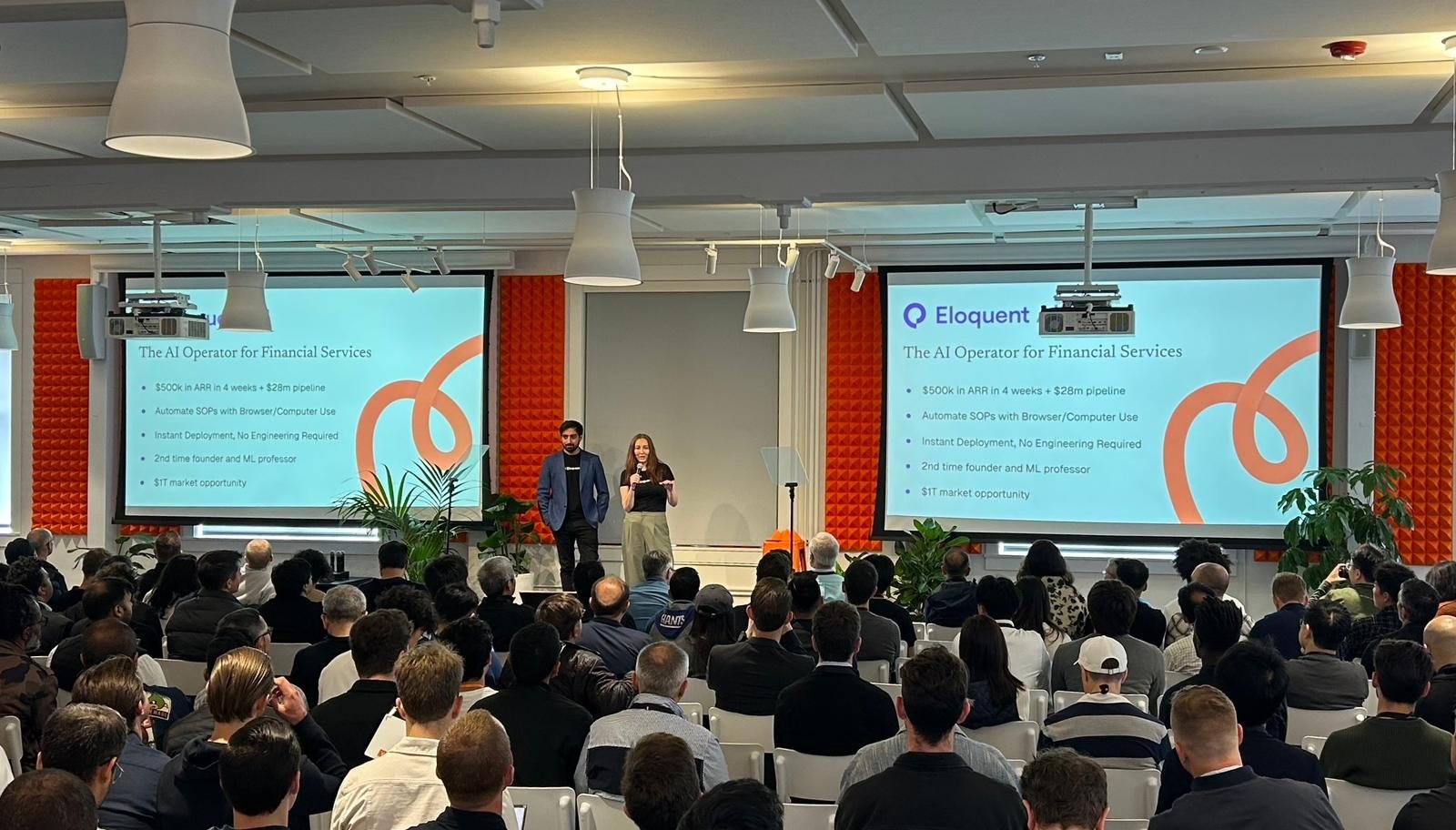
Going beyond traditional chatbots or AI tools limited to answering frequently asked questions, Eloquent AI Operators fully automate critical processes such as fraud investigations, dispute resolution, and KYC/AML audits, while ensuring complete traceability and regulatory compliance.
Bulut emphasized the operational burden financial institutions face due to accumulated customer support tasks.
"The notion that financial institutions lag in tech adoption is highly exaggerated. These organizations are often overwhelmed by compliance requirements and customer operations. The desire to solve these issues is absolutely there, but until now, the right tool didn’t exist," she noted.
Logo Ventures Managing Partner Merve Zabcı said Eloquent AI allows financial institutions to reimagine regulated customer service without long integration cycles.
"This is a real turning point. It goes far beyond a classic AI assistant, automating customer operations across a much broader and more sensitive domain. We've known Tuğçe and Aldo for a long time, and we're thrilled to support them from day one," Zabcı noted.
While most AI tools focus solely on simple conversations, Eloquent AI was born from the need to automate high-stakes interactions in financial services. Today, only 20–30% of customer requests can be handled by general-purpose AI tools. The rest require logging into internal systems, reviewing documents, and integrating actions across multiple platforms.
These complex and costly workflows are often carried out manually, as IT teams have limited time to develop APIs. This is precisely where Eloquent AI steps in, going beyond basic FAQ bots to deliver true operational transformation.
One of Türkiye's leading telecoms and technology companies, Türk Telekom's digital TV platform Tivibu is playing a pioneering role in reshaping the broadcasting industry in Türkiye by offering flexibility, diversity and personalized viewing experiences.
Televisions, now transformed into smart devices, serve personalized preferences through digital platforms. Traditional television broadcasting is undergoing a significant transformation as digitalization accelerates.
And internet-based platforms like Tivibu are becoming central to the new era of customized broadcasting.
Accessible from various devices, including TVs, computers, tablets, and smartphones, Tivibu has moved beyond being a conventional broadcasting platform to become a service that fundamentally changes how viewers engage with content.
One of its most notable features is its multi-device support. Users can access their accounts from various screens, allowing them to watch live broadcasts, series, movies, or sports events without being tied to a single device. This flexibility is especially valuable for viewers with busy lifestyles.
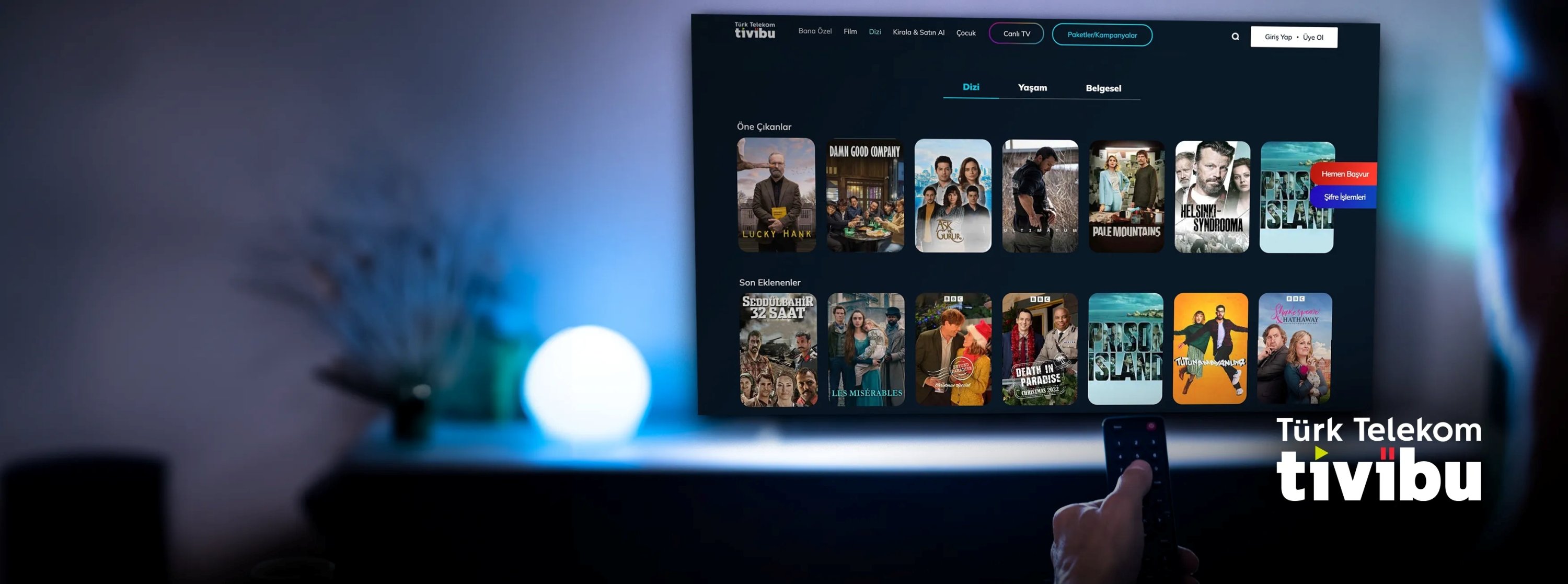
With its user-friendly interface and constantly updated content library, Tivibu positions itself as the "digital face of broadcasting." As Türkiye's internet infrastructure continues to expand, Tivibu is reaching more households and is expected to introduce AI-powered recommendation systems, personalized watchlist and more interactive features in the near future.
One of the most requested features in digital TV is control over the broadcast stream. Tivibu meets this demand with options to rewind, pause and record. Whether it's rewinding a missed episode or saving a key sports match for later viewing, these features offer a tailored experience that adapts to the viewer's schedule.
Beyond live broadcasts, Tivibu hosts an extensive archive of films, series and documentaries. Users can access hundreds of titles across various categories at any time. The platform's emphasis on local content has also helped it secure a strong position in the Turkish market.
Tivibu's appeal to sports enthusiasts is bolstered by dedicated channels for football, basketball and other sports. Its coverage of national leagues and international tournaments sets it apart in the highly competitive digital broadcasting space.
Choosing a smart television is becoming increasingly complex as new technologies emerge.
TVs are no longer just about resolution and sound. They're evolving into platforms for immersive gaming and AI-generated art. Screens are now doubling as digital canvases, while integrated smart audio systems redefine the home entertainment experience.
AI technology was prominently featured on screens at this year's Innovation For All (IFA), one of the world’s leading consumer electronics fairs.
While Arçelik Beko opted out of this year's IFA, Vestel continued its participation with mobility-focused products alongside televisions. Yet it was artificial intelligence that stole the spotlight at the fair, not just through visual and audio systems, but as a creative force behind digital artworks displayed on next-gen screens.
With a growing number of display technologies available, consumers are facing decision fatigue. Turkish consumers, known for their keen interest in cutting-edge tech, are now exploring Mini LED TVs as a premium option.
TCL Electronics Türkiye General Manager Timo Xu highlighted the brand's flagship model, the C8K Premium QD-Mini LED TV, which drew significant attention at the fair.
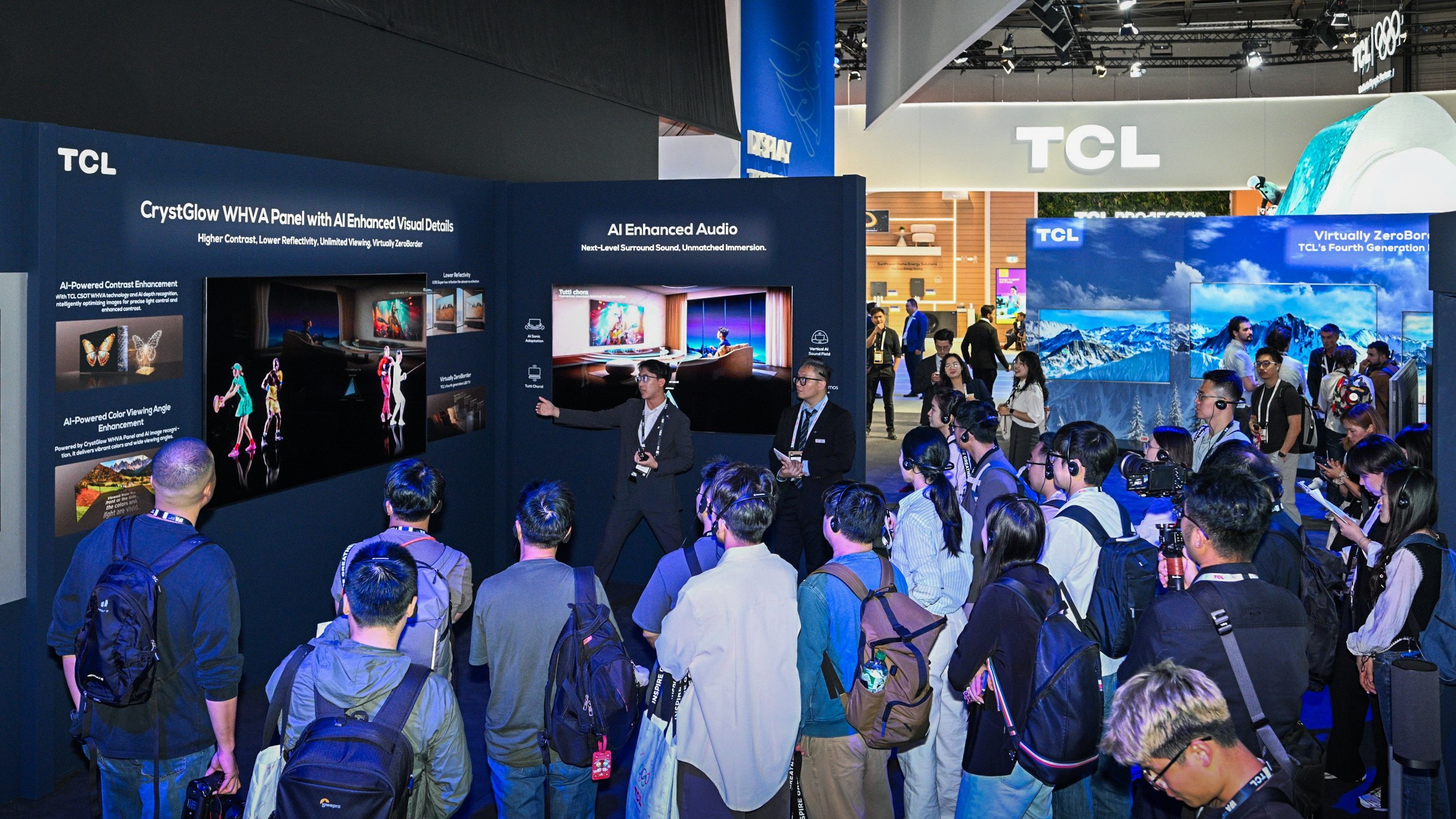
Featuring a CrystalGlow WHVA panel, a virtually borderless design, advanced QLED technology and an Audio by Bang & Olufsen sound system, the C8K combines precision Mini LED backlighting with world-class QLED performance.
It delivers OLED-level contrast, a wide color gamut, higher peak brightness, longer lifespan and superior value, especially in ultra-large screen formats. The AI-powered energy-efficient backlighting and high-performance panels also help reduce environmental impact.
Xu noted that gamers prioritize fast response times, and Mini LED TVs are meeting those expectations.
"Gaming enthusiasts want screens that react instantly, and brands are investing heavily in this space,” he said. TCL's QD-Mini LED technology has now been extended to ultra-wide monitors, with the standout 57R94 Dual 4K model offering immersive visuals for gaming and multitasking.
Beyond gaming, screens are becoming digital art galleries. The new AI Art Frame, equipped with an E-Ink Spectra 6 display, showcases AI-generated or user-uploaded artworks.
They are compatible with standard IKEA frames and capable of running on battery power for up to two years. These smart frames allow homeowners to rotate digital artworks on their walls. In this next-gen gallery concept, art collections will be delivered in curated packages via the internet.