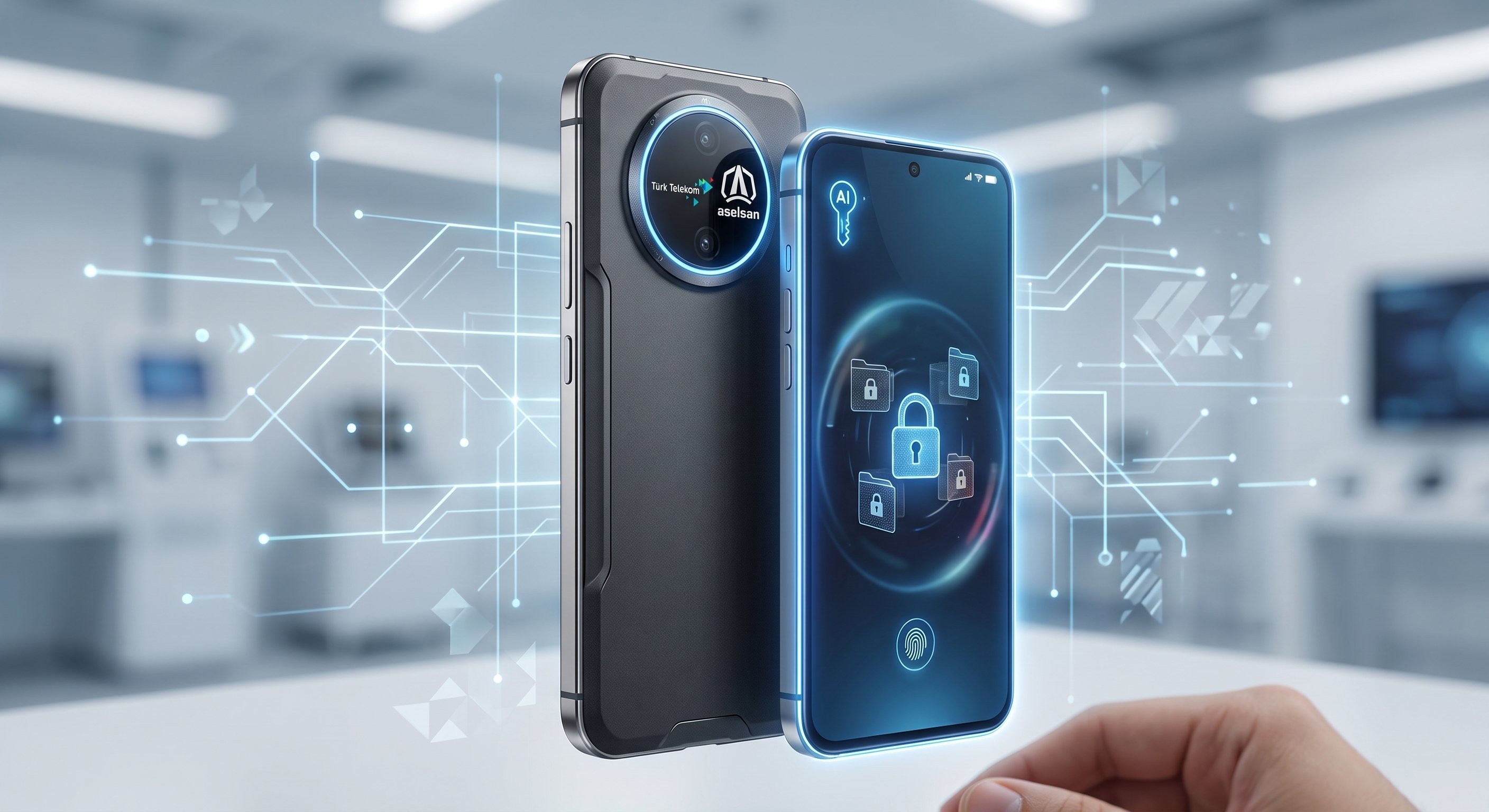
Türkiye's smartphone manufacturing industry is navigating a challenging period amid continued pressure from the global memory chip crisis. At the same time, the emergence of AI is fundamentally reshaping the design of connected devices, opening a window of opportunity for new entrants.
Türkiye's leading telecom operator, Türk Telekom, and defense electronics maker Aselsan signed a strategic cooperation agreement in May to jointly develop domestic smartphones and communication devices.
They have now outlined the project's roadmap at a meeting in Ankara, attended by Türk Telekom CEO Ebubekir Şahin and Aselsan CEO Ahmet Akyol. The Ankara Chamber of Commerce (ATO) and the Turkish World Business Council also announced that they would support the initiative as stakeholders.
The partnership is not the companies' first collaboration. Aselsan-produced antennas have been operating on Türk Telekom's network for the past five years.
Şahin described the development of domestically designed communication devices as a "red line" for Türk Telekom, emphasizing that the company has transformed from being solely a telecommunications operator into a technology developer and exporter.
Akyol noted that Aselsan has decades of experience in designing indigenous communication systems and has deployed more than 1 million secure communication systems to date. That expertise in secure communications and critical infrastructure is expected to reflect in the new device.
The partners plan to increase the domestic content ratio gradually through both short- and long-term development phases. Their roadmap includes integrating locally developed processors and battery technologies while leveraging Aselsan's cybersecurity expertise to provide enhanced protection against cyberattacks, unauthorized access and electronic surveillance.
The smartphone is expected to launch in 2027, although the companies have not yet disclosed technical specifications or a definitive release schedule. Reports are also suggesting that Türk Telekom subsidiaries Argela and Netsia could contribute to the project.
Industry observers argue that the timing of the initiative is particularly significant.
As artificial intelligence becomes deeply embedded across consumer electronics, the hardware and software architecture of smartphones and other connected devices is being fundamentally redesigned. Processors, operating systems, AI assistants and security frameworks are all undergoing rapid transformation.
This technological transition is forcing even the world's largest smartphone manufacturers to rethink their long-term product strategies. Such a structural shift lowers the barriers for new entrants by reducing the need to replicate existing products and instead enables companies to design devices around emerging technologies from the outset.
For Türkiye, this creates an opportunity to integrate its expertise in cybersecurity, artificial intelligence and telecommunications into a next-generation smart device built specifically for the AI era.
Viewed in this context, the Aselsan-Türk Telekom partnership represents more than an effort to produce a domestic smartphone. It is also an attempt to position Türkiye early in a global smart device market that is being fundamentally reshaped by artificial intelligence.
The domestic smartphone initiative comes at a pivotal moment for the electronics industry. On one side are factory closures and layoffs triggered by prolonged supply chain disruptions and pressures across the global semiconductor market. On the other is an ambitious project that coincides with the once-in-a-generation redesign of smart devices driven by artificial intelligence.
Although many technical details and the final launch schedule remain undisclosed, the transfer of Aselsan's defense communications expertise into the civilian smartphone market has already made the initiative one of the country's most closely watched technology projects.
Industry representatives share a common view: preserving and expanding domestic manufacturing capabilities is strategically important not only for producers but also for Türkiye's broader industrial policy, technological independence and long-term employment objectives.
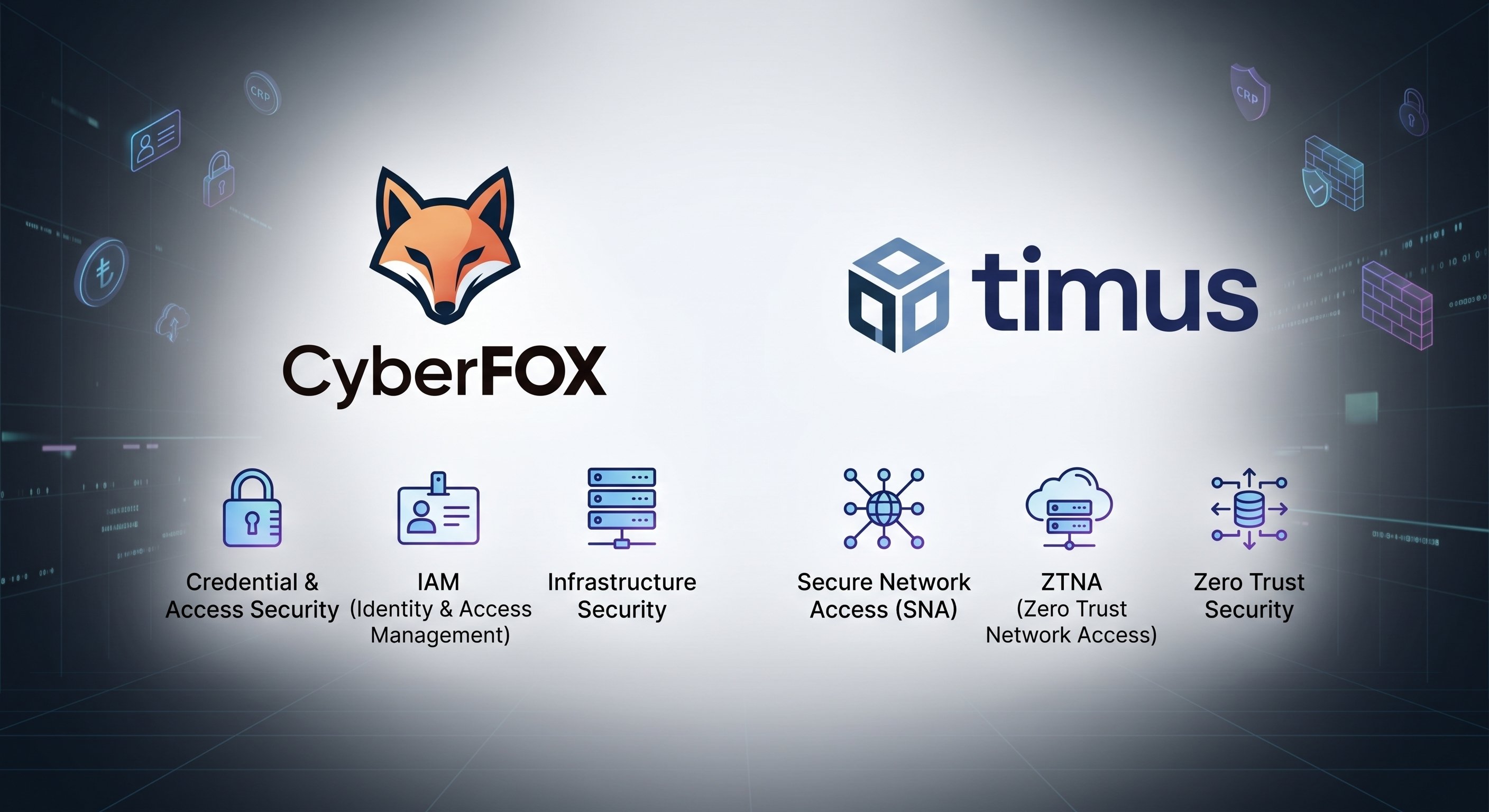
Turkish cybersecurity startup Timus has been acquired by U.S.-based CyberFOX, but founder and major shareholder Tuğrul Tekbulut said he does not view the transaction as an exit. Instead, he believes Timus has the potential to become one of Türkiye's future unicorns and has retained his stake in the company.
Timus Networks, which specializes in cybersecurity, was founded by Logo Software founder Tekbulut and Ahmet Polat. Its investors included a fund managed by Metis Ventures, alongside TechOne VC and Logo Ventures.
Following CyberFOX's acquisition of Timus Networks, Tekbulut moved to clarify the nature of the deal, emphasizing that he does not regard it as a conventional exit. Confident in Timus' long-term growth prospects, he said he has kept his shares and will continue as one of the company's shareholders.
Another notable aspect of his statement concerned the markets excluded from the transaction. Tekbulut explained that the agreement carved out the rights for Türkiye, the Turkish Republic of Northern Cyprus (TRNC) and Azerbaijan. In these markets, the services will continue to be offered under the Berqnet brand, particularly targeting small and medium-sized enterprises (SMEs).
Berqnet will also continue to provide software development and research and development (R&D) services to CyberFOX.
Tekbulut's remarks suggest that the acquisition is more nuanced than a traditional buyout. By retaining his ownership stake, the founding team is signaling confidence in CyberFOX's long-term growth strategy. Rather than cashing out completely, the founders are choosing to remain involved, allowing the transaction to be positioned not as a simple exit but as an opportunity to create additional value through continued expansion.
The decision to separate regional rights and preserve the Berqnet brand in Türkiye is also strategically significant.
While the Timus Secure Access Service Edge (SASE) platform acquired by CyberFOX is aimed primarily at U.S. and international mid-market customers through managed service provider (MSP) channels, Berqnet already enjoys a strong position in Türkiye's SME cybersecurity market.
This structure reflects the founders' intention to preserve both the brand recognition and customer base they have built domestically. At the same time, it illustrates that CyberFOX's primary focus lies in the global mid-to-enterprise market, while the local SME business will continue to grow under a separate organization. The arrangement enables Timus to leverage CyberFOX's global scale while ensuring that Berqnet's customer relationships and brand value in Türkiye remain intact.
CyberFOX's acquisition of Timus reflects a broader trend reshaping the cybersecurity industry: the race to deliver more security capabilities through integrated platforms.
Identity security, access management, web protection and technologies designed to replace traditional VPNs are increasingly becoming standard components of cybersecurity discussions with SMEs and mid-sized businesses.
CyberFOX CEO David Bellini said customers increasingly prefer to purchase their security solutions from a smaller number of trusted technology providers capable of delivering comprehensive protection through products that are actively used rather than left sitting on the shelf.
New regulations that took effect on July 1 require restaurants and cafes in Türkiye to provide calorie, allergen and ingredient information on their menus. Digital menu solutions are helping businesses comply with the new rules while accelerating the digitalization of restaurant operations.
A new regulation introduced by the Agriculture and Forestry Ministry marks a significant shift for the food service industry.
As of this month, restaurants, cafes and similar establishments must clearly disclose calorie counts, ingredient lists, allergen information and other required product details for all food and beverages offered to customers.
Businesses may provide this information through printed menus as well as digital channels, including QR codes and digital display screens. Beyond introducing a new legal requirement, the regulation is expected to accelerate the digital transformation of restaurants across the country.
While the new rules are likely to further expand the use of QR codes, Elektraweb's digital menu platform goes beyond simply displaying a list of products.
Through the system, customers can review detailed ingredient information, check allergen warnings, specify cooking preferences and place complete orders directly from the digital menu.
The approach not only gives consumers easier access to accurate product information but also helps reduce communication errors that frequently occur during the ordering process.
Commenting on the new regulation, Elektraweb CEO Kemal Oral said it would accelerate digitalization across the restaurant industry.
"The regulation coming into force on July 1 is not simply another legal obligation. It also presents an important opportunity for restaurants to strengthen their digital infrastructure," Oral said.
"Businesses will no longer be required only to disclose product information; they must also keep that information continuously updated, manage it accurately and make it easily accessible to customers," he noted.
“With our Smart Digital Menu solution, businesses can quickly comply with the new regulation while digitally managing their entire operation, from customer ordering to kitchen management, through a single platform. As a result, a regulatory requirement becomes an opportunity to improve operational efficiency and customer satisfaction."
For many restaurants, the new rules mean continuously updating hundreds of menu items, ensuring every revision is reflected across all menus simultaneously and keeping ingredient information current at all times.
For businesses with extensive menus, maintaining this information manually can become a significant operational challenge.
Elektraweb's Smart Digital Menu platform is designed to simplify that process. Ingredient lists, allergen information, calorie values, cooking preferences and product descriptions can all be managed from a centralized system, with updates reflected instantly across every digital menu.
The platform digitizes not only the customer experience but also restaurant operations. Waitstaff can enter orders quickly through mobile devices, while orders are transmitted directly to digital kitchen production displays.
Using card-based kitchen display systems, food preparation becomes more organized, reducing the risk of incorrect orders, improving service speed and enabling restaurants to operate more efficiently, even during peak service hours.