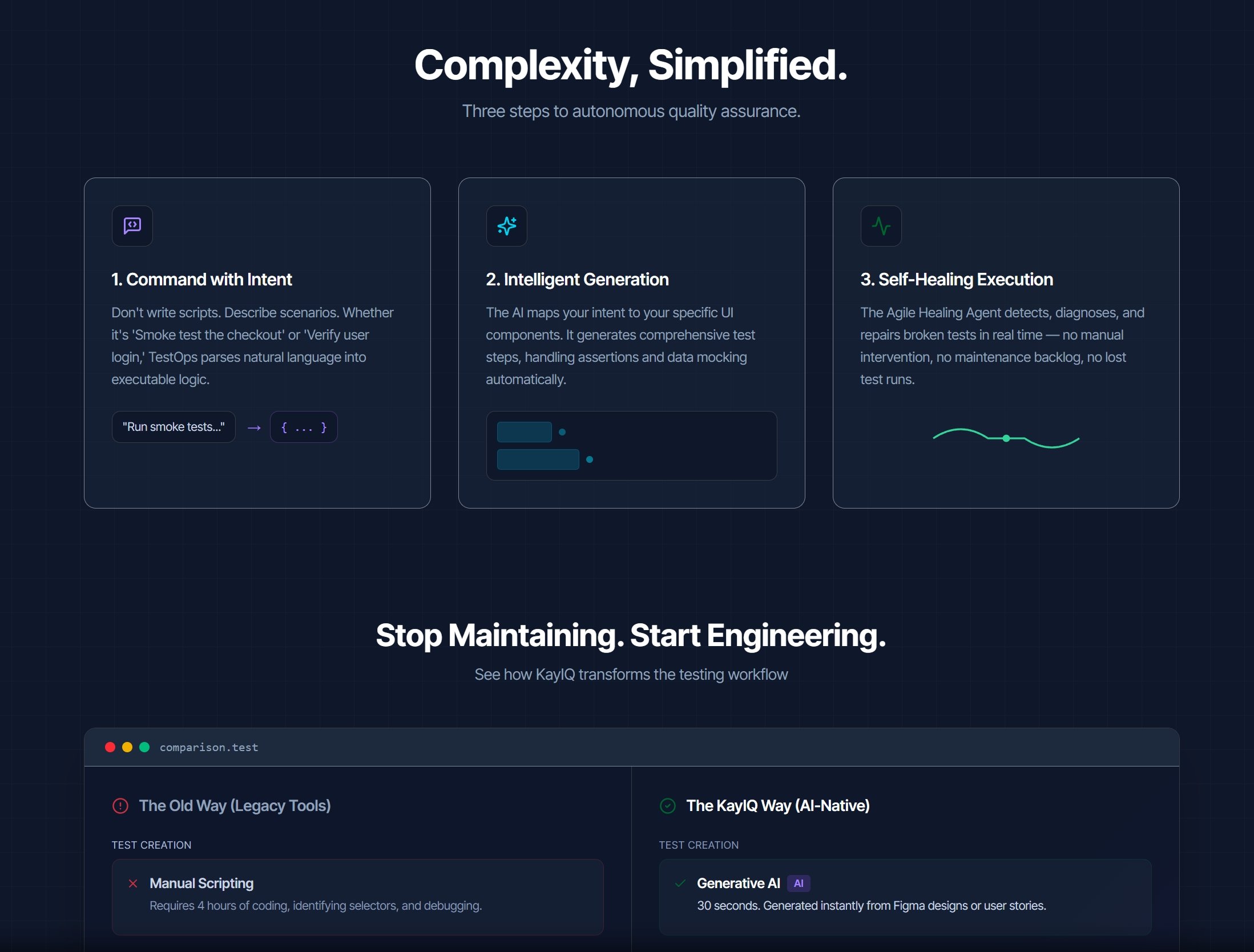
Turkish artificial intelligence startup kayIQ.ai, which automates software testing and quality assurance using autonomous AI agents, has secured $500,000 in seed funding as it prepares for international expansion.
The startup acts as a "bug hunter" as it develops AI-powered software that automatically generates test scenarios, explores applications, detects software defects and repairs broken test processes without manual intervention. It is targeting customers in the telecommunications, retail and financial services sectors.
The investment from kayIQ.ai's founders and technology company Magis Technology comes as demand for AI-driven software testing accelerates worldwide.
According to the independent research firm Mordor Intelligence, the global software testing market reached $54.4 billion in 2026 and is expected to nearly double to $99.9 billion by 2031, growing at a compound annual rate of 12.9%.
The most significant driver behind this growth is the shift toward AI-powered automation. Indeed, when looking solely at AI-powered testing and quality assurance solutions, the picture is even more striking. The submarket is projected to rise from $9.32 billion in 2025 to $11.99 billion in 2026, and grow at an annual rate of 26.88% to reach $39.43 billion by 2031.
When a banking app is updated, a new payment screen is added to an e-commerce site, or an insurance company revamps its mobile app, who ensures that the app runs without crashing, errors, or glitches? Until now, this task has largely been performed by human labor, involving manual checks that take hours.
Istanbul-based startup kayIQ.ai is handing this process over to AI. It automates quality control processes for digital products using artificial intelligence,
Magis Technology, which serves companies such as Türk Telekom in the telecommunications sector and Carrefour in the retail sector, has also chosen to invest in test software.
Speaking on behalf of Magis Technology, Ismet Gökduman said they believe the future of digital product development lies in autonomous AI systems.
Gökduman emphasized that kayIQ.ai offers an innovative solution to quality assurance processes, one of the industry's biggest challenges, and noted that the platform shifts the operational burden to AI while leaving strategic decisions to human teams.
He explained that the funding they provided alongside the founders during the seed stage was not only financial support, but a demonstration of their strong belief in this vision to transform traditional quality automation.
Tolga Özel, founder of kayIQ.ai, said that while digital products are now being developed much faster thanks to artificial intelligence, quality assurance processes cannot keep pace with this speed.
According to Özel, even minor errors in applications that reach users can lead to significant commercial losses and user dissatisfaction for companies. Noting that product teams have spent far too much time preparing test scenarios, troubleshooting broken automations and adapting to constantly changing application interfaces, he explained that kayIQ.ai takes this burden off human labor and delegates it to AI agents.
Özel emphasized that their platform can automatically generate test scenarios from requirements, independently explore application interfaces, automatically repair broken processes and measure in real time how ready a release is for deployment.
Özel added that their goal is to transform quality assurance from a final check at the end of the product development cycle into a "decision intelligence" that guides the development process from start to finish.
To put it simply: When a company makes a small change to its mobile app or website, it needs to test whether that change breaks the rest of the app. Normally, software test specialists do this manually; they click through each screen one by one, run test scenarios over and over, log any errors they find, and wait for them to be fixed.
The system developed by kayIQ.ai, however, carries out this work independently, much like an AI "team." It generates its own test scenarios, navigates through app screens on its own, automatically flags errors when it detects them and can even fix some broken test steps on its own.
In the company's own words, this approach is called "agentic AI," an AI architecture capable of making its own decisions and taking action. The goal is to be able to determine, almost instantly, whether a new app version is "ready for release" before it reaches the user.
As a result, quality control transforms from a final check performed after a product is completed into a continuous safety net that spans every stage of the development process.
As the number of tech startups finding success in the U.S. market grows, long-established Turkish institutions such as Türk Telekom are carrying out joint innovation projects at the University of California, Berkeley. Investors are also expressing optimism about Turkish AI startups.
Last week, the University of California, Berkeley hosted one of the world's most important conferences on Agentic AI. Featuring prominent figures such as Andrew Ng, Ion Stoica and Andrej Karpathy, the conference was dominated by discussions on the future of software engineering, corporate investments in AI, advancements in robotics and the emergence of "superintelligence," where AI agents are now beginning to issue commands to themselves.
It also presented significant collaboration opportunities for innovation initiatives led by Turkish organizations such as Türk Telekom.
Another prominent figure who has made significant contributions at Berkeley is Oğuzhan Aygören, who, through his many years of work in the field of entrepreneurship, has helped bring Silicon Valley closer to Türkiye.
Aygören is now continuing this mission in his role as director of the Innovation Institute at the UC Berkeley Haas School of Business. Through this role, he offers opportunities to startups and large companies in Turkey to enhance their competitiveness and develop an international vision.
"Our core philosophy at the Institute is open innovation and co-creation," he said. "To this end, we organize events such as the Berkeley Innovation Forum, where companies can learn from one another and from the latest academic research, as well as courses and accelerator programs in areas such as customer discovery, go-to-market strategies, and fundraising strategies, with a particular focus on deep-tech, climate, energy, aviation, aerospace, and defense industry startups," he noted.
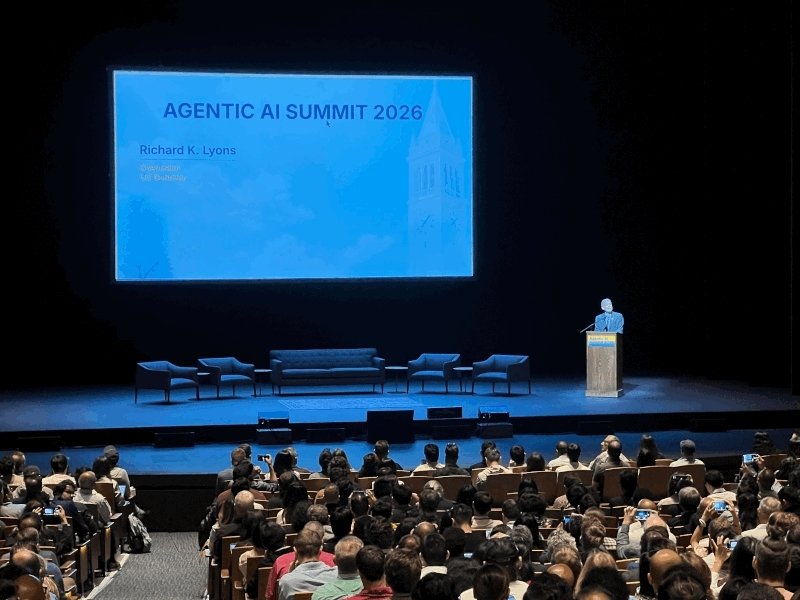
Citing Işbank, Pegasus Airlines and Şişecam as examples of their work with major Turkish institutions, Aygören also referred to their collaboration with Türk Telekom Ventures, the venture capital arm of Türk Telekom.
"Thanks to our collaboration with Türk Telekom Ventures during our visits to Silicon Valley, we facilitated meetings between investors, researchers, and other entrepreneurs in our own network and entrepreneurs from Türkiye. We began these meetings with a brief seminar to share information. Following that, we helped some of these startups find opportunities to advance within the Berkeley ecosystem," he noted.
According to Aygören, Berkeley is the university that produces the most startups annually in the world.
"The vast majority of teams accepted into Y Combinator come from Berkeley. Berkeley also has the most Nobel Prize-winning researchers in the world. Being part of such an environment naturally enriches you," he said.
"It also gives you the courage to dream bigger by bringing you together with people you wouldn't normally have the chance to meet on your own."
One of Türkiye's leading telecoms and tech companies, Türk Telekom, is integrating artificial intelligence and next-generation technologies into its human resources strategy.
The company is preparing young talent for the future through dedicated programs while also enhancing the skills of its existing workforce.
Türk Telekom's steps in developing young talent and deploying AI applications in its operations show that the company sees digital transformation not merely as an infrastructure investment, but as a central element of its human resources strategy.
The AI Camp '26, organized under the umbrella of Türk Telekom's Development Hub, opened its doors to young talent as part of the company's efforts to develop a skilled workforce.
The program was open to final-year undergraduate students and graduates who had completed their studies within the previous year, were under 25 and were not currently employed.
Following an initial assessment, online exam and interview process, selected participants completed the program through in-person training at the company's Ataköy Guesthouse in Istanbul. The 10-day certified camp was offered free of charge, with the company also covering participants' transportation and accommodation costs.
During the program, participants worked on real-world problems with mentoring support from Türk Telekom's human resources and data science teams.
The impact of AI extends beyond the company's human resources programs.
Smart systems deployed in internal operations can detect network outages or congestion without human intervention and reroute traffic accordingly. The application has increased operational efficiency by 26%.
Türk Telekom's AI-focused efforts also have a social impact dimension.
Introduced in January 2026, the EyeMo project is a fully homegrown, AI-powered image-processing solution that enables people who cannot use their hands due to conditions such as ALS and paralysis to control computers and peripheral devices with their eye movements.