Turkish cybersecurity company Kron is accelerating its international expansion strategy, targeting Europe after establishing a presence across Asia-Pacific, the Gulf region and North America as demand for identity and access security solutions continues to grow.
Founded in Istanbul in 2007 and publicly listed on Borsa Istanbul since 2011, Kron provides cybersecurity solutions to telecommunications operators, including Türk Telekom, public institutions, banks and other critical infrastructure operators.
The company currently serves more than 400 enterprise customers across 35 countries.
Kron develops all of its products through domestic research and development (R&D) teams and was the first Turkish company to be included in Gartner's Magic Quadrant assessment.
The company specializes in Privileged Access Management (PAM), a cybersecurity category focused on controlling and monitoring access to critical systems and sensitive digital assets. The global PAM market reached an estimated $4.25 billion in 2025 and is projected to grow to $13.83 billion by 2031.
Growing regulatory requirements and cybersecurity insurance standards are also contributing to market expansion, with many insurers now requiring organizations to implement privileged access controls before issuing cyber insurance policies.
Kron expects its expanding teams and strengthened partner network across Asia-Pacific, North America, the Middle East and Africa, and Europe to play a key role in driving growth in these regions.
According to Ayşe Yenel, co-chief executive of Kron Technology, organizations such as telecommunications providers require increasingly sophisticated identity and access management systems due to the strategic importance of their networks and the volume of sensitive data they manage.
Kron and Türk Telekom, a giant that provides mobile, broadband, and data services to millions of users, signed a new cooperation agreement in 2025, further expanding a long-standing relationship in cybersecurity and infrastructure protection.
The critical detail here is this: the key to Türk Telekom's treasury is domestically produced. Relying on a foreign supplier is like handing over the key to your safe to a locksmith from another country.
Zeynep Yenel Onursal, co-CEO of Kron, noted that while the that went public 15 years ago is required to operate profitably, this has turned into an advantage because it prioritizes trust among corporate clients.
She also emphasized that the company's foreign sales, which account for up to 30% of total sales, will help elevate its global growth targets even further.
In the past, only humans had access to safes; it was enough to monitor employees and managers. Now, robots, automated systems and AI agents are also accessing the system.
Mehmet Ilgaz, deputy general manager of products and solutions at Kron, noted in a statement that the number of machine identities in organizations' infrastructures has surpassed the number of human identities by exactly 100 times.
AI agents, service accounts, and cloud workloads are the new members of this ecosystem. Moreover, it is emphasized that the vast majority of organizations have not even begun to ask these robots who they are.
Kron is focused on filling this very gap. In addition to the company's PAM solution, its Non-Human Identity (NHI) products also bring every entity, whether human or robot, entering the system under control through a single platform.
Türk Telekom is expanding its cybersecurity portfolio and integrating artificial intelligence into its security operations as organizations face a growing wave of increasingly sophisticated cyber threats.
The company currently provides more than 50 cybersecurity products and services to over 5,000 institutions across Türkiye, helping organizations defend against phishing campaigns, distributed denial-of-service (DDoS) attacks, malware and other digital threats.
The move comes as cyberattacks continue to rise worldwide. More than 8 million DDoS attacks were recorded globally in the first half of 2025, while advances in artificial intelligence have enabled attackers to automate and enhance the scale and complexity of their operations.
Global cybersecurity spending is expected to exceed $520 billion annually as of this year.
According to industry data, telecommunications remains one of the sectors most exposed to cyber threats.
Research from Kaspersky showed that between November 2024 and October 2025, 79% of users in the telecom sector encountered web-based threats, while 76% experienced device-level security incidents. Nearly 10% of telecommunications organizations worldwide were affected by ransomware attacks during the period.
In Türkiye, cybersecurity spending is projected to grow at an average annual rate of 7.9%, reaching approximately $285.8 million by 2029.
Türk Telekom says it maintains full compliance with both the European Union's General Data Protection Regulation (GDPR) and Türkiye's Personal Data Protection Law (KVKK).
The company relies on encryption technologies, access-control systems and data loss prevention tools to support regulatory compliance and protect customer information.
The operator has also expanded its focus on workforce development.
Türk Telekom is both expanding its portfolio in the field of cybersecurity and deepening protection for its corporate customers by integrating artificial intelligence technologies into this area.
In 2025, the company launched Türkiye's first telecommunications-focused Secure Access Service Edge (SASE) infrastructure. It provides services across various sectors with end-user security, identity and access management, and xOT security solutions tailored to the remote work trend.
Türk Telekom describes the broader integration of AI in the areas of incident management, endpoint incident detection and identification, response and intelligence as part of a wider "GenAI transformation" intended to shorten response times.
From smartphones to tablets, all devices are evolving with the new capabilities of the artificial intelligence era. Innovations from Google's Gemini platform are now making their way to competitors as well.
Apple has unveiled a redesigned AI-powered Siri assistant and the latest version of Apple Intelligence at its WWDC 2026 developers conference, introducing new features aimed at making AI a more central part of its ecosystem.
The updates will be available through iOS 27, iPadOS 27, macOS 27 and visionOS 27, extending AI capabilities across iPhones, iPads, Macs and Apple Vision Pro devices.
The company said the revamped assistant, branded as "Siri AI," is powered by new foundation models developed by Apple and is designed to deliver more context-aware and conversational interactions. Siri AI can search across applications, including messages, emails and photos, while also understanding content displayed on a user's screen and performing actions across the operating system.
Apple said the assistant will be able to leverage personal context and screen awareness to provide more relevant responses and streamline tasks.
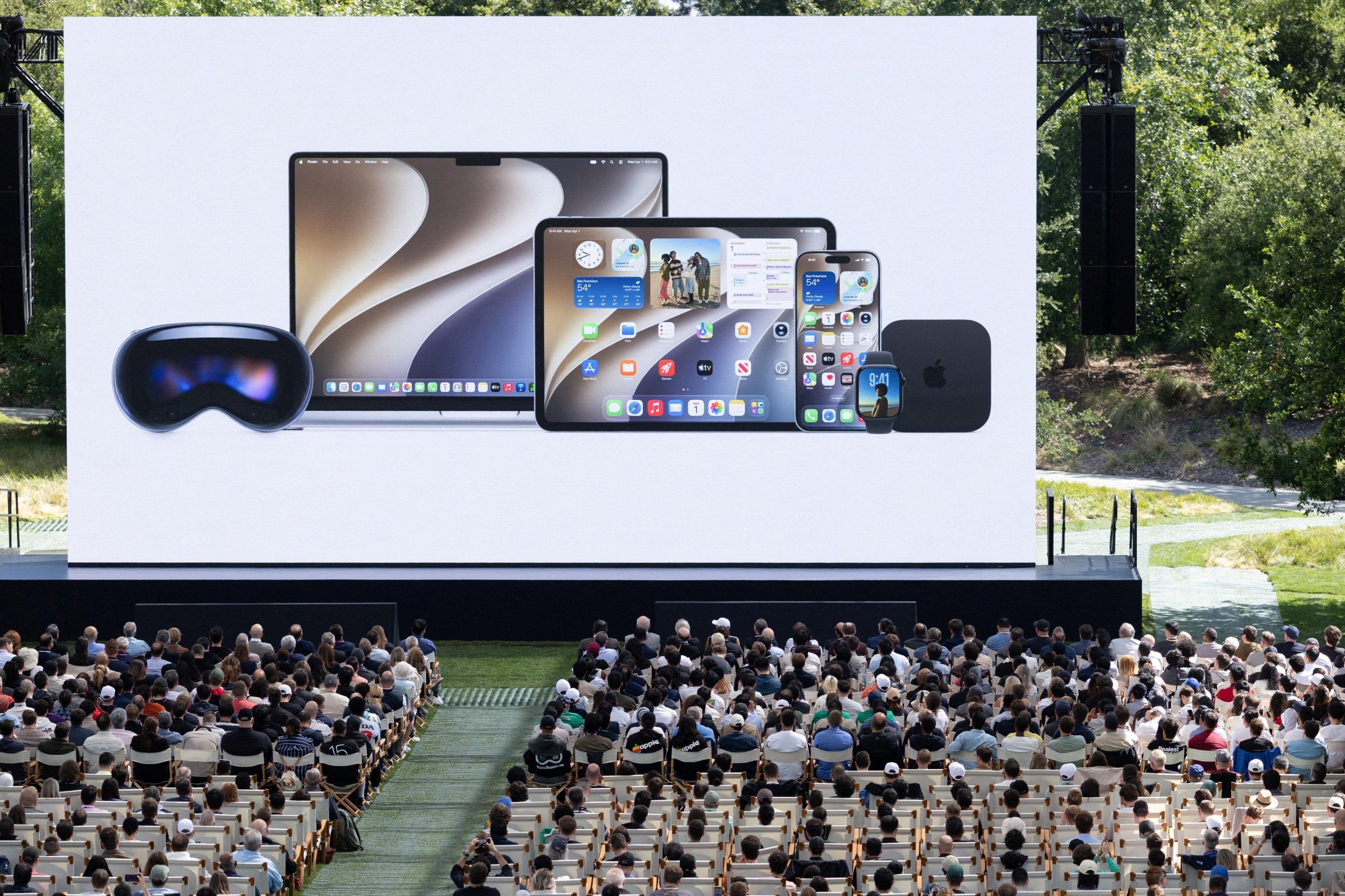
For example, the iPhone 11 purchased from Türk Telekom, as well as next-generation phones and iPad models, will be able to use Siri's AI capabilities after the update.
A standalone Siri application will also debut, allowing conversations to be synchronized across devices through iCloud. Users will be able to begin an interaction on a Mac and continue it on an iPhone or Apple Watch without interruption.
Apple is also expanding its Visual Intelligence feature beyond the iPhone to include iPad, Mac and Apple Vision Pro. Through a new "Siri Mode," users can point their device camera at objects and receive contextual information, such as nutritional details about food or assistance with everyday calculations.
The company said system-wide Writing Tools have also been enhanced, enabling users to generate, edit and refine text while adapting to different communication styles.
Alongside the AI updates, Apple introduced performance and design improvements across its operating systems. The company's "Liquid Glass" design language, first introduced last year, has been refined with additional transparency controls and a more consistent user interface.
Apple said app launch speeds have increased by up to 30%, while photo-loading performance has improved by as much as 70%. The company also introduced processor scheduling optimizations aimed at improving performance on older devices, including the iPhone 11 and newer models.
Additional updates include AI-powered tab organization and page-change notifications in Safari, as well as enhanced Smart Reply capabilities in Mail and Messages that adapt responses to users' writing styles.
Six unicorns, three sectors and one city. Behind Türkiye's billion-dollar startup success stories lies a recurring pattern, though replicating it is far from straightforward.
When Zynga acquired Istanbul-based Peak Games for $1.8 billion in June 2020, the deal marked more than Türkiye's largest gaming exit.
In the months that followed, 108 employees left the company, with 37 going on to launch startups of their own. One of those ventures would later produce one of the world's highest-grossing mobile games.
This isn't just a single exit story. It's a summary of Türkiye's "unicorn math." Before 2020, there wasn't a single startup in Türkiye with a valuation exceeding $1 billion. As of 2026, there are six unicorns, and behind these companies lies a common logic shared by three sectors that appear independent but are actually deeply intertwined: e-commerce, mobile gaming and financial technology, or fintech.
A report recently published by the Koç University-Esas Holding Center for Alternative Investments (KUES), which analyzed more than 11,000 transactions between 2006 and 2025, uses data to demonstrate that this pattern is no coincidence.
Türkiye's e-commerce unicorns are not simply success stories of applying a globally proven model to a large population. They are the stories of startups that understand the unique dynamics of their market.
Trendyol began in 2010 as a flash-sale site. Over the next decade, it evolved into a logistics and marketplace infrastructure serving 70% of Türkiye's 85 million population. Alibaba's $782 million investment in 2018, in exchange for an 82% stake, was a routine funding round. It also served as confirmation that the Turkish market had come onto the radar of global players.
By 2021, its valuation had skyrocketed to $9.35 billion. Trendyol was now a decacorn. Hepsiburada, meanwhile, went public on Nasdaq that same year. Türkiye's transformation of an e-commerce company into an entity traded on a U.S. stock exchange was a step that previous generations could not have imagined.
Getir, on the other hand, was a completely unique venture. Its formula was an innovation introduced to the world by Nazım Salur, a one-of-a-kind location data hunter. It quickly garnered significant interest from investors. It experienced the growing pains of rapid expansion.
Türkiye's young, mobile-first demographic, the need for alternative payment methods driven by relatively low credit card penetration, and the critical mass that e-commerce infrastructure achieved between 2015 and 2020 all played a role.
The pandemic accelerated this trend but did not create it. The infrastructure was already in place; the spark came from outside. The first layer of the formula here is this: building the right infrastructure at the right time in a large but not-yet-digitized market.
Peak Games was Türkiye's first unicorn. It had developed casual puzzle games like Toy Blast and Toon Blast, which reached 12 million daily active users. Zynga's $1.8 billion acquisition sent shockwaves through the industry: If that much money could flow into a Turkish gaming company, it meant something was working in this sector.
The teams that left Peak internalized this reality. Dream Games was founded in 2019, right around that time. CEO Soner Aydemir was the product director for Toy Blast and Toon Blast; CTO Hakan Sağlam and the engineering team were the people who built Peak's infrastructure. The five founders took equal shares and focused on a single game: Royal Match.
The strategy was unconventional. Not viral growth, but endless retention. The goal was to position the game as a "forever franchise" in the global market. This thesis was proven in the first 90 days after its launch in early 2021: $20 million in monthly revenue, 6 million active users, and a top-20 ranking in the U.S., the U.K. and Germany.
In June 2021, the company secured $155 million in funding; its valuation reached $1 billion. Dream Games had become Türkiye's fastest-growing unicorn.
In 2022, Royal Match surpassed Candy Crush. In 2023, the game generated $2 billion in revenue. By 2025, Dream Games had become the seventh-largest mobile gaming company globally. But there's another key point worth noting: Of the 108 employees who left after Peak's sale to Zynga, 37 went on to start their own companies. From among them emerged TaleMonster Games, Spyke Games and a dozen other studios. Istanbul is home to more than 30 game studios, each valued at over $100 million.
This isn't a matter of chance. This post-exit knowledge diffusion and Türkiye's gaming ecosystem systematically generate this mechanism. The second layer of the formula: A major exit creates not just a company, but an ecosystem.