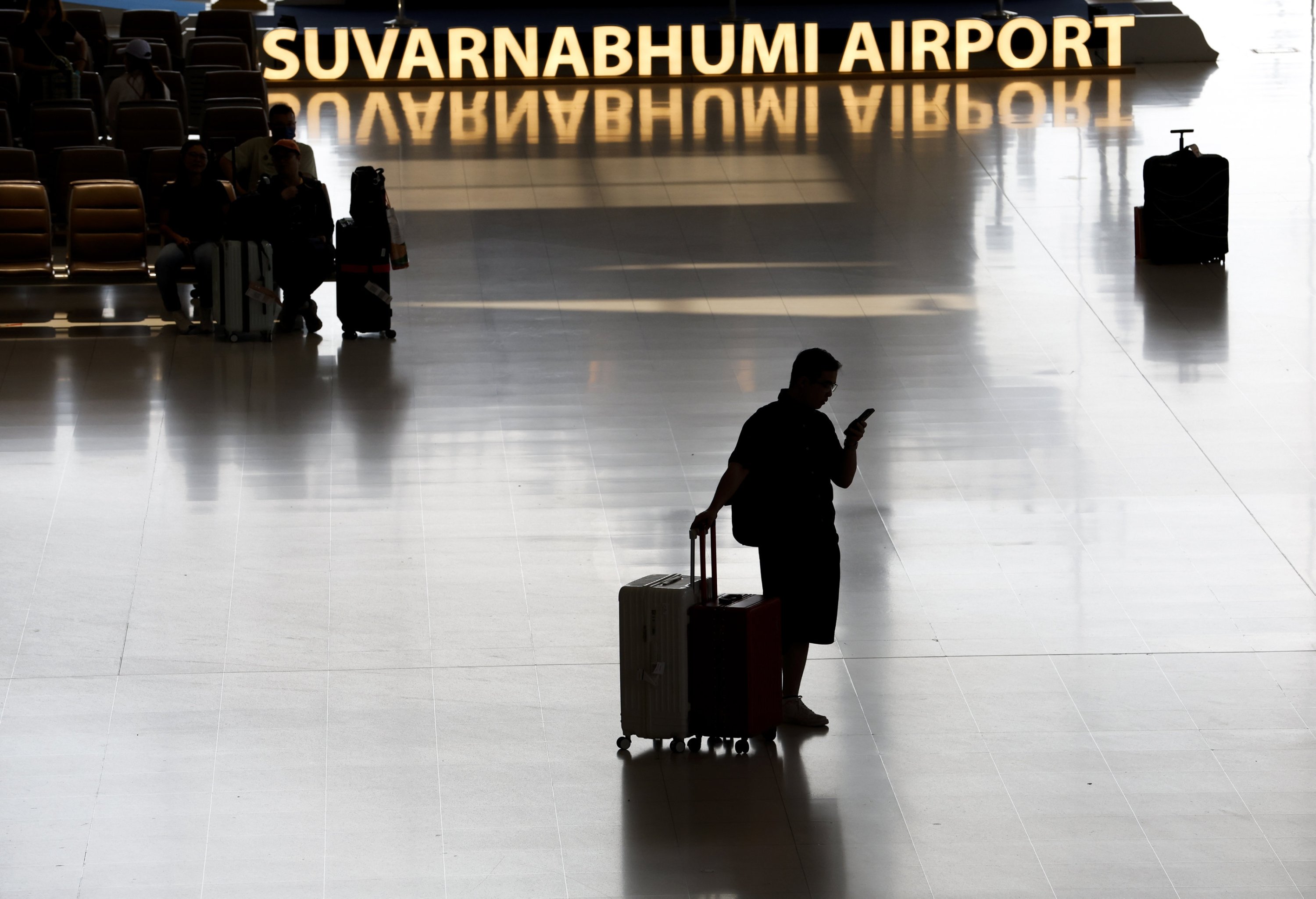
With summer just around the corner, rising prices and other complications stemming from the U.S. and Israel's war with Iran are straining the tourism-dependent economies of countries in Southeast Asia, including Thailand and Vietnam.
The region's peak tourist summer season is at risk as elevated jet fuel costs, coupled with cease-fire uncertainties prompt flight cancellations and higher ticket prices.
Tourism in Asia has yet to fully recover from the COVID-19 pandemic.
Now, many countries are coping with the war's repercussions for global energy supplies and prices, which hit Asia first and hardest. Some families are pulling back on travel as visiting gas stations and grocery stores gets more expensive worldwide. Crowds have thinned at some places once synonymous with travel.
"With gasoline prices rising and tourism declining, how can we make money?" asked Siv Pech, a 58-year-old tuk-tuk driver in Siem Reap, home to Cambodia’s centuries-old Angkor Wat temple complex.
Tourism is an economic lifeline for many developing nations. It contributes nearly 13% of gross domestic product (GDP) in Thailand and nearly 9% in Vietnam, and it underpins millions of jobs in Cambodia. Travelers bring in much-needed foreign currency for import-dependent economies such as the Philippines and Nepal.
Those tourism dollars are more critical than ever as war-driven spikes in oil prices push up the cost of fuel imports, especially for parts of the world that relied on the Strait of Hormuz off Iran's coast as a conduit for much of their oil and gas.
The war will determine which tourism businesses can survive long enough to benefit from the eventual return of travelers, said Jitsai Santaputra of The Lantau Group, an energy industry consulting firm. "This, happening within five years of each other, first the pandemic and now the war, is horrible for the tourism industry," she said.
Jet fuel shortages and surging costs have led Vietnam Airlines, the Malaysia-based AirAsia group, Hong Kong's Cathay Pacific and other carriers to cut flights or re-adjust schedules.
European carriers face a squeeze from similar issues.
Airspace closures across the Persian Gulf early in the war and the intermittent closures of certain Gulf airports cut off key layover locations for Asia-bound flights or forced commercial airplanes to take longer, costlier routes.
Airfares have jumped, with airlines like Air India and Cathay Pacific implementing sharp increases in fuel surcharges.
Cathay Pacific's fuel surcharge for medium-haul flights has jumped to 633 Hong Kong dollars ($80) from 264 Hong Kong dollars ($34) before the war. For long-haul flights, it increased to 1,362 Hong Kong dollars ($174) from 569 Hong Kong dollars ($73).
"Jet fuel prices remain at highly elevated levels" and have increased cost pressures, said Lavinia Lau, Cathay's chief customer and commercial officer. Travelers are booking closer to their departure dates, she said, indicating growing unease.
Sandra Awodele, a freelance travel writer in the Washington area, often plans year-round international trips and hoped this summer would finally be the one she crossed Asia off her bucket list.
In March, she began planning a long-awaited vacation to Thailand, envisioning one to two weeks of exploring. Her plans hit a wall when she checked airfares.
"I looked at flight options and that’s where it ended," Awodele said.
On the ground, rising fuel costs in tourism-dependent Southeast Asia are squeezing taxi and ride-hailing app drivers.
Pech, the Cambodian tuk-tuk driver, said he used to earn up to $20 a day toting tourists around Siem Reap. That’s plummeted to about $5 a day.
His gas bill eats half of that. The rest goes to food. "Some days, I don't earn even a cent,” he said.
Tourism is vital for many regional economies, accounting for nearly 11% of economic activity in the Association of Southeast Asian Nations in 2019, according to the World Travel and Tourism Council.
An analysis by Moody's Analytics estimated effects from the war would likely reduce economic growth across the Asia-Pacific region by 0.1 to 0.4 percentage points in 2026.
"The conflict will weigh on growth mainly through higher production costs and consumer prices, along with weaker external demand from trade and tourism,” said Albert Park, chief economist at the Asia Development Bank.
Higher airfares and weaker travel confidence can quickly spill over into household livelihoods and public revenues in economies where visitor arrivals are a major source of jobs, income and foreign exchange, according to a recent report by the United Nations Development Program (UNDP).
Travel is often the first expense people cut when the economy worsens, said Le Tuyet Lan, who runs bed-and-breakfast properties in Vietnam's Hanoi and Ho Chi Minh City.
In times of crisis luxury travelers tend to shift toward midrange options, midrange travelers move toward budget hotels, and the cheapest tier of the market becomes the most vulnerable.
"This will disrupt the whole industry," she said.
Tourism in Thailand is "a big industry and we are feeling it," said Santaputra with The Lantau Group in Bangkok, one of Southeast Asia's most visited cities.
The number of visitors to Thailand fell 7% year-on-year in April, while European arrivals fell almost 16% and Middle Eastern arrivals sank 57%, according to the Ministry of Tourism and Sports.
In neighboring Cambodia, Sokha Sambo, owner of the popular Sambo Khmer & Thai Restaurant in Siem Reap, said the rising price of liquefied petroleum gas (LPG) used for cooking has strained her budget, hindering her ability to dish out her signature green curries.
"I’m worried about gas and goods inflation. It makes the business less profitable and difficult to cover employees’ salaries," said Sambo, who has 14 staff members.
In the first four months of 2026, the number of recorded international and domestic visitors to Siem Reap dropped by 37.5% compared to the same period last year, according to the province's tourism department.
"This has greatly affected all of us," Sambo said.