Daily Sabah logo

Politics
Diplomacy Legislation War On Terror EU Affairs Elections News Analysis
TÜRKİYE
Istanbul Education Investigations Minorities Expat Corner Diaspora
World
Mid-East Europe Americas Asia Pacific Africa Syrian Crisis Islamophobia
Business
Automotive Economy Energy Finance Tourism Tech Defense Transportation News Analysis
Lifestyle
Health Environment Travel Food Fashion Science Religion History Feature Expat Corner
Arts
Cinema Music Events Portrait Reviews Performing Arts
Sports
Football Basketball Motorsports Tennis
Opinion
Columns Op-Ed Reader's Corner Editorial
PHOTO GALLERY
JOBS ABOUT US RSS PRIVACY CONTACT US
© Turkuvaz Haberleşme ve Yayıncılık 2026

Daily Sabah - Latest & Breaking News from Turkey | Istanbul

  • Politics
    • Diplomacy
    • Legislation
    • War On Terror
    • EU Affairs
    • Elections
    • News Analysis
  • TÜRKİYE
    • Istanbul
    • Education
    • Investigations
    • Minorities
    • Expat Corner
    • Diaspora
  • World
    • Mid-East
    • Europe
    • Americas
    • Asia Pacific
    • Africa
    • Syrian Crisis
    • Islamophobia
  • Business
    • Automotive
    • Economy
    • Energy
    • Finance
    • Tourism
    • Tech
    • Defense
    • Transportation
    • News Analysis
  • Lifestyle
    • Health
    • Environment
    • Travel
    • Food
    • Fashion
    • Science
    • Religion
    • History
    • Feature
    • Expat Corner
  • Arts
    • Cinema
    • Music
    • Events
    • Portrait
    • Reviews
    • Performing Arts
  • Sports
    • Football
    • Basketball
    • Motorsports
    • Tennis
  • Gallery
  • Opinion
    • Columns
    • Op-Ed
    • Reader's Corner
    • Editorial
  • TV
  • Business
  • Automotive
  • Economy
  • Energy
  • Finance
  • Tourism
  • Tech
  • Defense
  • Transportation
  • News Analysis

Jet fuel supply recovery to take months even if Hormuz reopened: IATA

by Reuters

SINGAPORE/HONG KONG Apr 08, 2026 - 10:12 am GMT+3
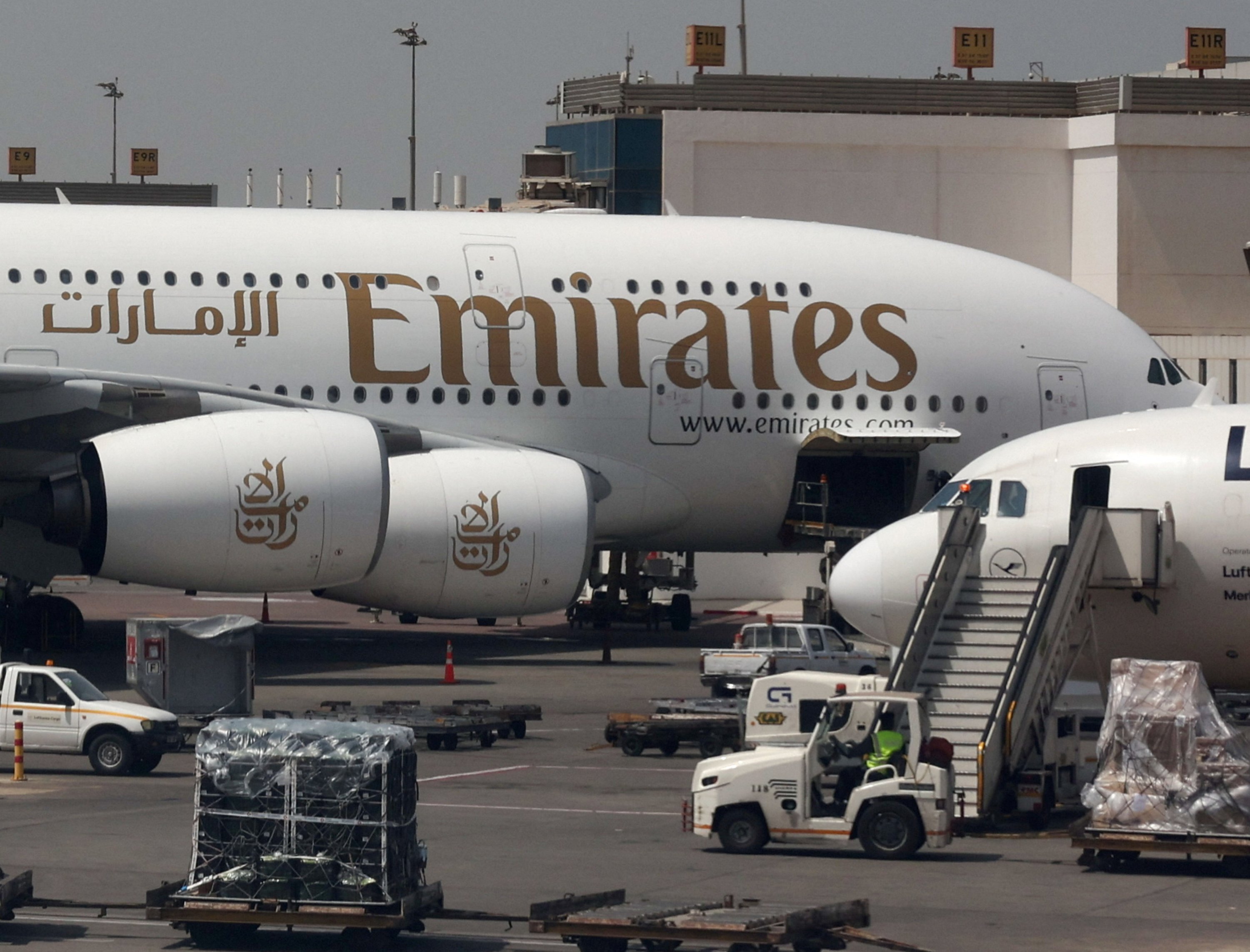
An Emirates aircraft is seen through the window of a Middle East Airlines airplane at Cairo International Airport, amid the U.S.-Israeli conflict with Iran, Cairo, Egypt, March 31, 2026. (Reuters Photo)
by Reuters Apr 08, 2026 10:12 am

It would likely take months for the jet fuel ⁠supply to recover even if Iran reopened the Strait of ⁠Hormuz, given disruptions to the Middle East refining capacity, the head of a body representing global airlines warned on Wednesday, as a two-week cease-fire was reached.

Fuel is the second-largest expense for air carriers after labor, typically accounting for about 27% of operating expenses, according to the International Air Transport Association (IATA).

Iran's closure of the Strait of Hormuz as ​part of retaliatory moves in the war with the U.S. and Israel has choked supplies of jet fuel globally, and ​news ⁠of a cease-fire and the possibility of safe passage through Hormuz sent airline stocks soaring.

Oil fell below $100 per barrel after U.S. President Donald Trump said he had agreed to a two-week cease-fire with Iran that was subject to the immediate and safe reopening of the Strait of Hormuz.

Willie Walsh, director general of the IATA, told reporters in Singapore that while he expected crude oil prices to fall, jet fuel costs were likely to remain slightly elevated due to the impact on refineries.

"If it were to reopen and remain open, I think it will still take a period of months to get back to where supply needs to be given the disruption to the refining capacity in the Middle East," Walsh said.

He shrugged off comparisons to the COVID-19 pandemic, which crippled global travel.

"This is not similar to COVID. This is not a crisis anywhere close to what we experienced (in COVID-19)," he said. "In COVID, capacity reduced ⁠by ⁠95% because borders closed. We're nowhere near that."

The situation was more comparable to other shocks such as the downturns of 2008-09 or the aftermath of the Sept. 11 attacks, he added.

"Post-9/11, the recovery took about four months. In 2008-2009, it was probably 10 to 12 months," he said.

Airline shares surge

Airlines across Asia have been cutting flights, carrying extra fuel from home airports and adding refuelling stops as the Middle East conflict squeezes jet fuel supply, piling pressure on an industry already hit by a doubling of jet fuel prices.

Jet fuel prices normally move in tandem with oil prices, but they have more than doubled since the Iran conflict, far outpacing a 50% rise in crude prices before the two-week cease-fire news.

The news and ⁠a possible safe passage through Hormuz lifted airline stocks across Asia. Shares of Australia's Qantas Airways jumped more than 9%, Air New Zealand rose over 4%, Hong Kong's Cathay Pacific climbed 5%, while India's IndiGo soared as much as 10%

Walsh said the hit to capacity for Gulf carriers, which last year accounted ​for 14.6% of international capacity, would be temporary.

"Some of that capacity will be replaced by airlines outside of the region ... but there's ​no way they can replace the (entire) capacity that was provided by the Gulf carriers," he said, adding that data from April and May would provide a clearer picture of the scale of disruption.

"I fully expect the Gulf hubs ⁠to recover and ‌recover quickly," he said.

On ‌refining capacity, Walsh said the reopening of the strait, if sustained, would be positive ⁠not just for crude flows but for refined products, including jet fuel.

"It will ‌take some time for refineries outside of the region to adapt and increase," he said, pointing to India and Nigeria as countries with the capacity to increase refined ​product output in the interim.

Walsh added he "would like" ⁠to expect China and South Korea to resume exports of refined products once crude flows resume.

"So ⁠there is (refining) capacity available once we get the crude oil flowing, but it'll take a little bit of time, and ⁠with the crack spread elevated the ​way it is, I think that provides an incentive for refineries to increase the production of jet fuel," Walsh said.

The crack spread refers to refinery margins.

  • shortlink copied
  • Last Update: Apr 08, 2026 11:29 am
    KEYWORDS
    air transportation air travel iata airlines jet fuel fuel supply middle east stait of hormuz disruption
    The Daily Sabah Newsletter
    Keep up to date with what’s happening in Turkey, it’s region and the world.
    You can unsubscribe at any time. By signing up you are agreeing to our Terms of Use and Privacy Policy. This site is protected by reCAPTCHA and the Google Privacy Policy and Terms of Service apply.
    No Image
    Rare white tiger cub found in Turkey triples weight in 4 months
    PHOTOGALLERY
    • POLITICS
    • Diplomacy
    • Legislation
    • War On Terror
    • EU Affairs
    • News Analysis
    • TÜRKİYE
    • Istanbul
    • Education
    • Investigations
    • Minorities
    • Diaspora
    • World
    • Mid-East
    • Europe
    • Americas
    • Asia Pacific
    • Africa
    • Syrian Crisis
    • İslamophobia
    • Business
    • Automotive
    • Economy
    • Energy
    • Finance
    • Tourism
    • Tech
    • Defense
    • Transportation
    • News Analysis
    • Lifestyle
    • Health
    • Environment
    • Travel
    • Food
    • Fashion
    • Science
    • Religion
    • History
    • Feature
    • Expat Corner
    • Arts
    • Cinema
    • Music
    • Events
    • Portrait
    • Performing Arts
    • Reviews
    • Sports
    • Football
    • Basketball
    • Motorsports
    • Tennis
    • Opinion
    • Columns
    • Op-Ed
    • Reader's Corner
    • Editorial
    • Photo gallery
    • DS TV
    • Jobs
    • privacy
    • about us
    • contact us
    • RSS
    © Turkuvaz Haberleşme ve Yayıncılık 2021