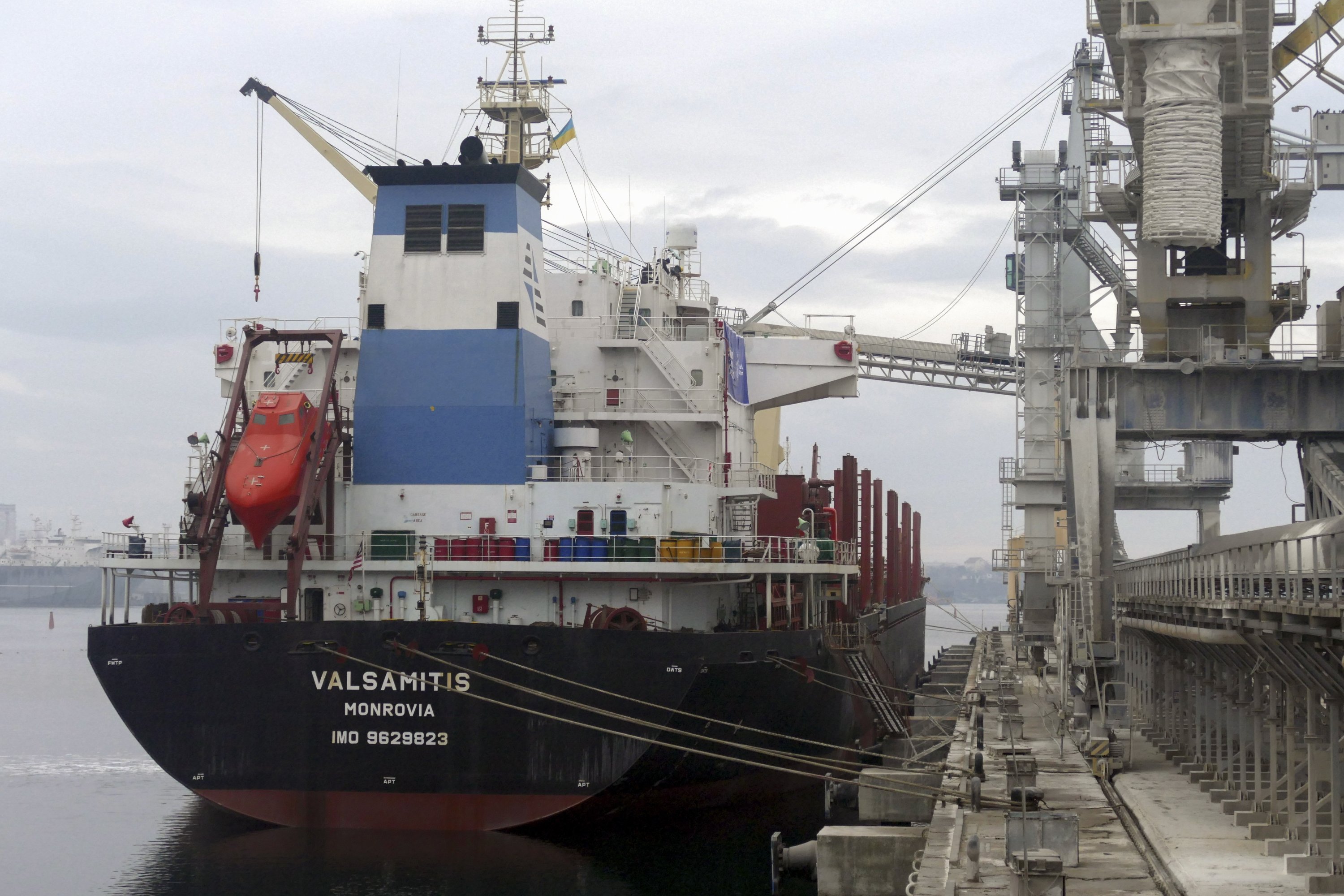
The amount of grain leaving Ukrainian ports has dropped even as a U.N., Türkiye-brokered deal works to keep food flowing to developing nations, with inspections of ships falling by half of what they were four months ago and a backlog of vessels growing as Russia’s invasion nears the one-year mark.
Ukrainian and some U.S. officials are blaming Russia for slowing down inspections, which Moscow has denied. Less wheat, barley and other grain getting out of Ukraine, dubbed the “breadbasket of the world,” raises concerns about the impact to those going hungry in Africa, the Middle East and parts of Asia – places that rely on affordable food supplies from the Black Sea region.
The hurdles come as separate agreements brokered last summer by Türkiye and the U.N. to keep supplies moving from the warring nations and reduce soaring food prices are up for renewal next month. Russia is also a top global supplier of wheat, other grains, sunflower oil and fertilizer, and officials have complained about the holdup in shipping the nutrients critical to crops.
Under the deal, food exports from three Ukrainian ports have dropped from 3.7 million metric tons in December to 3 million in January, according to the Joint Coordination Center (JCC) in Istanbul. That is where inspection teams from Russia, Ukraine, the U.N. and Türkiye ensure ships carry only agricultural products and no weapons.
The drop in supply equates to about a month of food consumption for Kenya and Somalia combined. It follows average inspections per day slowing to 5.7 last month and 6 so far this month, down from the peak of 10.6 in October.
That has led to backups in the number of vessels waiting in the waters off Türkiye to either be checked, or join the Black Sea Grain Initiative. There are 152 ships in queue, the JCC said, a 50% increase from January.
"This month, vessels waited an average of 28 days between applying to participate and being inspected," said Ruslan Sakhautdinov, head of Ukraine’s delegation to the JCC. That’s a week longer than in January.
Factors like poor weather hindering inspectors’ work, demand from shippers to join the initiative, port activity and capacity of vessels also affect shipments.
“I think it will be a problem if the inspections continue to be this slow. In a month or two, you’ll realize that’s a couple a million tons that didn’t come out because it’s just going too slowly,” said William Osnato, a senior research analyst at agriculture data and analytics firm Gro Intelligence.
“By creating the bottleneck, you’re creating a sort of this gap of the flow, but as long as they’re getting some out, it’s not a total disaster,” he added.
U.S. officials such as USAID Administrator Samantha Power and U.S. Ambassador to the U.N. Linda Thomas-Greenfield have blamed Russia for the slowdown, saying food supplies to vulnerable nations are being delayed.
Ukrainian Foreign Minister Dmytro Kuleba and Infrastructure Minister Oleksandr Kubrakov on Wednesday said in Facebook statement that Russian inspectors have been “systematically delaying the inspection of vessels” for months.
They accused Moscow of obstructing work under the deal and then “taking advantage of the opportunity of uninterrupted trade shipping from Russian Black Sea ports.”
Osnato also raised the possibility that Russia might be slowing inspections “in order to pick up more business” after harvesting a large wheat crop. Figures from financial data provider Refinitiv show that Russian wheat exports more than doubled to 3.8 million tons last month from January 2022, before the invasion.
Russian wheat shipments were at or near record highs in November, December and January, increasing 24% over the same three months a year earlier, according to Refinitiv. It estimated Russia would export 44 million tons of wheat in 2022-2023.
Alexander Pchelyakov, a spokesman for the Russian diplomatic mission to U.N. institutions in Geneva, said last month that the allegations of deliberate slowdowns are “simply not true.”
Russian officials also have complained that the country’s fertilizers are not being exported under the agreement, leaving renewal of the four-month deal that expires March 18 in question.
Without tangible results, extending the deal is “unreasonable,” Deputy Foreign Minister Sergey Vershinin on Monday told RTVI, a privately owned Russian-language TV channel.
U.N. officials say they have been working to unstick Russian fertilizers and expressed hope that the deal will be extended.
“I think we are in slightly more difficult territory at the moment, but the fact is, I think this will be conclusive and persuasive. The global south and international food security needs that operation to continue,” Martin Griffiths, U.N. undersecretary-general for humanitarian affairs, told reporters Wednesday.
Tolulope Phillips, a bakery manager in Lagos, Nigeria, has seen the impact firsthand. He says the cost of flour has exploded 136% since the war in Ukraine began. Nigeria, a top importer of Russian wheat, has seen costs for bread and other food items surge.
“This is usually unstable for any business to survive. You have to fix your prices to accommodate this increase, and this doesn’t only affect flour – it affects sugar, it affects flavors, it affects the price of diesel, it affects the price of electricity. So, the cost of production has generally gone up,” Phillips said.
Global food prices, including wheat, have dropped back to levels seen before the war in Ukraine after reaching record highs in 2022. In emerging economies that rely on imported food, like Nigeria, weakening currencies are keeping prices high because they pay in dollars, Osnato said.
"Plus, droughts that have affected crops from the Americas to the Middle East meant food was already expensive before Russia invaded Ukraine and exacerbated the food crisis," Osnato said.
Prices will likely stay high for more than a year, he said. What is needed now is “good weather and a couple of crop seasons to become more comfortable with global supplies across a number of different grains” and “see a significant decline in food prices globally.”