Ankara is inclined toward a new round of reconciliation talks if three criteria are fulfilled: One, security forces will enforce public safety by pushing terrorists out of residential areas, two, the PKK leadership will withdraw its forces from Turkey and, three, upon its withdrawal, the PKK leadership publicly commits to disarmament
In recent months, Turkish security forces have been fighting terrorists in eastern and southeastern Anatolia. Having suffered heavy losses in the countryside, PKK militants adopted a new strategy of engaging security forces in urban centers. As such, the organization aims to create autonomous zones in Turkey akin to the cantons in northern Syria. Civilian casualties, likewise, help them draw parallels between Turkey and Syria in an attempt to legitimize terrorist attacks on Turkish forces.
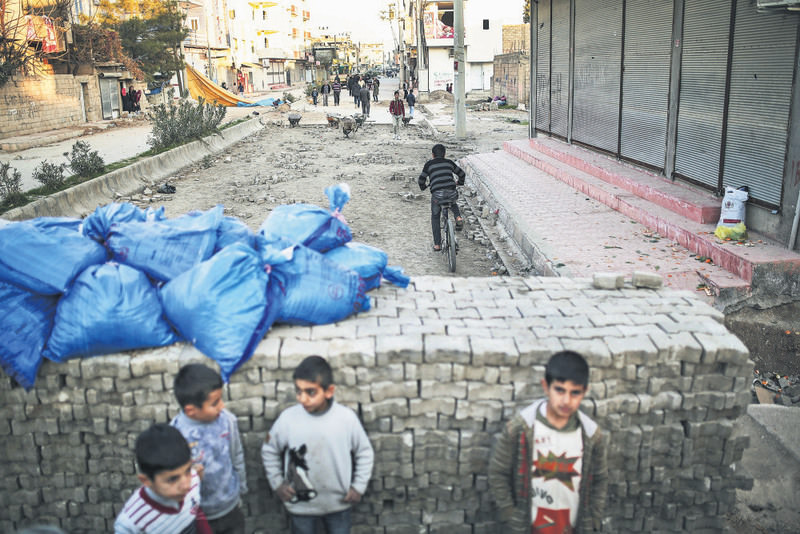
Local communities, however, took a clear stance against the terrorists, who have been digging trenches and planting explosives in residential areas. Despite the PKK's efforts to prevent the exodus of civilians, the people of Sur, Cizre and Silopi have left the conflict-struck areas to allow the security forces to neutralize more than 200 terrorists over the past week. Frustrated and confused, the terrorists started targeting civilians. PKK members have been not only torching schools and libraries but also fired shots at people trying to leave the affected area. Medical professionals, likewise, have been under attack. Most recently, a 77-year-old man was shot dead by terrorists for refusing to let them launch attacks on security forces from his home.
Against the backdrop of fierce clashes, certain media outlets have prematurely alleged that the government would relaunch the reconciliation process in the spring. At a time when the security forces conduct counterterrorism operations on the ground, the claims left a lot of people confused. Today, many people ask whether a new round of disarmament talks will start soon. Others wonder which issues will be covered in the talks. How exactly security operations and disarmament talks could go hand-in-hand is yet another question. I recently posed the above questions to government officials in Ankara and received the following answers:
- In August, President Recep Tayyip Erdoğan had announced that the reconciliation process was "in the freezer." In order to reinitiate disarmament talks, Ankara expects three criteria to be fulfilled. One, security forces will enforce public safety by pushing terrorists out of residential areas and refilling PKK trenches, two, the PKK leadership will withdraw their forces from Turkey before a new round of talks begins and, three, upon withdrawing from Turkey, the PKK leadership will publicly commit to disarmament.
- If the above criteria are fulfilled, the government is prepared to move forward with the "National Unity and Fraternity Process." Although the Peoples' Democratic Party (HDP) will not be part of the talks, it remains unclear which role imprisoned PKK founder Abdullah Öcalan will play. Moving forward, the government wants to get local nongovernmental organizations and stakeholders involved in the process. According to sources, they will reach out to opposition parties to secure their support for democratic and constitutional reforms. "We have learned from past mistakes," a senior official said. "We won't tolerate violations of public order in the future."
- In Ankara's backrooms senior officials maintain that security operations alone might not be enough to fulfill the government's criteria. They argue that the government could resort to other channels, but has no concrete interest in them at this time.
- What about the timeline? The developments in northern Syria were the main reason why the PKK leadership ended the two-year ceasefire. They that that it might be possible to establish cantons and stockpile weapons in Turkey. Simply put, the Syrian civil war derailed the reconciliation process and the Syrian civil war will jumpstart the talks. In other words, the government is unlikely to take any steps until it has a better idea about Syria's future. Turkey will not act before the Vienna process starts on Jan. 1. Likewise, the PKK leadership will not agree to withdrawing from Turkey under the current circumstances.
To conclude, the government already knows that it must resort to dialogue in order to talk the PKK leadership into disarmament - no matter how successful the security operations may be. To make progress, however, it needs to have a better idea about Syria's future, deal some heavy blows to the PKK's self-confidence and secure a commitment from the PKK leadership about withdrawing their forces from Turkey. Honestly, none of the preconditions are likely to be met anytime soon.
About the author
NULL
The views and opinions expressed in this article are solely those of the author. They do not necessarily reflect the editorial stance, values or position of Daily Sabah. The newspaper provides space for diverse perspectives as part of its commitment to open and informed public discussion.
Keep up to date with what’s happening in Turkey,
it’s region and the world.
You can unsubscribe at any time. By signing up you are agreeing to our Terms of Use and Privacy Policy.
This site is protected by reCAPTCHA and the Google Privacy Policy and Terms of Service apply.