Daily Sabah logo

Politics
Diplomacy Legislation War On Terror EU Affairs Elections News Analysis
TÜRKİYE
Istanbul Education Investigations Minorities Expat Corner Diaspora
World
Mid-East Europe Americas Asia Pacific Africa Syrian Crisis Islamophobia
Business
Automotive Economy Energy Finance Tourism Tech Defense Transportation News Analysis
Lifestyle
Health Environment Travel Food Fashion Science Religion History Feature Expat Corner
Arts
Cinema Music Events Portrait Reviews Performing Arts
Sports
Football Basketball Motorsports Tennis
Opinion
Columns Op-Ed Reader's Corner Editorial
PHOTO GALLERY
JOBS ABOUT US RSS PRIVACY CONTACT US
© Turkuvaz Haberleşme ve Yayıncılık 2026

Daily Sabah - Latest & Breaking News from Turkey | Istanbul

  • Politics
    • Diplomacy
    • Legislation
    • War On Terror
    • EU Affairs
    • Elections
    • News Analysis
  • TÜRKİYE
    • Istanbul
    • Education
    • Investigations
    • Minorities
    • Expat Corner
    • Diaspora
  • World
    • Mid-East
    • Europe
    • Americas
    • Asia Pacific
    • Africa
    • Syrian Crisis
    • Islamophobia
  • Business
    • Automotive
    • Economy
    • Energy
    • Finance
    • Tourism
    • Tech
    • Defense
    • Transportation
    • News Analysis
  • Lifestyle
    • Health
    • Environment
    • Travel
    • Food
    • Fashion
    • Science
    • Religion
    • History
    • Feature
    • Expat Corner
  • Arts
    • Cinema
    • Music
    • Events
    • Portrait
    • Reviews
    • Performing Arts
  • Sports
    • Football
    • Basketball
    • Motorsports
    • Tennis
  • Gallery
  • Opinion
    • Columns
    • Op-Ed
    • Reader's Corner
    • Editorial
  • TV

Currency fluctuations test global economies

by Anadolu Agency

NEW YORK Apr 21, 2015 - 12:00 am GMT+3
No Image
by Anadolu Agency Apr 21, 2015 12:00 am
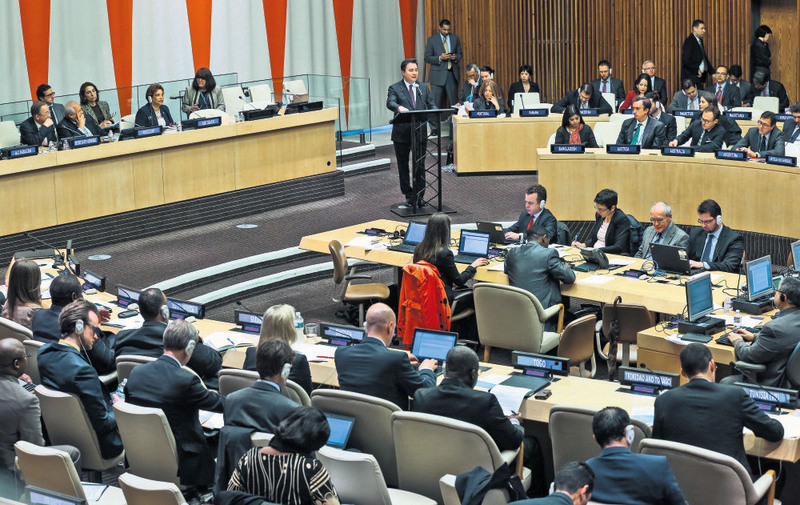
Deputy Prime Minister Ali Babacan said despite positive developments, the global economy was against severe tests such as currency fluctuations. In a meeting focusing on financing for sustainable development held by the U.N.'s Economic and Social Council, Babacan explained Turkey's G20 priorities and development perspective as term-president. Noting that even though it has been seven years since the global crisis, fast and sustainable development cannot be achieved. However, Babacan said that there were some promising signals in the larger economies, which were expected to affect other economies in a positive way.

Babacan emphasized that while some of the emerging economies achieved strong growth, others could not gain the same speed. "Despite the positive developments, tests in global economic outlook are still out there. One of the most serious tests is currency fluctuations, which have been witnessed recently. One reason for this is the monetary policies of the developed economies," stressed Babacan. In addition to saying that monetary policies have reached their limits, Babacan said that fiscal policies should be flexibly practiced to support growth without jeopardizing the medium-term economic expectations.


Emphasizing that governments should put structural reforms into effect quickly, Babacan said, "We should not forget that central banks can only open windows of opportunity so that governments can perform the right reforms." Saying that different countries have different needs, Babacan stressed that there were reforms to develop the labor force market, production, social security and investment climate, which were among those needs. Expressing that those reforms will be used as a base to overcome the global crisis, he remarked, "Monetary or fiscal policies cannot be enough alone to achieve sustainable global development." Highlighting that growth and development of countries can be achieved by the private sector, Babacan added, "Independently of how loose fiscal policies are or how much money the central bank prints, if the private sector lacks trust in the future and it is worried about employing more people, growth and unemployment targets cannot reach our expectations." Babacan said humanitarian crises also have a negative impact on development targets, adding that the current approach is seen to fail in terms of long-term crises. He said Turkey was specifically experiencing this problem with the Syrian crisis. "In times of humanitarian crises, developed countries should shift their resources to development budgets in those crisis regions," Babacan emphasized, adding that Turkey would provide some offers to finance humanitarian crises during the World Humanitarian Summit, which will be held in Turkey next year.
  • shortlink copied
  • Last Update: Apr 21, 2015 11:52 pm
    KEYWORDS
    business
    The Daily Sabah Newsletter
    Keep up to date with what’s happening in Turkey, it’s region and the world.
    You can unsubscribe at any time. By signing up you are agreeing to our Terms of Use and Privacy Policy. This site is protected by reCAPTCHA and the Google Privacy Policy and Terms of Service apply.

    No Image
    Gaza suffers on brink of hunger and thirst
    PHOTOGALLERY
    • POLITICS
    • Diplomacy
    • Legislation
    • War On Terror
    • EU Affairs
    • News Analysis
    • TÜRKİYE
    • Istanbul
    • Education
    • Investigations
    • Minorities
    • Diaspora
    • World
    • Mid-East
    • Europe
    • Americas
    • Asia Pacific
    • Africa
    • Syrian Crisis
    • İslamophobia
    • Business
    • Automotive
    • Economy
    • Energy
    • Finance
    • Tourism
    • Tech
    • Defense
    • Transportation
    • News Analysis
    • Lifestyle
    • Health
    • Environment
    • Travel
    • Food
    • Fashion
    • Science
    • Religion
    • History
    • Feature
    • Expat Corner
    • Arts
    • Cinema
    • Music
    • Events
    • Portrait
    • Performing Arts
    • Reviews
    • Sports
    • Football
    • Basketball
    • Motorsports
    • Tennis
    • Opinion
    • Columns
    • Op-Ed
    • Reader's Corner
    • Editorial
    • Photo gallery
    • DS TV
    • Jobs
    • privacy
    • about us
    • contact us
    • RSS
    © Turkuvaz Haberleşme ve Yayıncılık 2021