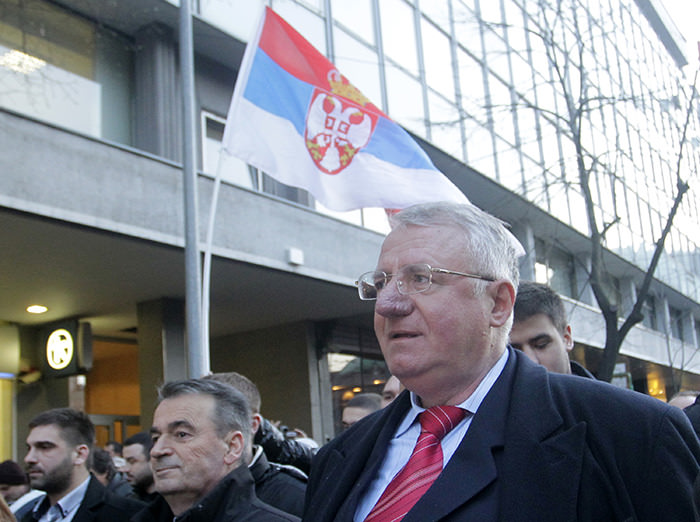
The United Nations judges acquitted Serbian nationalist firebrand Vojislav Seselj of war crimes and crimes against humanity on Thursday, a shock verdict that delivered a boost to his anti-EU Serbian Radical Party ahead of April elections.
War victims and leaders of neighbouring countries reacted with dismay to the acquittal of Seselj, who was accused of stoking murderous ethnic hatred with his fiery rhetoric during the 1990s wars that followed the break-up of federal Yugoslavia into seven successor states and killed 130,000 people.
On one occasion, Seselj gave a speech to Serbian troops, telling them: "Not a single Ustasha must leave Vukovar alive," using a derogatory term for Croats in 1991 in the eastern Croatian city on the Danube River border with Serbia. But the U.N. tribunal ruled that this did not amount to incitement.
Croatia imposed the ban on the grounds that Seselj would pose "a threat to public order," she said. Seselj has not announced any plans to visit Croatia.
Munira Subasic, who lost her husband and son in the 1995 Serb massacre of 8,000 Muslim men and boys in the Bosnian town of Srebrenica, said the tribunal had rewarded "an ideology of persecution and war crimes".
In a scathing and unusually strong dissent over the acquittal, one of the three judges said Seselj and his allies outside the courtroom had intimidated prosecution witnesses. "The majority sets aside all the rules of international humanitarian law," Flavia Lattanzi wrote.
Pressure on pro-EU government
Thursday's verdict ramps up the pressure on the right-wing government of Serbian Prime Minister Aleksandar Vucic, once an ally of Seselj who dropped his nationalism in favour of a policy of seeking Serbia's admission to the European Union.
The government is walking a tightrope at a time of growing Russian influence in southeastern Europe and risks losing votes to Seselj's camp if it is seen as too accommodating of the EU-backed ICTY, which has prosecuted mainly Serbs.
Seselj, 61, is a prolific writer known for his pugnacious temper and was a close ally of late Serbian President Slobodan Milosevic, who died in his U.N. tribunal cell in The Hague a decade ago before his war crimes trial could be completed.
Seselj has never abandoned his ideal of a "Greater Serbia" incorporating parts of Croatia and Bosnia that Serb nationalist forces fought for after Yugoslavia's federal republics split away, and his message could yet tempt back Vucic supporters.
"This panel of judges contributed to removing the taint from the Serbian people," Seselj told a news conference after the news of his acquittal.
Last week, the U.N. tribunal sentenced Radovan Karadzic, former political leader of the Bosnian Serbs, to 40 years in prison for war crimes and genocide, while Ratko Mladic, the ex-Bosnian Serb military commander, remains on trial.
But since Milosevic's death, the tribunal has never managed to pin legal responsibility for Bosnia's genocide on a Belgrade Serb.
Seselj's acquittal also came as a blow to prosecutors at the International Criminal Tribunal for the former Yugoslavia after the decade-long trial, the longest in the history of the ICTY.
Prosecutors said they were considering appealing against the acquittal of Seselj, who has been living freely in Belgrade since 2014 after being diagnosed with terminal cancer. Still vigorous, he defied judges by re-immersing himself in politics.
"With this acquittal on all the nine counts of the indictment, the arrest warrant issued by the appeals chamber is rendered moot," said Antonetti. "Vojislav Seselj is now a free man."