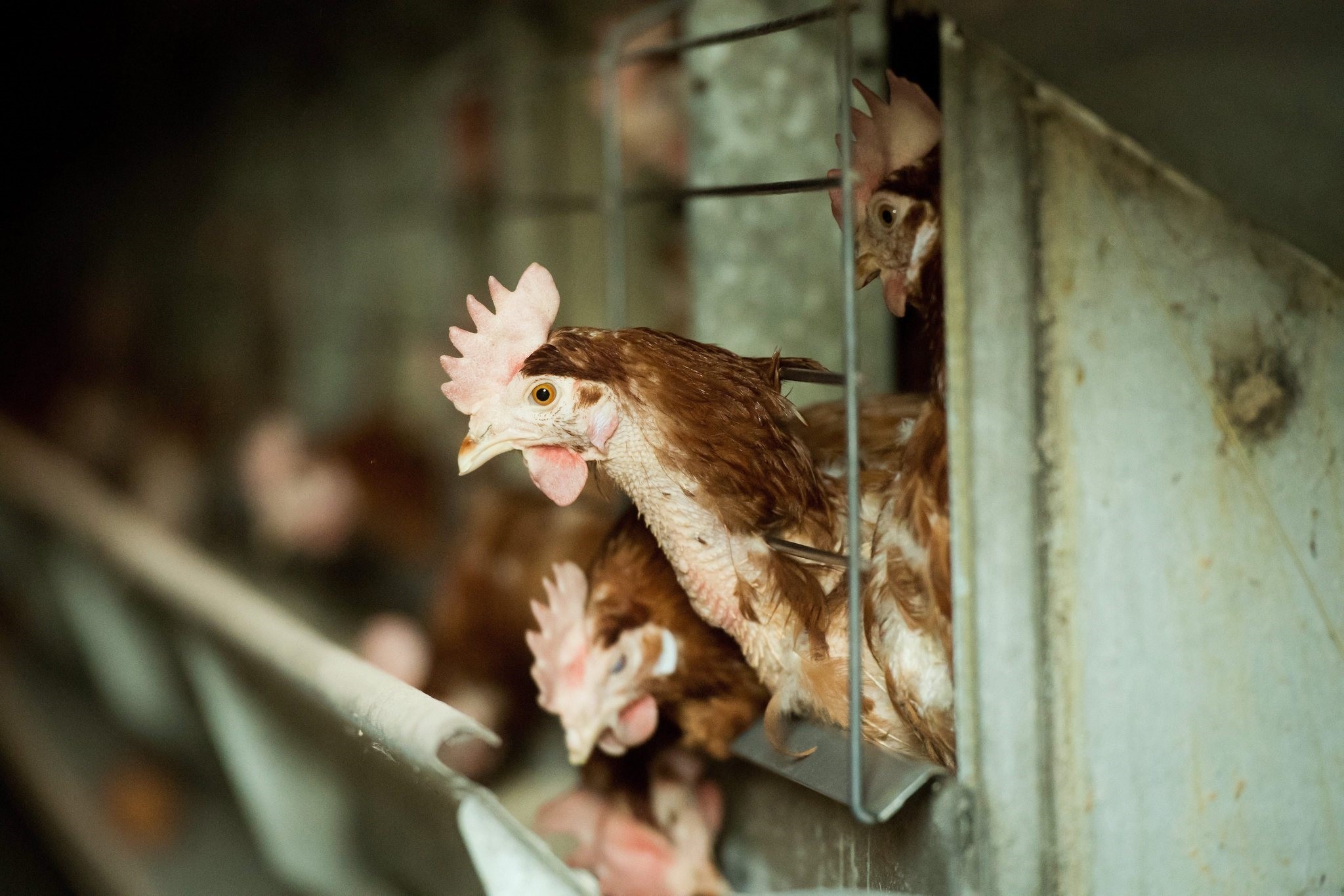
German animal health authorities moved on Thursday to cull more than 100,000 fowl on farms in the state of Lower Saxony in response to an outbreak of bird flu that is sweeping across northern Europe.
The case was confirmed in Cloppenburg in north Germany and is the first farm-based case in Lower Saxony, one of Europe's largest poultry production regions, the state's agriculture ministry said.
Frank Beumker, a spokesman for the local authority in Cloppenburg, said all 16,000 turkey cocks at one operation in the area had been destroyed after the H5N8 bird flu virus was found.
A further 92,000 fowl on two sites nearby would also be destroyed, the local authority said.
Hungary and Austria also recently reported cases in domestic duck and turkey farms where all poultry had to be culled.
On Wednesday, the Swedish National Veterinary Institute (SVA) reported that the deadly H5N8 strain of the virus had been detected in a wild bird in the country's southern Scania province.
Traces of the H5 virus have also been found at a factory farm in Helsingborg, though it is not yet clear whether it is the H5N8 strain. Some 38,000 hens have been destroyed as a precaution, the agricultural ministry said. Infected birds have also been found in Denmark.
H5N8 was first found on the Russian-Mongolian border in June when birds were tested as part of a wildfowl monitoring programme. The pathogen has since been found in Iran and Israel.
The proportion of wildfowl testing positive for the pathogen is very high compared with the rates found for the H5N1 avian flu strain of 10 years ago, according to the German institute.