Daily Sabah logo

Politics
Diplomacy Legislation War On Terror EU Affairs Elections News Analysis
TÜRKİYE
Istanbul Education Investigations Minorities Expat Corner Diaspora
World
Mid-East Europe Americas Asia Pacific Africa Syrian Crisis Islamophobia
Business
Automotive Economy Energy Finance Tourism Tech Defense Transportation News Analysis
Lifestyle
Health Environment Travel Food Fashion Science Religion History Feature Expat Corner
Arts
Cinema Music Events Portrait Reviews Performing Arts
Sports
Football Basketball Motorsports Tennis
Opinion
Columns Op-Ed Reader's Corner Editorial
PHOTO GALLERY
JOBS ABOUT US RSS PRIVACY CONTACT US
© Turkuvaz Haberleşme ve Yayıncılık 2025

Daily Sabah - Latest & Breaking News from Turkey | Istanbul

  • Politics
    • Diplomacy
    • Legislation
    • War On Terror
    • EU Affairs
    • Elections
    • News Analysis
  • TÜRKİYE
    • Istanbul
    • Education
    • Investigations
    • Minorities
    • Expat Corner
    • Diaspora
  • World
    • Mid-East
    • Europe
    • Americas
    • Asia Pacific
    • Africa
    • Syrian Crisis
    • Islamophobia
  • Business
    • Automotive
    • Economy
    • Energy
    • Finance
    • Tourism
    • Tech
    • Defense
    • Transportation
    • News Analysis
  • Lifestyle
    • Health
    • Environment
    • Travel
    • Food
    • Fashion
    • Science
    • Religion
    • History
    • Feature
    • Expat Corner
  • Arts
    • Cinema
    • Music
    • Events
    • Portrait
    • Reviews
    • Performing Arts
  • Sports
    • Football
    • Basketball
    • Motorsports
    • Tennis
  • Gallery
  • Opinion
    • Columns
    • Op-Ed
    • Reader's Corner
    • Editorial
  • TV

Bosnian club symbol for ethnic unity

by

SARAJEVO Oct 28, 2017 - 12:00 am GMT+3
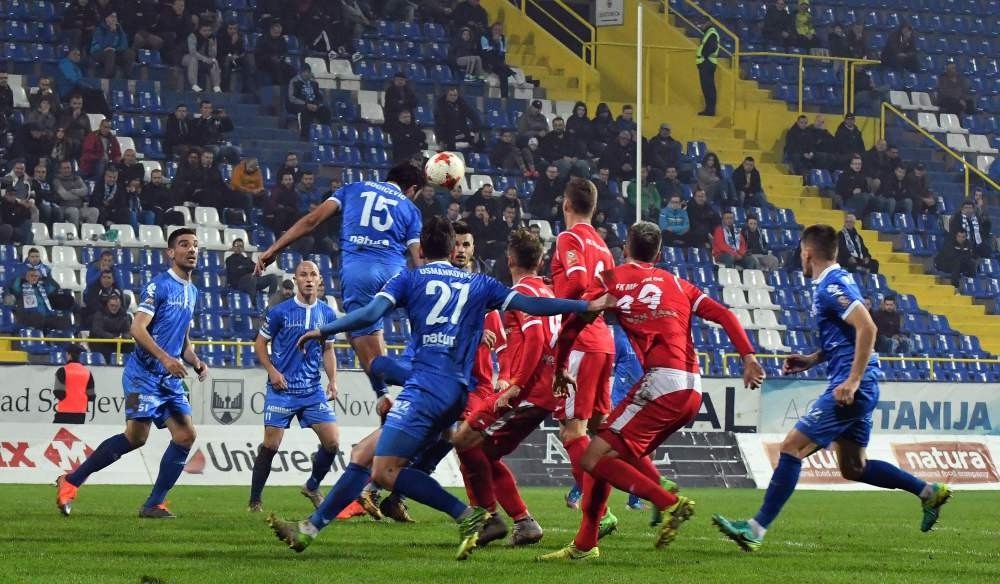
Footballers of Sarajevo's Zeljeznicar FC (blue jerseys) take part in a local match against Mladost FC (red jerseys).
by Oct 28, 2017 12:00 am

Two decades after Sarajevo's pride in its multi-ethnicities was torn apart by conflict, a football club remains testimony to the previous integration of Muslim Bosnians and Christian Croats and Serbs.

"We are in Zeljo and Zeljo is ours!" reads a motto on the wall at the entrance to the Zeljeznicar club's stadium, a rare place in the deeply divided Balkan country where only football team loyalty matters. "A fan of Zeljeznicar has never been determined ... by his ethnic or religious affiliation," 40-year-old club spokesman Adis Hadzic said.

Bosnia's inter-ethnic conflict in the early 1990s left some 100,000 people dead, including 11,000 in Sarajevo. But Zeljo remains "a club of nostalgics, who live by what was", says Ivica Osim, 76, a club legend and child of Sarajevo, who also served as the last coach of the Yugoslav football team before the federation fell apart. Osim believes the club "is not only about football, it's a lifestyle and behavior."

Created in 1921 by railway workers, the Plavi (Blues) arrived on the scene when there were already four clubs in Sarajevo. The new team was open to everyone. Champions of Yugoslavia in 1972, semi-finalists in the UEFA Cup in 1985 - with Osim on the bench and Mehmed Bazdarevic in the field - the club captured imaginations. Zeljo is a volunteer-led association, and in 2015 it was decided that fans would never own less than 51 percent of the club. With limited means and an annual budget of 3 million euros, Zeljo has often sold its best players, such as Croatian striker Ivan Lendric to Lens in France. How could the club make its decrepit stadium, with 13,500 seats, capable of hosting international games? "Someone had the idea to offer 10-year subscriptions" for 511 euros each, club president Vedran Vukotic, 39, explained. That is no small sum in Bosnia, but more than 800 supporters have provided more than 400,000 euros out of the 1.1 million needed. They include regular fans and businesses and also stars such as Juventus midfielder Miralem Pjanic and musician Goran Bregovic.

"I don't think that Zeljo is becoming a Bosniak club," said Mario Vukasovic, 29, whose ethnic Croat family returned to Sarajevo a year after the end of the conflict.

"Multi-ethnicity is greater [at the club] than in the city," he said, explaining that he also plans to help finance the covering of the southern stands, projected to cost 2.5 million euros. After the war, Croatian players returned, then Serbs such as Belgrade-born defender Jovan Blagojevic, 29, who starts his third season "never having received bad words."


  • shortlink copied
  • KEYWORDS
    sports
    The Daily Sabah Newsletter
    Keep up to date with what’s happening in Turkey, it’s region and the world.
    You can unsubscribe at any time. By signing up you are agreeing to our Terms of Use and Privacy Policy. This site is protected by reCAPTCHA and the Google Privacy Policy and Terms of Service apply.
    No Image
    Puppy eyes: Fuzzy pups train to guide the blind
    PHOTOGALLERY
    • POLITICS
    • Diplomacy
    • Legislation
    • War On Terror
    • EU Affairs
    • News Analysis
    • TÜRKİYE
    • Istanbul
    • Education
    • Investigations
    • Minorities
    • Diaspora
    • World
    • Mid-East
    • Europe
    • Americas
    • Asia Pacific
    • Africa
    • Syrian Crisis
    • İslamophobia
    • Business
    • Automotive
    • Economy
    • Energy
    • Finance
    • Tourism
    • Tech
    • Defense
    • Transportation
    • News Analysis
    • Lifestyle
    • Health
    • Environment
    • Travel
    • Food
    • Fashion
    • Science
    • Religion
    • History
    • Feature
    • Expat Corner
    • Arts
    • Cinema
    • Music
    • Events
    • Portrait
    • Performing Arts
    • Reviews
    • Sports
    • Football
    • Basketball
    • Motorsports
    • Tennis
    • Opinion
    • Columns
    • Op-Ed
    • Reader's Corner
    • Editorial
    • Photo gallery
    • DS TV
    • Jobs
    • privacy
    • about us
    • contact us
    • RSS
    © Turkuvaz Haberleşme ve Yayıncılık 2021