Most babies should start eating peanut-containing foods well before their first birthday, say guidelines released Thursday that aim to protect high-risk tots and other youngsters, too, from developing the dangerous food allergy.
The new guidelines from the National Institutes of Health mark a shift in dietary advice, based on landmark research that found early exposure dramatically lowers a baby's chances of becoming allergic.
The recommendations spell out exactly how to introduce infants to peanut-based foods and when — for some, as early as 4 to 6 months of age — depending on whether they're at high, moderate or low risk of developing one of the most troublesome food allergies.
"We're on the cusp of hopefully being able to prevent a large number of cases of peanut allergy," said Dr. Matthew Greenhawt of the American College of Allergy, Asthma and Immunology, a member of the NIH-appointed panel that wrote the guidelines.
Babies at high risk — because they have a severe form of the skin rash eczema or egg allergies — need a check-up before any peanut exposure, and might get their first taste in the doctor's office.
For other tots, most parents can start adding peanut-containing foods to the diet much like they already introduced oatmeal or mushed peas.
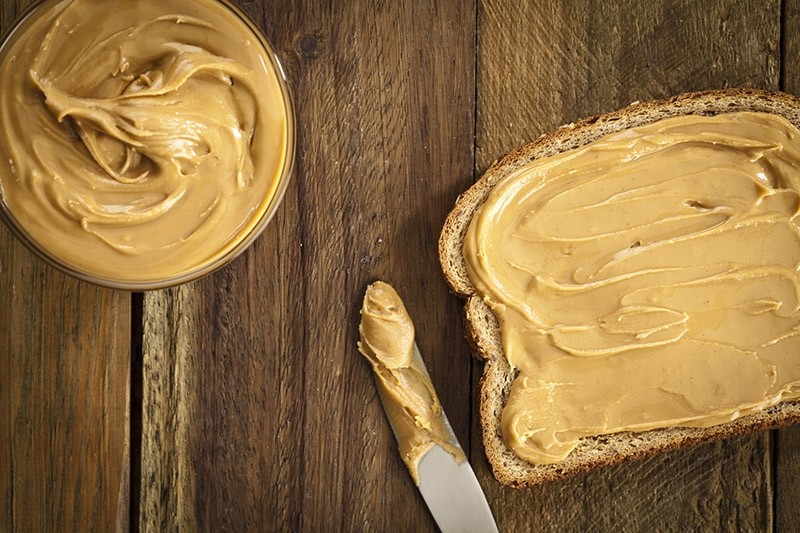
No, babies don't get whole peanuts or a big glob of peanut butter — those are choking hazards. Instead, the guidelines include options like watered-down peanut butter or easy-to-gum peanut-flavored "puff" snacks.
"It's an important step forward," said Dr. Anthony Fauci, director of NIH's National Institute of Allergy and Infectious Diseases, which appointed experts to turn the research findings into user-friendly guidelines. "When you do desensitize them from an early age, you have a very positive effect."
Peanut allergy is a growing problem, affecting about 2 percent of U.S. children who must avoid the wide array of peanut-containing foods or risk severe, even life-threatening, reactions.
For years, pediatricians advised avoiding peanuts until age 3 for children thought to be at risk. But the delay didn't help, and that recommendation was dropped in 2008 — although parent wariness of peanuts persists.
"It's old news, wrong old news, to wait," said Dr. Scott Sicherer, who represented the American Academy of Pediatrics on the guidelines panel.
Thursday's guidelines make that clear, urging parents and doctors to proactively introduce peanut-based foods early.
"Just because your uncle, aunt and sibling have an allergy, that's even more reason to give your baby the food now" — even if they're already older than 6 months, added Sicherer, a pediatric allergist at Mount Sinai Hospital in New York.
In Columbus, Ohio, one doctor told Carrie Stevenson to avoid peanuts after her daughter was diagnosed with egg allergy. Then Stevenson found an allergy specialist who insisted that was the wrong advice — and offered baby Estelle a taste test of peanut butter in his office when she was 7 months old.
"I was really nervous," Stevenson recalled, unsure which doctor to believe. But, "we didn't want her to have any more allergies."
Now 18 months old, Estelle has eaten peanut butter or peanut-flavored puffs at least three times a week since then and so far seems healthy. Stevenson, pregnant again, plans early exposure for her next child, too.
The guidelines recommend:
—All babies should try other solid foods before peanut-containing ones, to be sure they're developmentally ready.
—High-risk babies should have peanut-containing foods introduced as early as 4 to 6 months after a check-up to tell if they should have the first taste in the doctor's office, or if it's OK to try at home with a parent watching for any reactions.
—Moderate risk babies have milder eczema, typically treated with over-the-counter creams. They should start peanut-based foods around 6 months, at home.
—Most babies are low risk, and parents can introduce peanut-based foods along with other solids, usually around 6 months.
—Building tolerance requires making peanut-based foods part of the regular diet, about three times a week.
What's the evidence? First, researchers noticed a 10-fold higher rate of peanut allergy among Jewish children in Britain, who aren't fed peanut products during infancy, compared to those in Israel where peanut-based foods are common starting around age 7 months.
Then in 2015, an NIH-funded study of 600 babies put that theory to the test, assigning them either to avoid or regularly eat age-appropriate peanut products. By age 5, only 2 percent of peanut eaters — and 11 percent of those at highest risk — had become allergic. Among peanut avoiders, 14 percent had become allergic, and 35 percent of those at highest risk.
Whether the dietary change will spur a drop in U.S. peanut allergies depends on how many parents heed the new advice — and if a parent seems skeptical, the guidelines urge doctors to follow up.