Daily Sabah logo

Politics
Diplomacy Legislation War On Terror EU Affairs Elections News Analysis
TÜRKİYE
Istanbul Education Investigations Minorities Expat Corner Diaspora
World
Mid-East Europe Americas Asia Pacific Africa Syrian Crisis Islamophobia
Business
Automotive Economy Energy Finance Tourism Tech Defense Transportation News Analysis
Lifestyle
Health Environment Travel Food Fashion Science Religion History Feature Expat Corner
Arts
Cinema Music Events Portrait Reviews Performing Arts
Sports
Football Basketball Motorsports Tennis
Opinion
Columns Op-Ed Reader's Corner Editorial
PHOTO GALLERY
JOBS ABOUT US RSS PRIVACY CONTACT US
© Turkuvaz Haberleşme ve Yayıncılık 2026

Daily Sabah - Latest & Breaking News from Turkey | Istanbul

  • Politics
    • Diplomacy
    • Legislation
    • War On Terror
    • EU Affairs
    • Elections
    • News Analysis
  • TÜRKİYE
    • Istanbul
    • Education
    • Investigations
    • Minorities
    • Expat Corner
    • Diaspora
  • World
    • Mid-East
    • Europe
    • Americas
    • Asia Pacific
    • Africa
    • Syrian Crisis
    • Islamophobia
  • Business
    • Automotive
    • Economy
    • Energy
    • Finance
    • Tourism
    • Tech
    • Defense
    • Transportation
    • News Analysis
  • Lifestyle
    • Health
    • Environment
    • Travel
    • Food
    • Fashion
    • Science
    • Religion
    • History
    • Feature
    • Expat Corner
  • Arts
    • Cinema
    • Music
    • Events
    • Portrait
    • Reviews
    • Performing Arts
  • Sports
    • Football
    • Basketball
    • Motorsports
    • Tennis
  • Gallery
  • Opinion
    • Columns
    • Op-Ed
    • Reader's Corner
    • Editorial
  • TV

Extinct huge burrowing bat fossil discovered in New Zealand

by

WELLINGTON Jan 11, 2018 - 12:00 am GMT+3
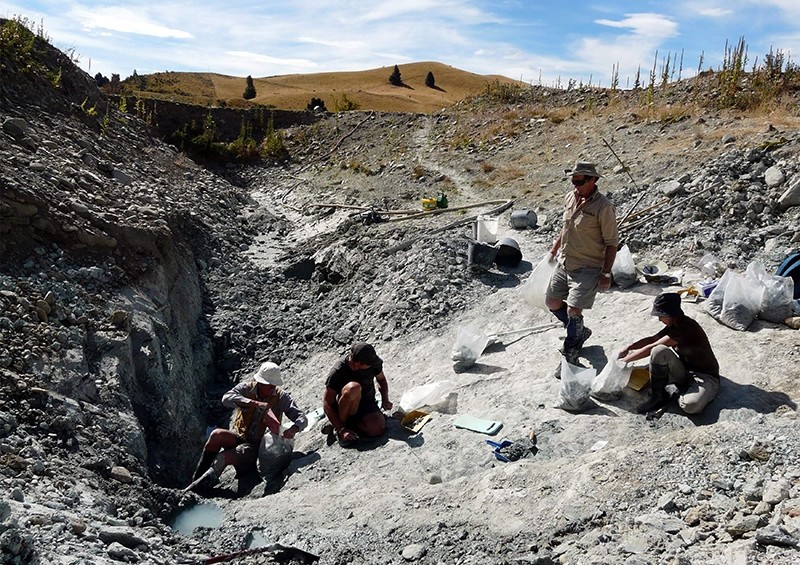
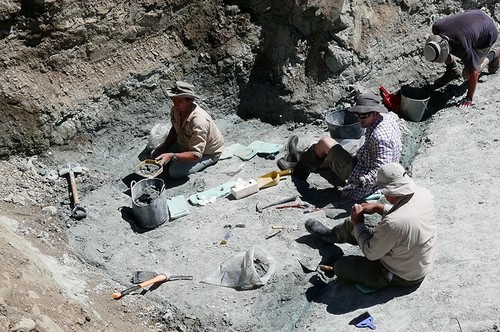
This undated handout picture released by the Te Papa Museum to AFP on January 11, 2018 shows scientists working at an excavating site in St Bathans in New Zealand's Central Otago (AFP Photo)
by Jan 11, 2018 12:00 am

The fossilized remains of a giant burrowing bat that lived millions of years ago have been found in New Zealand, an international team of scientists announced Thursday.

It belonged to "a bat super-family that once spanned the southern landmasses of Australia, New Zealand, South America and possibly Antarctica," according to study author Sue Hand from the University of New South Wales.

The teeth and bones of the animal, which lived 16 to 19 million years ago, were discovered near St. Bathans in Central Otago where the scientists have been working for the past 16 years.


It is estimated to be three times the size of an average modern bat and weighed 40 grams (1.4 ounces).

In findings published in the journal Scientific Reports, the scientists said the bat was peculiar because it not only flew but also scurried about on all fours over the forest floor, under leaf litter and along branches foraging for food.

Its "specialized teeth and large size suggest it had a different diet, capable of eating even more plant food as well as small vertebrates -- a diet more like some of its South American cousins. We don't see this in Australasian bats today," Hand said.

The bat has been named Vulcanops jennyworthyae after team member Jenny Worthy, who found the fossils, and Vulcan, the Roman god of fire and volcanoes -- a reference to New Zealand's tectonic nature and also to the historic Vulcan Hotel in St. Bathans.

"This weird bat is among the most bizarre of all the fossils that we've found," said Te Papa museum curator Alan Tennyson, a New Zealand member of the team which also included scientists from Australia, Britain and the United States.

"This new bat was a relative of New Zealand's peculiar short-tailed bats, extinct Australian species, and the Americas' vampire bats, suggesting that ground-dwelling forms of bat were more common in the past."

The St. Bathans dig has found several other extinct animals over the past 16 years, including species of tuatara, moa, kiwi, frogs, parrots, pigeons as well as land turtles and crocodiles.

Around 50 million years ago, the landmasses of Australia, New Zealand, South America and Antarctica were connected as the last vestiges of the southern supercontinent Gondwana.

With the subsequent fragmentation of Gondwana, cooling climates and the growth of ice-sheets in Antarctica, the report said Australasia's burrowing bats became isolated from their South American relatives.


  • shortlink copied
  • Last Update: Jan 11, 2018 10:52 am
    KEYWORDS
    life
    The Daily Sabah Newsletter
    Keep up to date with what’s happening in Turkey, it’s region and the world.
    You can unsubscribe at any time. By signing up you are agreeing to our Terms of Use and Privacy Policy. This site is protected by reCAPTCHA and the Google Privacy Policy and Terms of Service apply.
    No Image
    Türkiye's Karaleylek Canyon, a natural wonder
    PHOTOGALLERY
    • POLITICS
    • Diplomacy
    • Legislation
    • War On Terror
    • EU Affairs
    • News Analysis
    • TÜRKİYE
    • Istanbul
    • Education
    • Investigations
    • Minorities
    • Diaspora
    • World
    • Mid-East
    • Europe
    • Americas
    • Asia Pacific
    • Africa
    • Syrian Crisis
    • İslamophobia
    • Business
    • Automotive
    • Economy
    • Energy
    • Finance
    • Tourism
    • Tech
    • Defense
    • Transportation
    • News Analysis
    • Lifestyle
    • Health
    • Environment
    • Travel
    • Food
    • Fashion
    • Science
    • Religion
    • History
    • Feature
    • Expat Corner
    • Arts
    • Cinema
    • Music
    • Events
    • Portrait
    • Performing Arts
    • Reviews
    • Sports
    • Football
    • Basketball
    • Motorsports
    • Tennis
    • Opinion
    • Columns
    • Op-Ed
    • Reader's Corner
    • Editorial
    • Photo gallery
    • DS TV
    • Jobs
    • privacy
    • about us
    • contact us
    • RSS
    © Turkuvaz Haberleşme ve Yayıncılık 2021