Abstract questions and possibilities make all of us think deeply from time to time. Is there an end to the vacuum of space? What would happen if there was no water? Which came first, the chicken or the egg? How far will technology advance? Is black a color? And others in a similar vein ... So, what is the concept of time? Let's take a look at some answers to this question today.
Although there is no consensus on the definition of time, there is no disagreement about its measurement either.
The concept of time is not only one of the fields of interest of philosophy, but also indispensable in physics and mathematics studies.
And its definition in all of them differs from one to the next.
Throughout history, mankind has tried to measure time with various methods. At first, it was enough to know when it would be hot or cold, but as life progressed, the year was divided into months, weeks and days.
According to the ancient Egyptian priests, time was the disappearance of energy, or in other words, the transformation process of energy that symbolized the eternal creator.
Time is an extremely deep concept that one cannot rewind, renew or trade. It is an intangible element of our daily life, it organizes events in the order of their occurrence and flow.
Of course, we can find many answers to the question "What is time?" and consider it from different angles. However, objective time is the time that can be measured by a clock that is equal and unchanging for all individuals.
Objective time can also be called real time. Regular motions such as the earth itself and its rotation around the sun are essential for real time.
Ancient civilizations in the past benefited from these movements to organize their lives.
The Babylonians divided the year into 12 equal parts and the day into 24 hours according to the solar calendar back in 2,400 B.C., while the Islamic calendar divided the year into 354 or 355 days and 12 months according to the lunar calendar, that is, it was based on the orbit of the moon around the earth.
Let's come to today and the time measuring instrument we use the most: the clock.
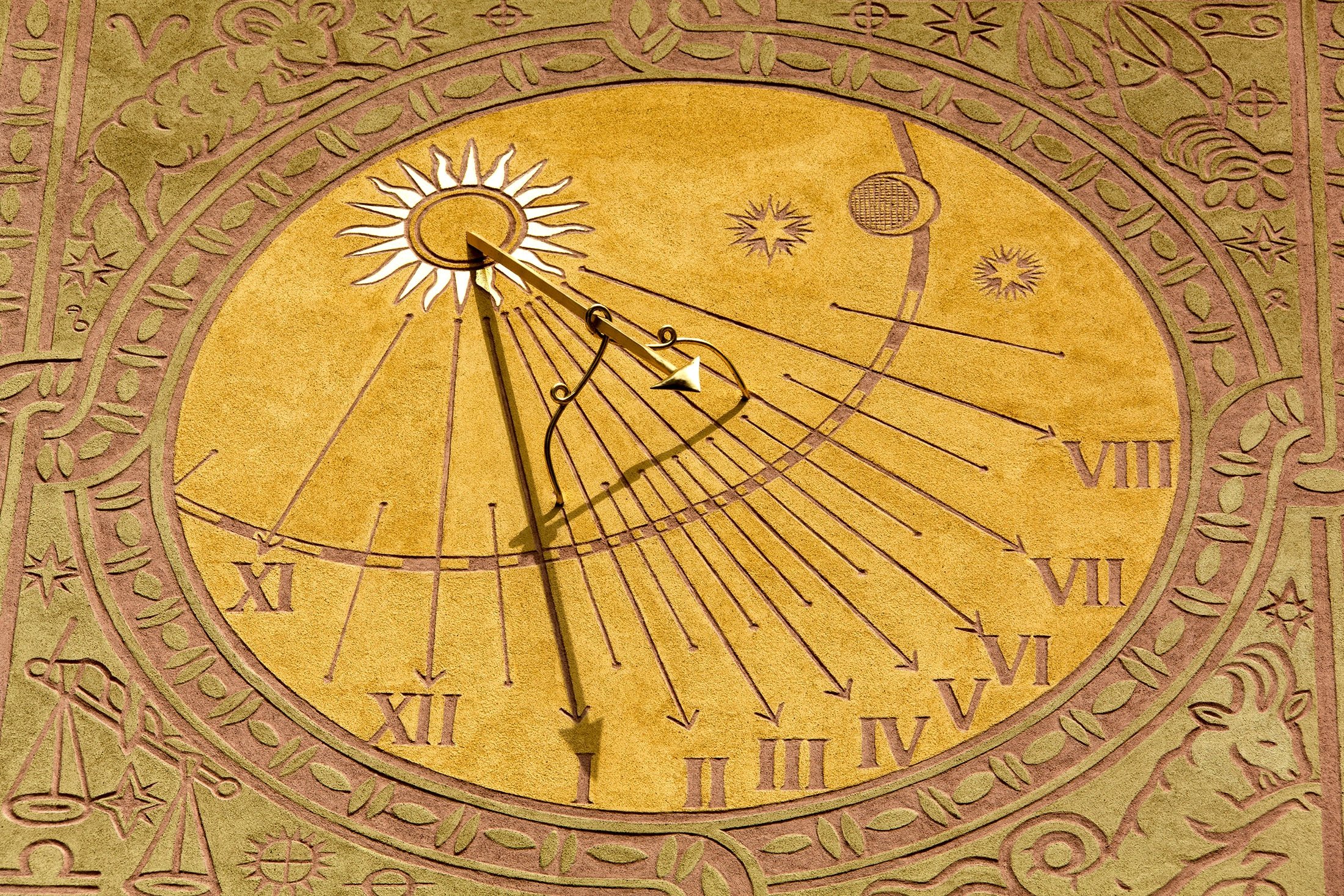
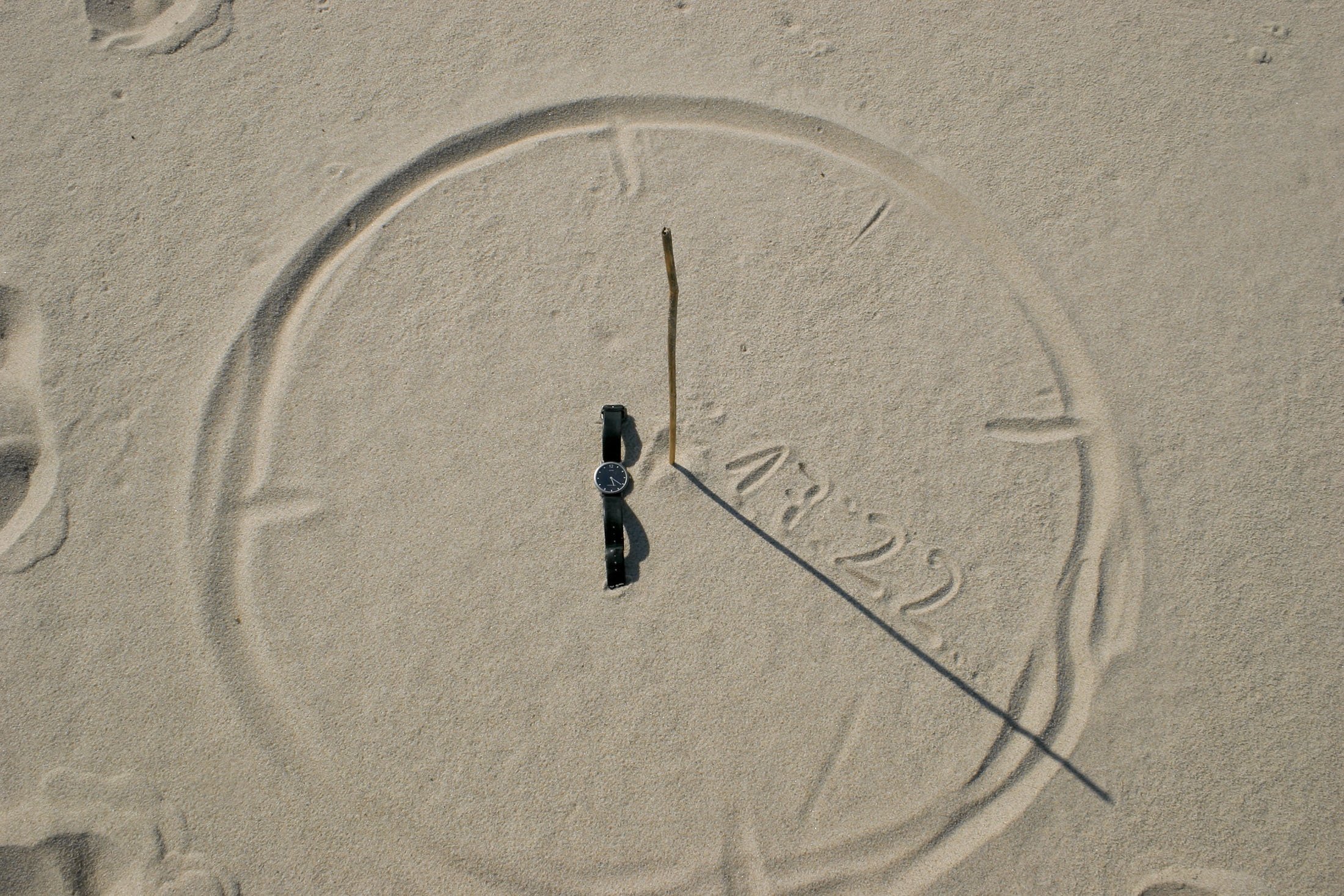
In written history, the clock was first used in Egypt in the form of a sundial in 4,000 B.C. In this type of clock, calculations were made by looking at the shadow length created by an upright object according to the angle of the sun, but it of course did not work at night.
Then, the ancient Egyptians invented the hourglass and the water clock.
In recent history – like the A.D. kind – in 1505 the earliest extant example of a watch was brought to Earth by Peter Henlein, a locksmith and clockmaker of Nuremberg, Germany, often considered the inventor of the watch. The number of mechanical watches increased considerably in the 1550s and did not change much after the 1600s.
The pendulum clock produced by George Graham in 1721 surpassed the first pendulum clock produced in 1656 with its precision.
In 1800, seconds entered the pocket with the first pocket chronometer, the first watch factory was opened in America in 1850 and mass production began.
Battery-powered watches were very robust and punctual when they were produced in 1952.
In 1970, the first electronic clocks in history were put on the market.
After 1980, with technology developing for decades, today smart watches are very successful and popular across the world.
At this point, I must say that although I cannot explain all the details, there is excellent information on how the mechanisms used for the watch were discovered and how they came together. It often amazes me that an object whose use has become commonplace today was discovered under very difficult conditions in the past.
With the development of technology, it has become easier to manage time.

These smart watches have many functions, including meal time reminders, calorie calculators, alarms, heart rate monitoring and step counting. They have evolved from being used only to measure time at first, but they have also evolved to guide us like a nanny on how to use them.
The time when no action is taken has been described as idle time, and in our age, with the information, research and data available on time management and using time correctly increasing, we can use it in a beneficial way and not leave it idle.
Time perception is sometimes described as fast or slow.
Time seems to slow in moments of sadness but happy times pass in the blink of an eye.
Although there is a scientifically proven time, our feelings, philosophical approaches and thoughts as humans may claim the opposite.
Using time efficiently would protect us from inaction and useless actions. This does not necessitate excessive planning or being isolated from things that make us happy, such as television or the telephone. Every moment we devote to our work, family and friends, hobbies, socializing, learning and sharing without breaking away from the reality of the world we live in is very valuable and productive.
In this way, we follow positive and negative developments in the world we live in, and take correct and effective decisions that will benefit our environment.
The time we spend empathizing and generating ideas makes us more sensitive to all living things and the environment.
As our awareness increases, we may see a butterfly flapping its wings or catch the scent of a flower we have never encountered before.
Here's to hoping we spend our time on good things in this age of consumption.