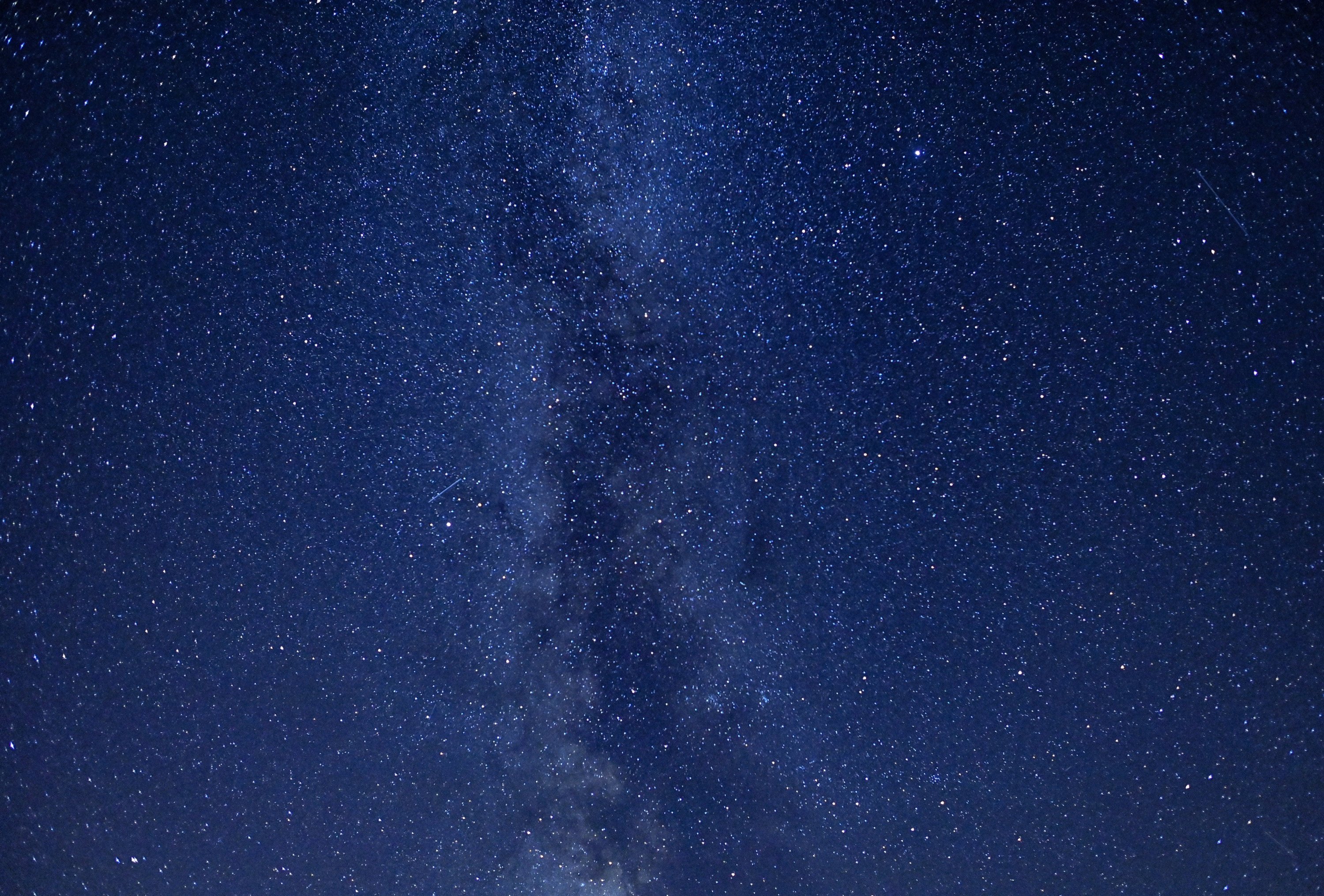
If you are becoming more fascinated by the night sky and have the desire to observe more than what can be seen without any aids, there is no necessity to invest in an expensive telescope that could cost hundreds or even thousands of dollars. In reality, seasoned astronomy professionals suggest refraining from such a purchase, at least initially.
They suggest starting with binoculars, and not just because they are less expensive.
Telescopes are more complicated to operate, meaning it takes time to learn how to use them, and they can be clumsy to transport. Binoculars are easier to use and can help you learn the basics of the night sky. While they do offer less magnification, they show wider sections of the sky than the narrow-view telescopes provide. They can help you see nebulae, star clusters, and several planets, including Jupiter with some of its moons.
"It allows you to explore some of those things before you decide whether to invest in a telescope," said Jeffrey Hunt, a retired planetarium director based in the U.S state of Illinois whose website When the Curves Line Up tracks interesting celestial events for amateur stargazers.
"Part of the reason for going with a binocular is learning the sky – learning where the bright stars are, where the constellations are, learning where some of the easier things to find in the sky are located. Some are dimmer than the bright stars, and some are just beyond the limit of human eyesight."
Hunt's "go-to" binocular for astronomy is a 7×50, meaning it magnifies objects seven times, and its apertures – the openings where light enters – measure 50 millimeters in diameter. You should stay away from 35-millimeter apertures because they let in far less light than 50s.
The owner of Mile High Astronomy in Lakewood, in the U.S. state of Colorado, Sorin (he goes by one name), also recommends 7x50s for novice astronomers. Sorin sells an entry-level Celestron 7×50 for $50. Celestron makes binoculars and telescopes.
"This is enough for you to see Jupiter and its four major moons," Sorin said.
Some people opt for binoculars with 10 times magnification, but Hunt recommends against it.
"If you get a 10-power or something even more powerful, it’s really hard to hold steady," Hunt said. "7×50 gives you nice light gathering with a 50-millimeter lens, and at seven power, people can hold it somewhat steadily. Not perfectly, but somewhat steadily." Keep in mind that many binoculars can be attached to tripods through the use of an adaptor, and you'll probably want that feature if you're going to use them for astronomy.
Guidebooks and websites can help you learn what you can see with binoculars and where to look. With 7×50 binoculars, you will be able to see the Orion nebula and the Andromeda galaxy. You'll see the moon like never before.
"You get a chance to see Earthshine," Hunt said, "which is the reflection of sunlight off the earth that shines on the moon, greatly accented with a binocular."
Another interesting target with binoculars is the Pleiades star cluster, which inspired the Subaru automobile logo. With the naked eye, you can make out the six stars represented in that logo.
"You can see a few dozen with a binocular," Hunt said. "There's a couple hundred there with a telescope, but the Pleiades are so big that they do not fit into a telescope eyepiece easily."
Hunt also likes binoculars for viewing conjunctions of planets, an occurrence when two celestial bodies appear to be close together, especially when they involve Venus or Jupiter with a crescent moon.
"A binocular gives you a beautiful view of the scene," Hunt said. "Or, if the moon is near the Pleiades and you get a nice little crescent moon, it's just a beautiful sight."