Daily Sabah logo

Politics
Diplomacy Legislation War On Terror EU Affairs Elections News Analysis
TÜRKİYE
Istanbul Education Investigations Minorities Expat Corner Diaspora
World
Mid-East Europe Americas Asia Pacific Africa Syrian Crisis Islamophobia
Business
Automotive Economy Energy Finance Tourism Tech Defense Transportation News Analysis
Lifestyle
Health Environment Travel Food Fashion Science Religion History Feature Expat Corner
Arts
Cinema Music Events Portrait Reviews Performing Arts
Sports
Football Basketball Motorsports Tennis
Opinion
Columns Op-Ed Reader's Corner Editorial
PHOTO GALLERY
JOBS ABOUT US RSS PRIVACY CONTACT US
© Turkuvaz Haberleşme ve Yayıncılık 2025

Daily Sabah - Latest & Breaking News from Turkey | Istanbul

  • Politics
    • Diplomacy
    • Legislation
    • War On Terror
    • EU Affairs
    • Elections
    • News Analysis
  • TÜRKİYE
    • Istanbul
    • Education
    • Investigations
    • Minorities
    • Expat Corner
    • Diaspora
  • World
    • Mid-East
    • Europe
    • Americas
    • Asia Pacific
    • Africa
    • Syrian Crisis
    • Islamophobia
  • Business
    • Automotive
    • Economy
    • Energy
    • Finance
    • Tourism
    • Tech
    • Defense
    • Transportation
    • News Analysis
  • Lifestyle
    • Health
    • Environment
    • Travel
    • Food
    • Fashion
    • Science
    • Religion
    • History
    • Feature
    • Expat Corner
  • Arts
    • Cinema
    • Music
    • Events
    • Portrait
    • Reviews
    • Performing Arts
  • Sports
    • Football
    • Basketball
    • Motorsports
    • Tennis
  • Gallery
  • Opinion
    • Columns
    • Op-Ed
    • Reader's Corner
    • Editorial
  • TV
  • Life
  • Health
  • Environment
  • Travel
  • Food
  • Fashion
  • Science
  • Religion
  • History
  • Feature
  • Expat Corner

Cats conquered Europe during Roman times: Genome study

by Reuters

LONDON Dec 01, 2025 - 10:53 am GMT+3
Edited By Ayşe Sena Aykın
A woman dressed in a traditional Ukrainian embroidered shirt holds her cat as she takes part in an embroidered shirt parade, central Kyiv, Ukraine, May 27, 2017. (Reuters Photo)
by Reuters Dec 01, 2025 10:53 am
Edited By Ayşe Sena Aykın

A new genetic study reveals that domestic cats arrived in Europe from North Africa around 2,000 years ago, challenging the idea that they were present during prehistoric times

Whether they are a siamese, Persian, Maine Coon or Domestic Shorthair, there are hundreds of millions of cats living with people around the world. But despite their popularity as pets, the history of cat domestication has remained difficult for scientists to decipher.

A new genome study is providing some insight into the matter by determining the timing of a key milestone in feline domestication – the introduction of domestic cats into Europe from North Africa.

Domestic cats pounced into Europe roughly 2,000 years ago in early imperial Roman times, the researchers found, probably thanks to maritime trade. Some of these furry trailblazers may have been brought by sailors to hunt mice on ships that plied the Mediterranean carrying grain from the fertile fields of Egypt to ports serving Rome and other cities in the sprawling Roman Empire.

The findings contradict a long-held idea that domestication occurred in prehistoric times, perhaps 6,000 to 7,000 years ago, as farmers from the ancient Near East and Middle East first moved into Europe, bringing cats with them.

A Persian cat is seen during the sixth edition of the
A Persian cat is seen during the sixth edition of the "Mi Mascota" (My Pet) fair in Malaga, southern Spain, Nov. 25, 2017. (Reuters File Photo)

"We show that the earliest domestic cat genomes in Europe are found from the Roman imperial period onwards," starting in the first century A.D., said paleogeneticist Claudio Ottoni of the University of Rome Tor Vergata, lead author of the study published on Thursday in the journal Science.

The study used genetic data from feline remains from 97 archaeological sites across Europe and the Near East as well as from present-day cats. The researchers analyzed 225 bones of cats – domestic and wild – ranging from about 10,000 years ago to the 19th century A.D. and generated 70 ancient feline genomes.

The researchers found that cat remains from prehistoric sites in Europe belonged to wildcats, not early domestic cats.

Dogs were the first animal domesticated by people, descended from an ancient wolf population separate from modern wolves. The domestic cat came later, descended from the African wildcat.

A cat looks on as Marjana Koceku, 24, newly elected MP, serves food at her stone house transformed into an agritourism guesthouse in a remote area at Koman Lake, Shkodra, Albania, Aug. 31, 2025. (Reuters Photo)

"The introduction of the domestic cat to Europe is important because it marks a significant moment in their long-term relationship with humans. Cats aren't just another species arriving on a new continent. They're an animal that became deeply integrated into human societies, economies and even belief systems," University of Rome Tor Vergata paleogeneticist and study co-author Marco De Martino said.

The genome data identified two introductions of cats to Europe from North Africa. Roughly 2,200 years ago, people brought wildcats from northwestern Africa to the island of Sardinia, whose present-day wildcat population descended from these migrants.

But those were not domestic cats. It was a separate dispersal from North Africa about two centuries later that formed the genetic basis of the modern domestic cat in Europe.
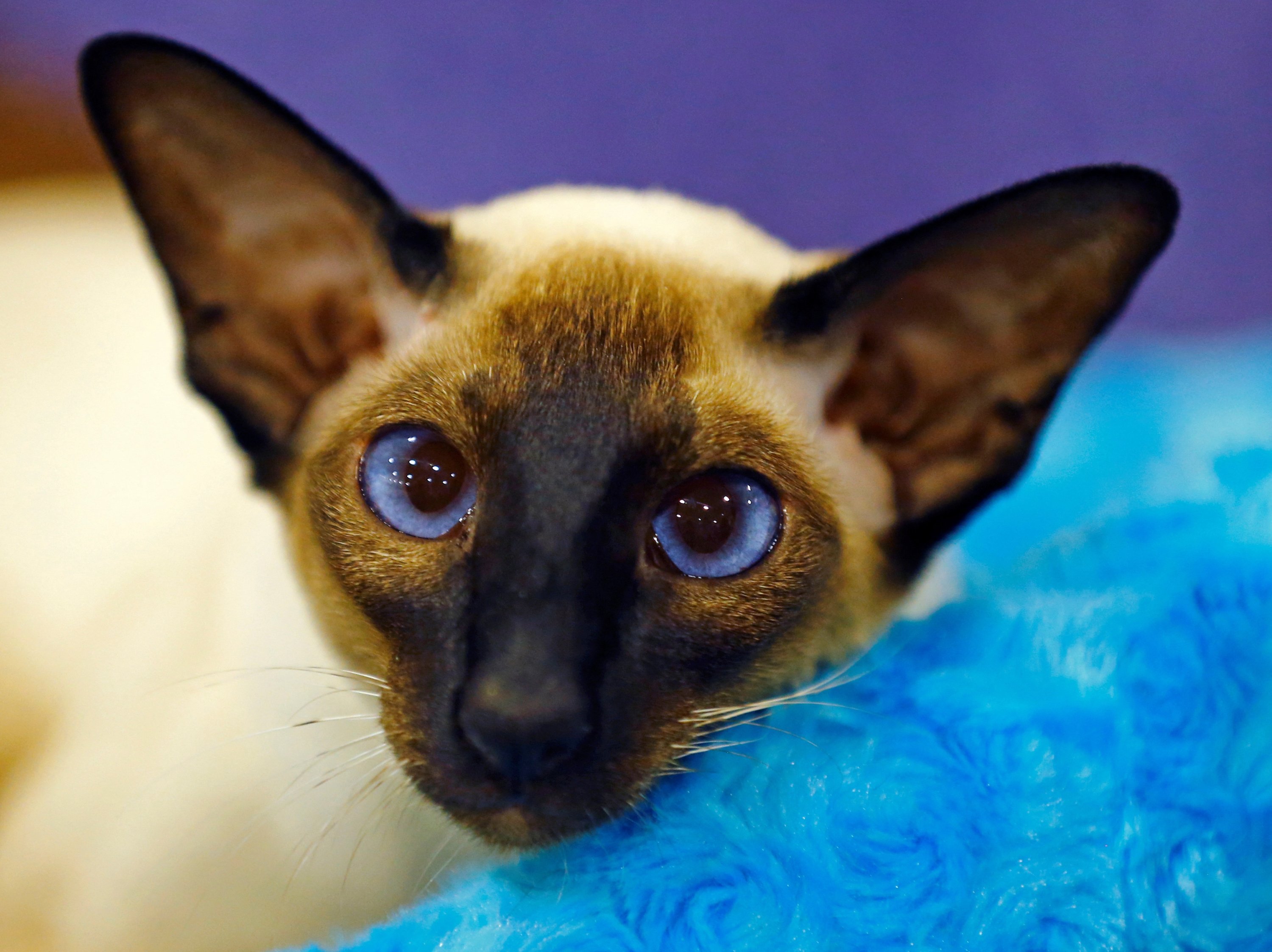
A siamese relaxes in his cat bed at the annual cat show in Del Mar, California, U.S., Jan. 24, 2015. (Reuters File Photo)

The study's findings suggest that there was not a single core region of cat domestication, but that several regions and cultures in North Africa played a role, according to zooarchaeologist and study co-author Bea De Cupere of the Royal Belgian Institute of Natural Sciences.

"The timing of the genetic waves of introduction from North Africa coincides with periods when trade around the Mediterranean intensified strongly. Cats likely traveled as efficient mouse hunters on grain ships but possibly also as valued animals with religious and symbolic significance," De Cupere said.

Cats, for example, were important in ancient Egypt, whose pantheon included feline deities and whose royalty kept pet cats, sometimes mummifying them for burial in elaborate coffins.

The ancient Roman army, with outposts arrayed across Europe and its entourage played an instrumental role in the dispersal of domestic cats throughout the continent, as attested to by feline remains discovered at the sites of Roman military camps.

Maine Coon cat plays during international pet industry fair Zoo Expo 2022, Riga, Latvia, Nov. 12, 2022. (Reuters File Photo)

The earliest domestic cat in Europe identified in the study – one genetically similar to present-day domestic cats – dated to between 50 B.C. and 80 A.D. from the Austrian town of Mautern, site of a Roman fort along the Danube River.

The study, however, does not unravel the timing and location of the initial feline domestication.

"Cat domestication is complex," Ottoni said, "and what we can tell now is the timing of the introduction of domestic cats to Europe from North Africa. We can't really say much what happened before and where."


  • shortlink copied
  • Last Update: Dec 01, 2025 1:38 pm
    KEYWORDS
    felines cats
    The Daily Sabah Newsletter
    Keep up to date with what’s happening in Turkey, it’s region and the world.
    You can unsubscribe at any time. By signing up you are agreeing to our Terms of Use and Privacy Policy. This site is protected by reCAPTCHA and the Google Privacy Policy and Terms of Service apply.
    No Image
    Countdown begins for first Turkish astronaut in space
    PHOTOGALLERY
    • POLITICS
    • Diplomacy
    • Legislation
    • War On Terror
    • EU Affairs
    • News Analysis
    • TÜRKİYE
    • Istanbul
    • Education
    • Investigations
    • Minorities
    • Diaspora
    • World
    • Mid-East
    • Europe
    • Americas
    • Asia Pacific
    • Africa
    • Syrian Crisis
    • İslamophobia
    • Business
    • Automotive
    • Economy
    • Energy
    • Finance
    • Tourism
    • Tech
    • Defense
    • Transportation
    • News Analysis
    • Lifestyle
    • Health
    • Environment
    • Travel
    • Food
    • Fashion
    • Science
    • Religion
    • History
    • Feature
    • Expat Corner
    • Arts
    • Cinema
    • Music
    • Events
    • Portrait
    • Performing Arts
    • Reviews
    • Sports
    • Football
    • Basketball
    • Motorsports
    • Tennis
    • Opinion
    • Columns
    • Op-Ed
    • Reader's Corner
    • Editorial
    • Photo gallery
    • DS TV
    • Jobs
    • privacy
    • about us
    • contact us
    • RSS
    © Turkuvaz Haberleşme ve Yayıncılık 2021