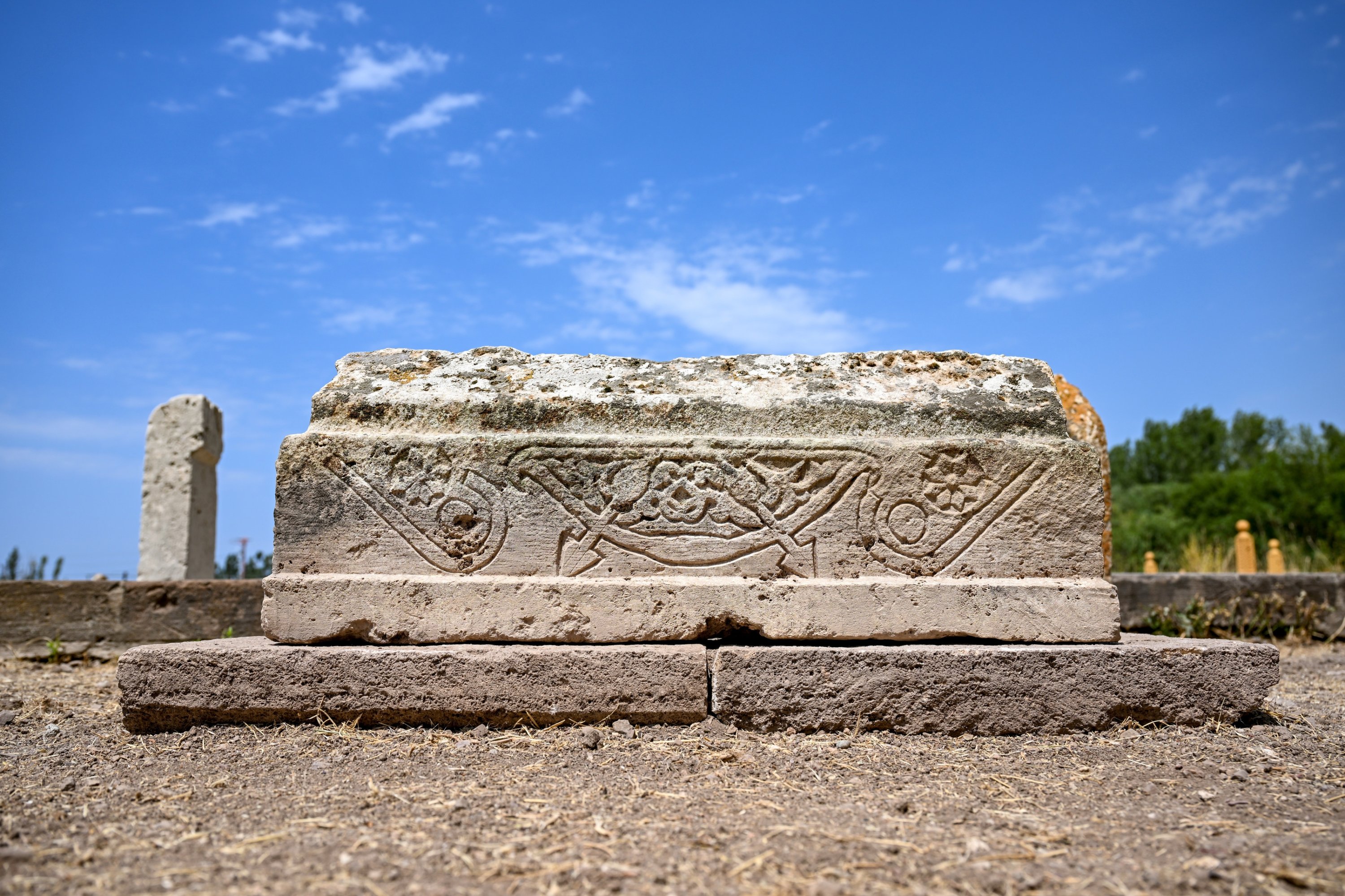
A child’s gravestone featuring a çovgan motif symbolizing horsemanship, bravery and warrior skills has been uncovered at the historic Seljuk Cemetery in Gevaş district of Van, eastern Türkiye.
Excavation, restoration and conservation work has been ongoing at the cemetery since 2022 with permission from the Ministry of Culture and Tourism. The site is home to the Halime Hatun Tomb, built about 700 years ago and is considered one of Anatolia’s largest historic Turkish-Islamic cemeteries.
The excavations are led by Ercan Çalış, an academic at the Department of Art History at Van Yüzüncü Yıl University, with a 15-member team of specialists in art history, archaeology, epigraphy, architecture, restoration and conservation.
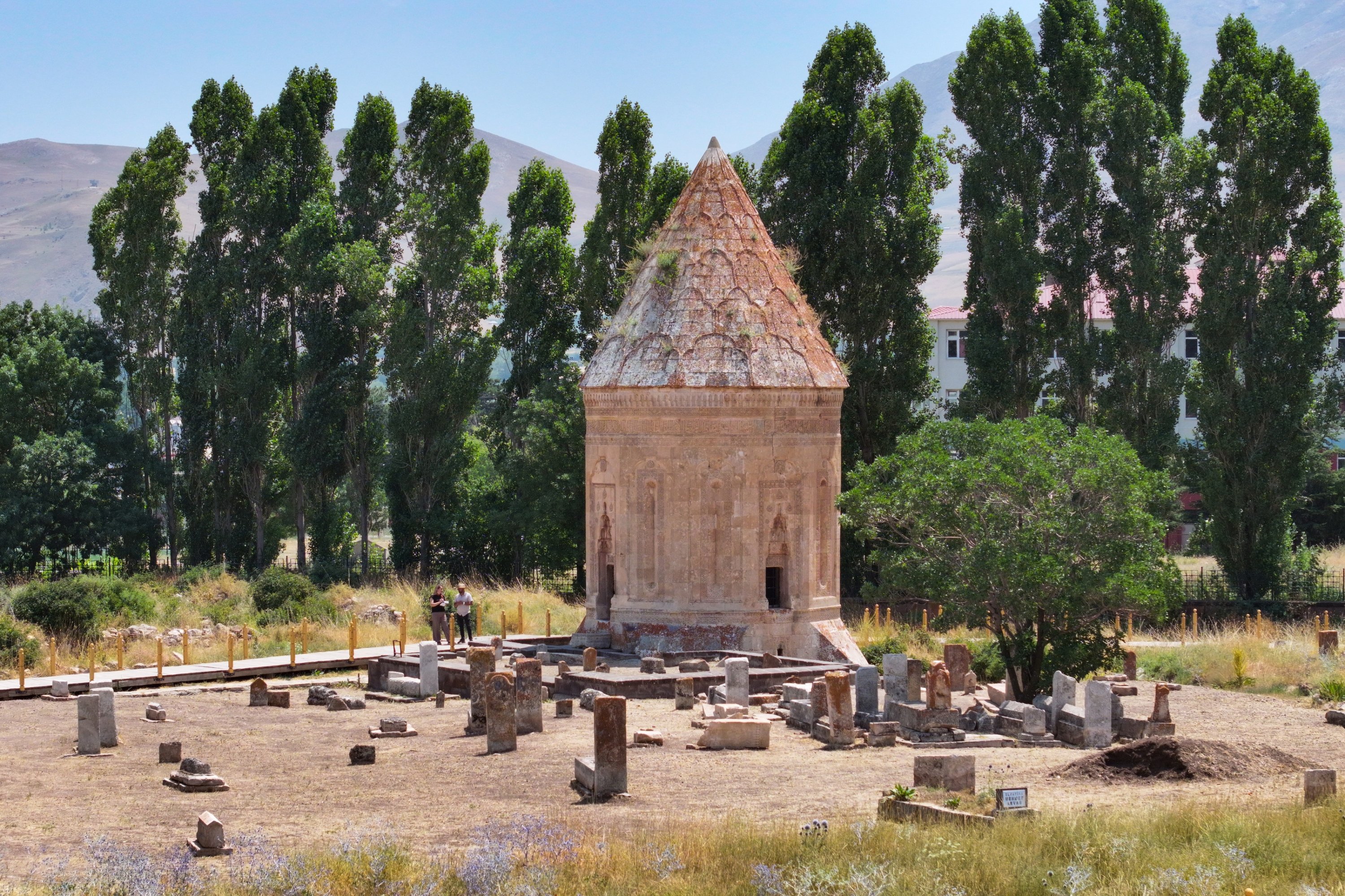
More than 1,000 gravestones have been identified across the roughly 50-decare cemetery. Some stand as high as 2.5 meters (8.2 feet) and feature inscriptions and traditional motifs.
The team has been systematically mapping the excavation area and working in 10-by-10-meter (33-by-33 feet) sections, carefully removing 30 to 60 centimeters (11.8 to 23.6 inches) of soil to identify gravestones buried underground.
While working near the Halime Hatun Tomb, the team discovered a child’s sarcophagus-style gravestone buried about 40 centimeters underground. The stone features a çovgan motif, a traditional figure found in Turkish-Islamic art and on gravestones that represents nobility, bravery, horsemanship and heroism.
After about a day and a half of meticulous work, specialists brought the gravestone to light.
Speaking to Anadolu Agency (AA), Çalış said çovgan, a traditional sport played on horseback, has an important place in Turkish culture. Players ride horses while using long sticks to hit a ball.
The game was not merely considered a sport or pastime in the past, he said. It also helped children and young people develop horsemanship, agility and warrior skills they could later need in battle.
Çalış said the Gevaş Seljuk Cemetery stands out from other historic cemeteries for its rich decorative program and wide variety of motifs.
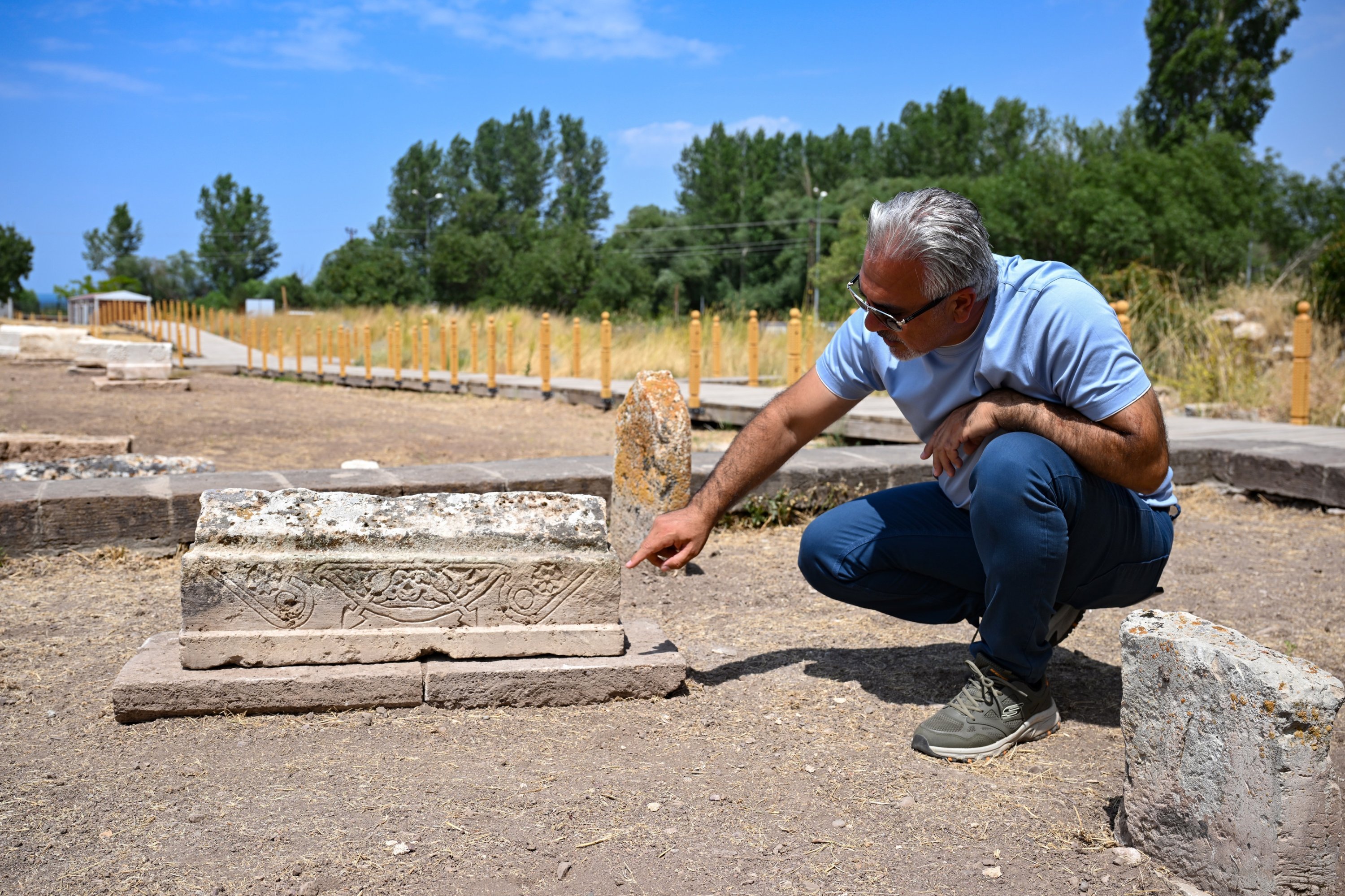
One notable example is the candlestick motif, which is rarely found in other cemeteries but appears systematically and in various forms at the Gevaş site, he said.
The çovgan motif, however, is particularly significant.
“This year, we have uncovered the second gravestone featuring a çovgan motif,” Çalış said. “The çovgan motif is very important in Turkish art because it represents the continuation of a culture that came from Central Asia.”
The discovery of the two çovgan-decorated gravestones has also provided an important clue about how the motif was used, Çalış said. Both stones belonged to children or young people.
He said the presence of the motif on the graves of young people may be linked to çovgan’s role as a game and form of training at the time, with the sport eventually becoming a motif on gravestones.
Çalış said çovgan was associated both with military tactics and sporting activity.
“Looking at the çovgan motif on gravestones belonging particularly to children, we see that their warrior qualities and courage were developed from a young age,” he said.
He compared the practice to the tradition of educating princes in the Ottoman period, saying children were trained from an early age to prepare them for the high positions and responsibilities they might assume later in life.