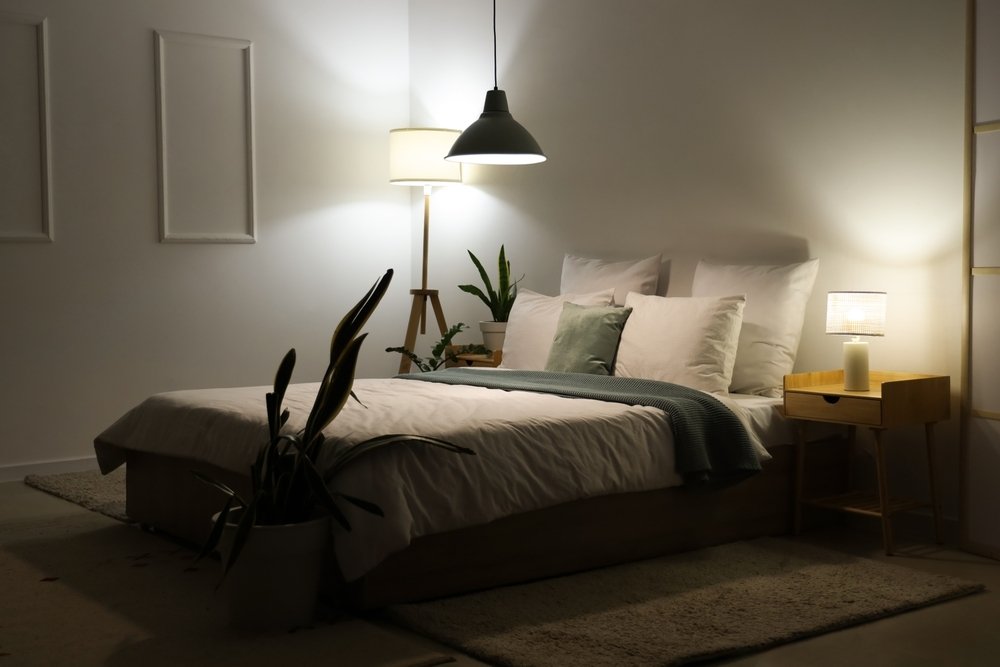
The "sleep architecture" trend transforms the bedroom from an ordinary resting place into a tranquil haven where people can escape the chaos of the day and find inner peace once more. Light, temperature, sound, fabric texture and color tones are now part of a conscious orchestration that protects human biological rhythms and centers on peace. When the darkness of night meets the elegance of simplicity, perhaps the most authentic luxury of modern life emerges: deep, restful sleep.
Technology plays a vital role in this new understanding of life. Smart curtains, systems that maintain humidity balance, mattresses that measure sleep quality and sleep trackers bring order to the night, countering the pace of the day. Even as the digital age continues, evenings are once again becoming a time for balance and recovery.
The decor combines minimalism and quiet luxury. Curtains are chosen for their transparency to soften the light, while melatonin-friendly hues like midnight blue, stone gray and sand beige dominate the walls. Noise-reducing surfaces and natural textures symbolize understated elegance. Luxury is no longer sought in glamour, but in tranquility.
This shift is also evident in people's daily preferences. In recent years, the most frequently asked question in bedroom shopping has become, "Which color makes you feel more peaceful?" Now, when choosing furniture, the goal is to determine the atmosphere; how a space touches the human spirit is becoming increasingly important.
Research shows that this new approach to living is not merely an aesthetic choice. A 2024 study from Harvard Medical School found that changing the lighting and color scheme in the bedroom extends sleep time by an average of 30 minutes. Similarly, according to the findings of the University of Tokyo's "Sleep Environment Study," simplified spaces reduce stress hormones, facilitating mental recovery. In other words, sleep architecture is, in essence, a scientifically validated quest for inner balance.
The language of the senses is also adapting to this new aesthetic. Natural scents like lavender and bergamot become small reminders that signal "it's time to rest." The texture of the fabrics, the softness of the mattress and even the weight of the pillow shape the sleep experience. Thus, sleep becomes a personal ritual where science and aesthetics intersect.
At the heart of this approach lies the principle of "less is more." As belongings diminish, the mind is refreshed; as spaces become simpler, one's inner world becomes clearer. Peace is now seen as a way of life. This understanding is particularly reflected in hotel and residential design in Türkiye. Spaces designed with the concepts of "sleep-friendly room" or "rest design" emphasize light insulation, the use of natural materials and tranquil color palettes.
Even in a sleepless city like Istanbul, people are now seeking spaces far from the chaos, spaces that soothe the soul. This quest stems from a desire to reestablish the serenity lost in the fast-paced world. Perhaps the most precious luxury of the future will be the ability to close your eyes and truly rest at the end of the day.