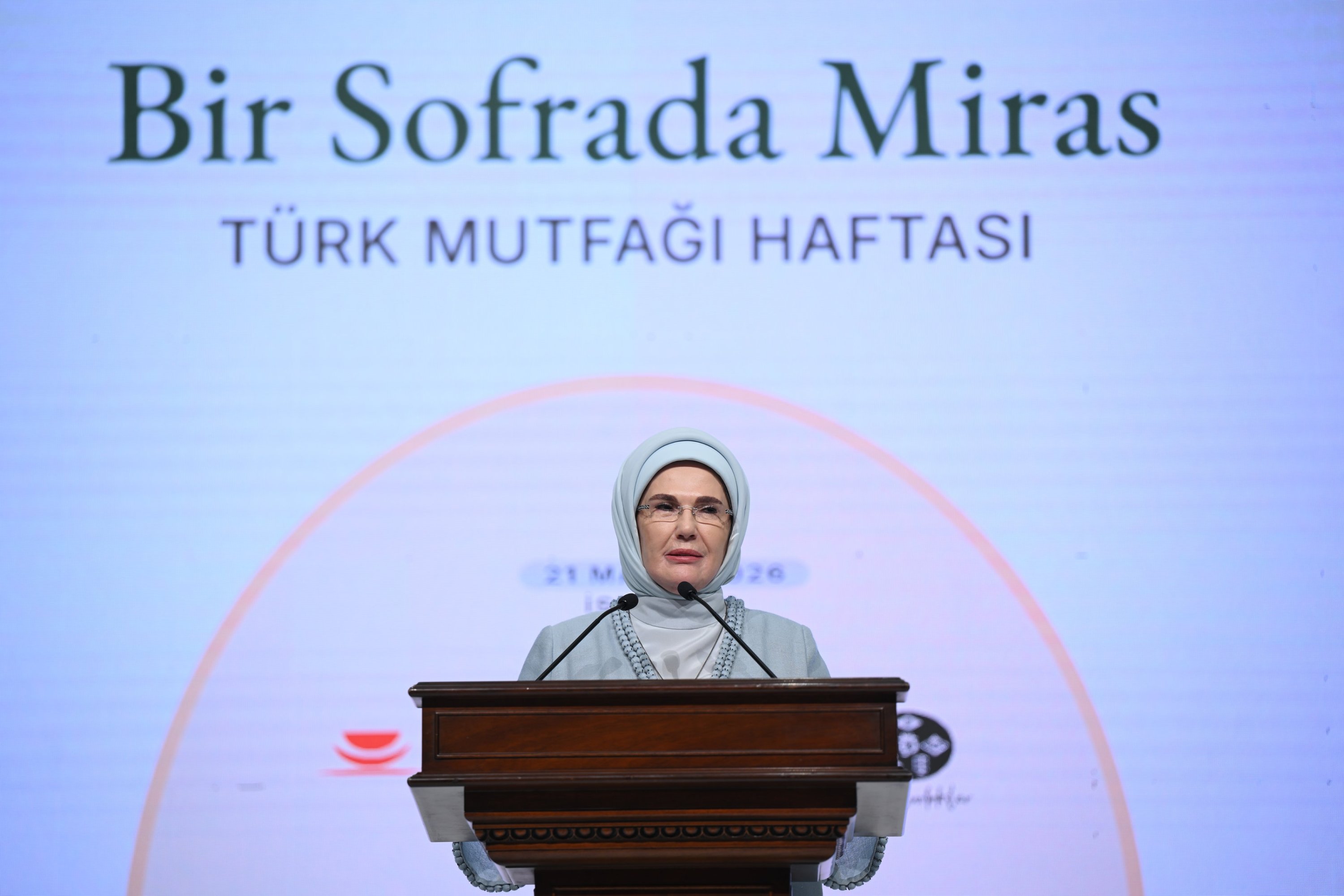
At the “The Heritage Table” program held in Istanbul as part of Turkish Cuisine Week events, first lady Emine Erdoğan emphasized the civilizational depth of Turkish gastronomy, describing it not merely as a culinary tradition but as a comprehensive cultural and moral heritage.
“The flavors of Turkish cuisine, together with its spiritual ties, family bonds, culture of sharing and collective production power, make it a complete art of living,” Erdoğan said. “Turkish cuisine is our most delicate cultural ambassador, carrying the spirit and conscience of Anatolia to all corners of the world. Our duty is to elevate our country’s gastronomic image beyond a few globally known dishes and position it, as it deserves, as a cuisine of meaning, culture, and values.”
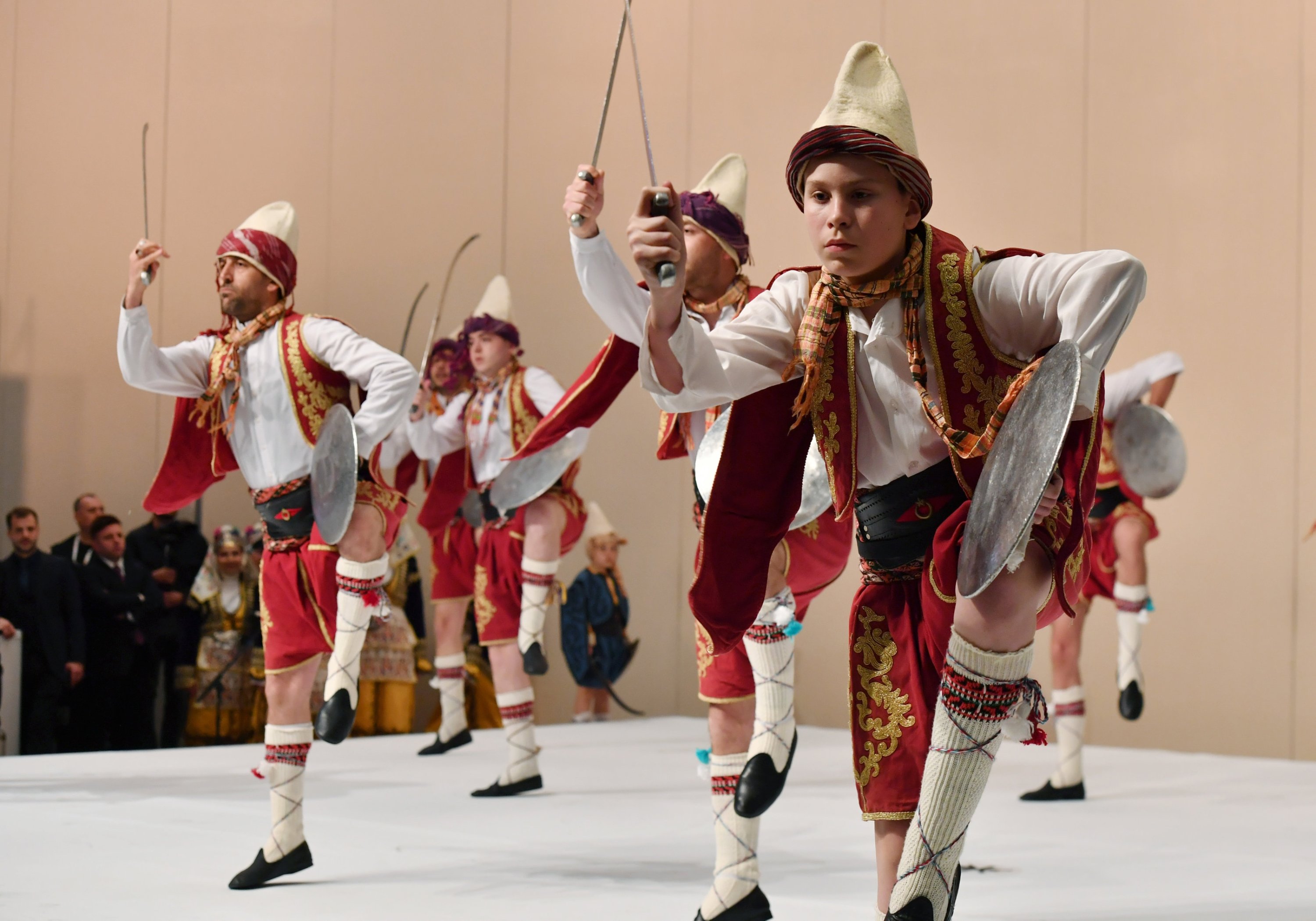
The event featured folk dance performances representing Siirt, Bursa, Izmir, the Caucasus and Trabzon regions, followed by a screening dedicated to Turkish culinary heritage. The evening concluded with a performance by the Presidential Symphony Orchestra under the direction of conductor Cemi’i Can Deliorman, featuring vocalists Ezgi Eyüboğlu and Okan Turan. The repertoire included traditional and classical works such as Turkish Folk Melody, Kürdilihicazkar Longa, Aziziye Waltz, Gesi Bağları, Çökertme and Değmen Benim Gamlı Yaslı Gönlüme.
In her opening remarks, Erdoğan traced the historical geography of Turkish cuisine: “When we speak of Turkish culinary heritage, we speak of a civilizational journey spanning centuries. The door of Turkish cuisine opens in Turkistan, extends to Anatolia through migrations and from there spreads across the Ottoman geography from the Balkans and Eastern Europe to the Middle East and North Africa.”
She emphasized that this historical trajectory created a unique multicultural culinary identity. “Different cultures have touched, learned from and enriched one another along this path. This is why multiculturalism is one of the strongest defining features of Turkish cuisine,” she said.
Referencing the Ottoman era, she highlighted centuries of coexistence among diverse communities. In Anatolia, she noted, this coexistence is reflected in shared culinary traditions: dishes such as aşure, koliva, anuşabur, Şam dessert, Albanian liver, Tatar pastry, Persian rice, Circassian chicken, Kurdish tandoor bread, Laz böreği and Bosnian mantı have all found a place on the same table.
The evening was curated as part of the fifth Turkish Cuisine Week, themed “The HeritageTable,” an initiative led by Erdoğan.
The stage, the speeches and even the atmosphere suggested that the event was designed not merely as a dinner but as a cultural narrative. Erdoğan’s message centered on the idea of the table as a “school of civilization,” a space where empathy, unity, and shared human experience are cultivated.
She also recounted the historical anecdote of Melik Gazi, who declined to share a meal with his opponent during wartime, arguing that eating together creates bonds that soften enmity. The story was presented as a metaphor for how shared tables can dissolve hostility and build enduring respect.
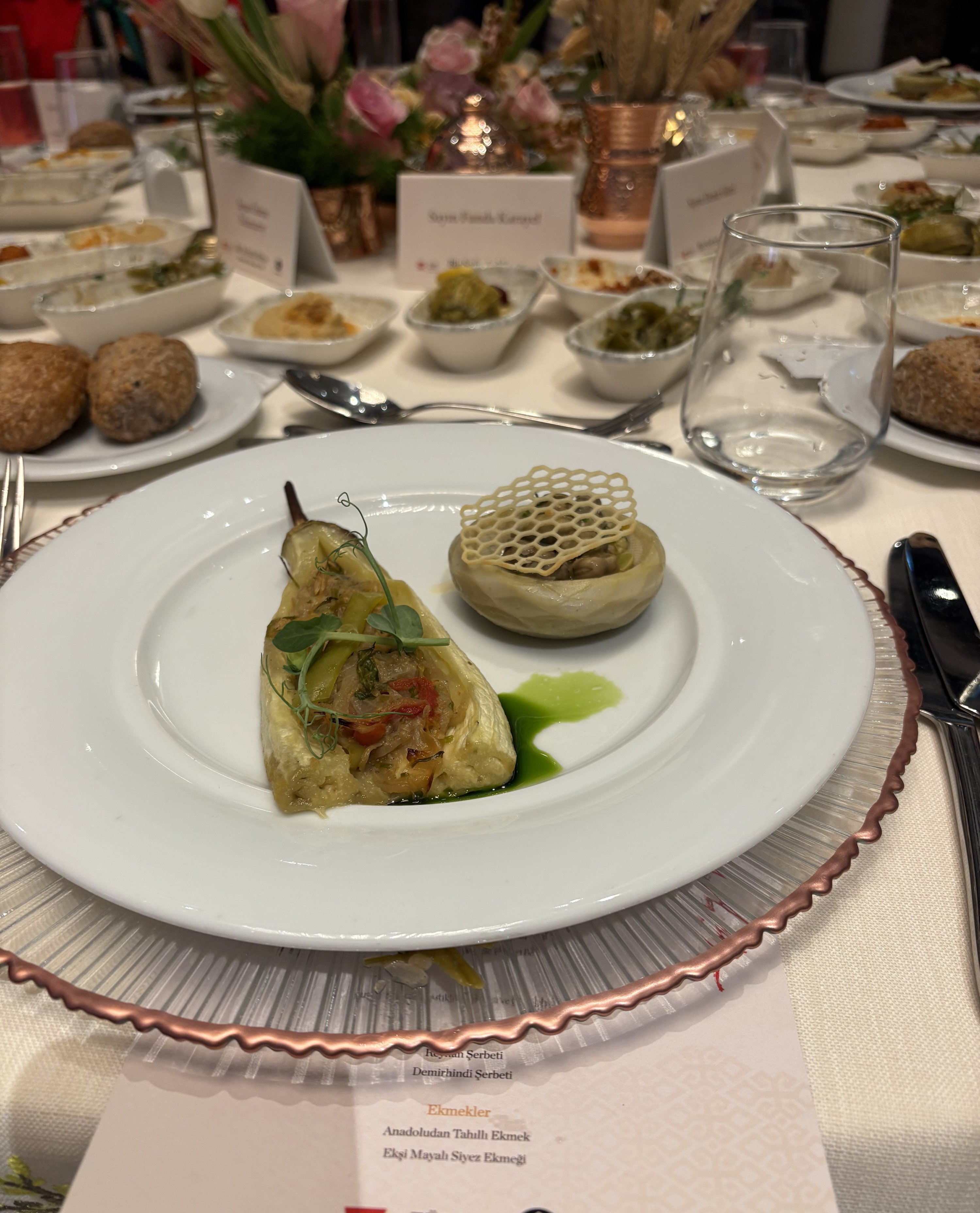
The evening’s menu reflected the geographic and cultural diversity of Türkiye. It included vine leaves and stuffed zucchini blossoms, Georgian-style green beans, pine nut hummus and walnut muhammara. Olive oil dishes, such as artichokes and roasted eggplants, added a lighter dimension, while goat cheese börek and purslane yogurt brought a nostalgic tone.
Slow-cooked Ottoman lamb with keşkek and plum sauce stood out as a centerpiece, followed by mutancana and Siirt stuffed rice – both highlighting the depth of classical Turkish cuisine. Traditional beverages such as basil sherbet and tamarind drink evoked Ottoman-era hospitality, while desserts including pistachio baklava, rice pudding, and chickpea halva concluded the evening.
Hoşaf, in particular, was noted as one of the most memorable elements, evoking the calm simplicity of old Anatolian tables.
Beyond the speeches and the menu, the evening’s staging was described as almost choreographic. The synchronized service of dishes across the hall created a rhythm that reinforced the sense of collective experience.
The presence of regional dance performances, culinary storytelling and orchestral music transformed the event into a multisensory cultural composition rather than a conventional diplomatic gathering.
Erdoğan also highlighted that keşkek has been inscribed on UNESCO’s Intangible Cultural Heritage List, underscoring the international recognition of Turkish culinary traditions.
“Turkish cuisine is our most graceful cultural ambassador, carrying the spirit and conscience of Anatolia to the world,” she reiterated.
The evening concluded with a shared message of cultural continuity, memory and hospitality – positioning Turkish cuisine not only as a culinary heritage, but as a living expression of civilization