Daily Sabah logo

Politics
Diplomacy Legislation War On Terror EU Affairs Elections News Analysis
TÜRKİYE
Istanbul Education Investigations Minorities Expat Corner Diaspora
World
Mid-East Europe Americas Asia Pacific Africa Syrian Crisis Islamophobia
Business
Automotive Economy Energy Finance Tourism Tech Defense Transportation News Analysis
Lifestyle
Health Environment Travel Food Fashion Science Religion History Feature Expat Corner
Arts
Cinema Music Events Portrait Reviews Performing Arts
Sports
Football Basketball Motorsports Tennis
Opinion
Columns Op-Ed Reader's Corner Editorial
PHOTO GALLERY
JOBS ABOUT US RSS PRIVACY CONTACT US
© Turkuvaz Haberleşme ve Yayıncılık 2025

Daily Sabah - Latest & Breaking News from Turkey | Istanbul

  • Politics
    • Diplomacy
    • Legislation
    • War On Terror
    • EU Affairs
    • Elections
    • News Analysis
  • TÜRKİYE
    • Istanbul
    • Education
    • Investigations
    • Minorities
    • Expat Corner
    • Diaspora
  • World
    • Mid-East
    • Europe
    • Americas
    • Asia Pacific
    • Africa
    • Syrian Crisis
    • Islamophobia
  • Business
    • Automotive
    • Economy
    • Energy
    • Finance
    • Tourism
    • Tech
    • Defense
    • Transportation
    • News Analysis
  • Lifestyle
    • Health
    • Environment
    • Travel
    • Food
    • Fashion
    • Science
    • Religion
    • History
    • Feature
    • Expat Corner
  • Arts
    • Cinema
    • Music
    • Events
    • Portrait
    • Reviews
    • Performing Arts
  • Sports
    • Football
    • Basketball
    • Motorsports
    • Tennis
  • Gallery
  • Opinion
    • Columns
    • Op-Ed
    • Reader's Corner
    • Editorial
  • TV
  • Life
  • Health
  • Environment
  • Travel
  • Food
  • Fashion
  • Science
  • Religion
  • History
  • Feature
  • Expat Corner

Climate change threatens millions of Australian lives: Report

by Agence France-Presse - AFP

SYDNEY, Australia Sep 15, 2025 - 10:27 am GMT+3
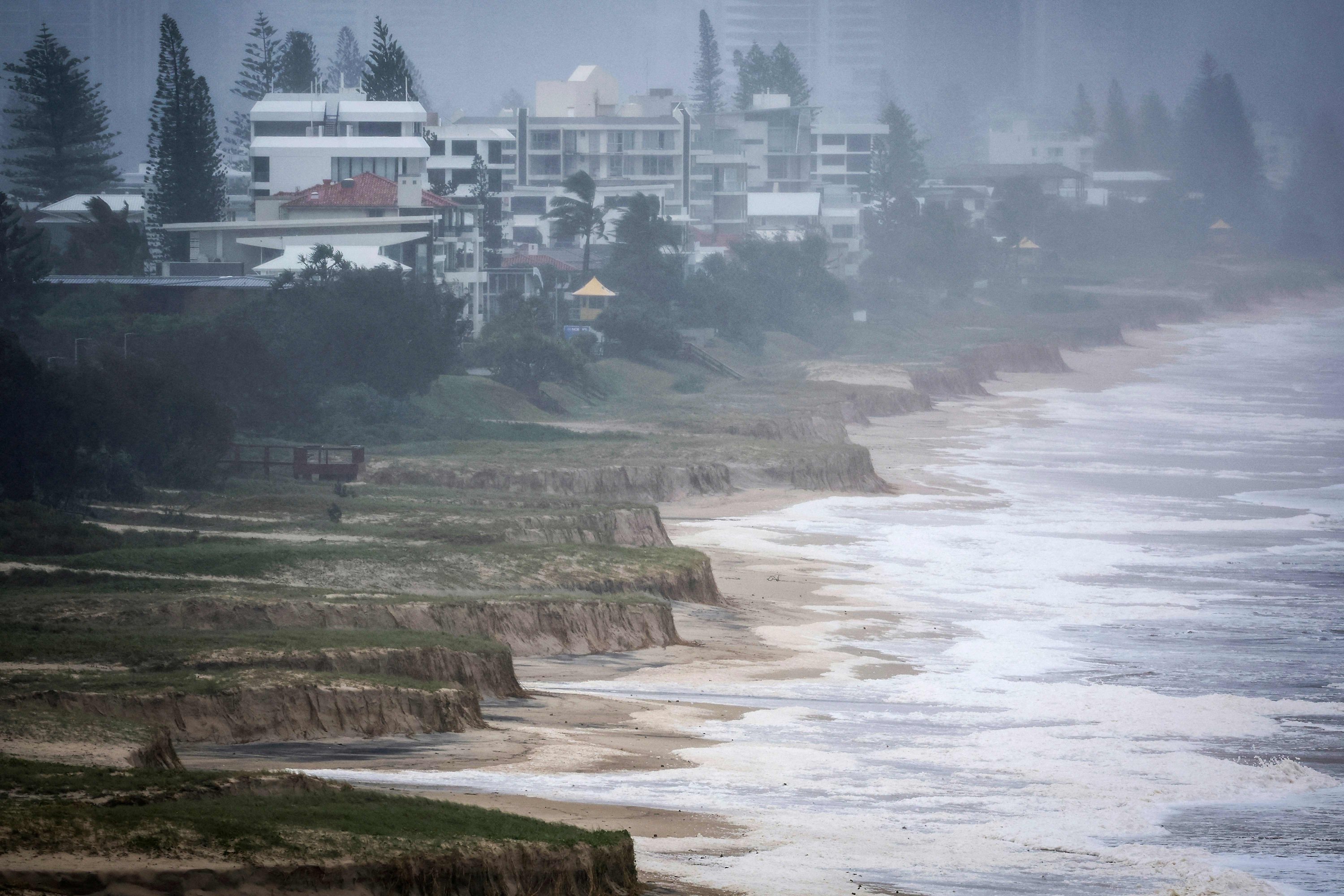
A general view of erosion at Miami Beach after the sand was washed away during Tropical Cyclone Alfred, the Gold Coast, Australia, March 9, 2025. (AFP photo)
by Agence France-Presse - AFP Sep 15, 2025 10:27 am

Rising oceans and flooding caused by climate change will threaten the homes and livelihoods of more than a million Australians by 2050, while deaths from heat-related illness will soar, a landmark report warned Monday ahead of Canberra's release of emission reduction targets this week.

The long-awaited national climate risk assessment found that rising temperatures will have "cascading, compounding, concurrent" impacts on life in Australia, home to more than 27 million people.

"We are living in climate change now. It's no longer a forecast, a projection or prediction – it is a live reality and it's too late to avoid any impacts," Climate Minister Chris Bowen said.

The report, prepared independently for the government, found that 1.5 million people living in coastal areas will be at risk of sea level rise and coastal flooding by 2050.

By 2090, about 3 million people will be at risk from rising oceans.

Sea level rises pose a significant threat to homes, livelihoods and cultural connections – particularly in locations such as the Torres Strait Islands, the report said.

Scattered through the warm waters off Australia's northernmost tip, the sparsely populated islands are threatened by seas rising much faster than the global average.

Joanne Hill, community engagement coordinator at Edith Cowan University and an Indigenous woman, said in response to the report, "We cannot delay this emergency response anymore."

"Our coastal and island communities, particularly the Torres Strait Islands, are at immediate risk of losing their homes, their cultural practices and traditions if we do not do anything now," Hill said.

Monday's report comes as Australia is set to release its next round of emissions reduction targets in the coming week, a key obligation under the landmark Paris climate agreement.

Many hope the country will reveal more ambitious targets.
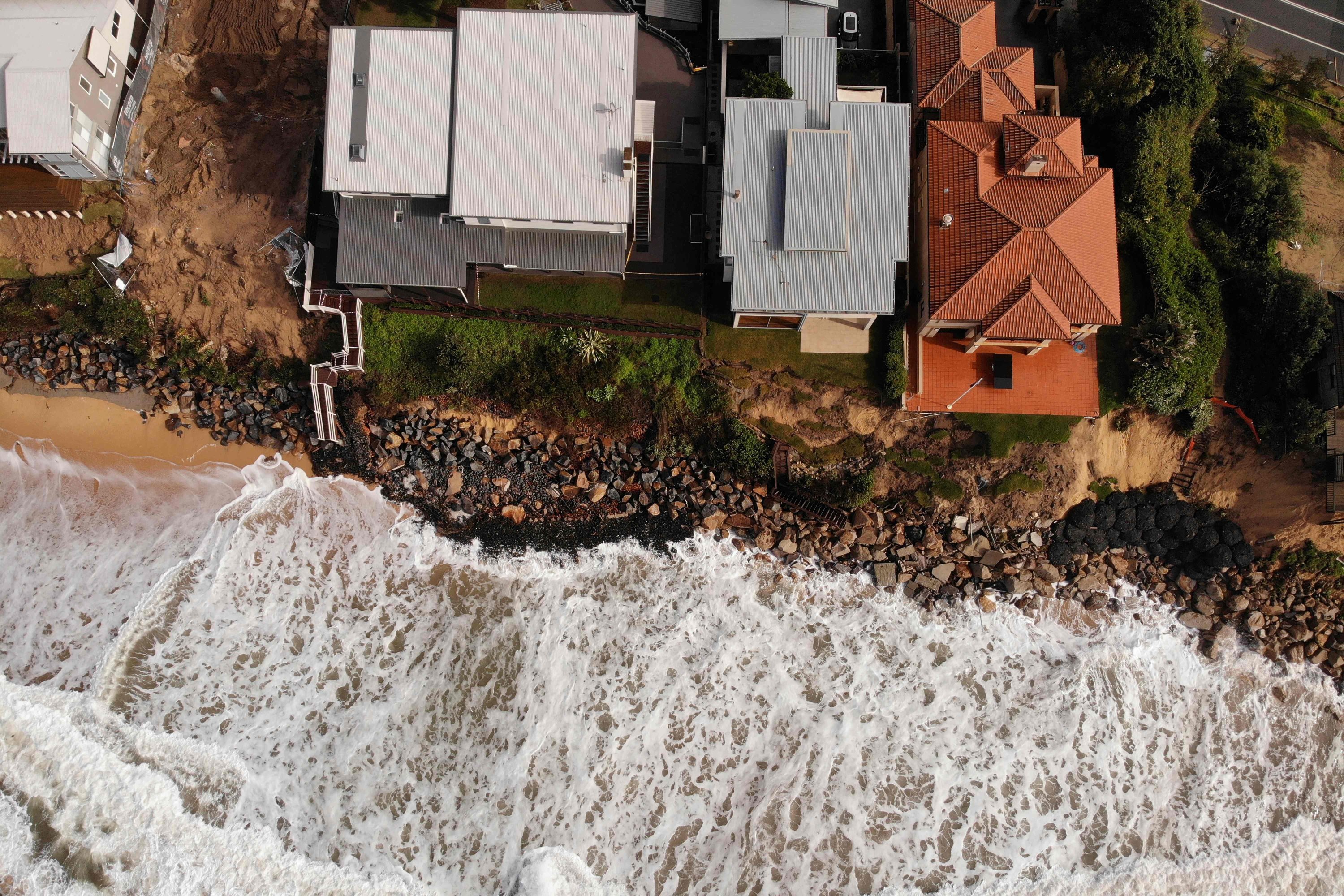
An aerial file photo taken on July 28, 2020 shows homes perched on Australia's eastern coastal town of Wamberal that are at risk of being swept away, after days of driving rain, high winds and monster swells smashed the coastline. (AFP Photo)

Terrifying

Losses in Australian property values are estimated to soar to AU$611 billion ($406 billion) by 2050 and could increase to AU$770 billion by 2090.

Should the temperatures increase by 3 degrees Celsius, heat-related deaths could soar by more than 400% in Sydney, Australia's most populous city, the report said.

Australia's unique species will also be forced to move, adapt to the new conditions or die out as climate change intensifies, the report said.

Amanda McKenzie, chief executive of the Climate Council nongovernment organization (NGO), described the report as "terrifying."

"We can choose a better future by cutting climate pollution harder and faster now," McKenzie said.

"The first step is legislating the strongest possible 2035 climate target and stopping new polluting projects," she said.

One of the world's biggest fossil fuel exporters, Australia, has been criticised for treating climate action as a political and economic liability.

The "climate wars" – a yearslong domestic fight over emissions policy – were blamed for curtailing progress in cutting heat-trapping carbon emissions.

The center-left Labor government has stepped up efforts in recent years to bring down emissions and roll out renewable energy.

However, despite its green ambitions, the government continues to approve fossil fuel projects, including granting a 40-year extension to a major liquefied natural gas plant.

The extended lifeline of the North West Shelf project – a sprawling complex of offshore rigs and processing factories pumping out more than 10 million tonnes of LNG and petroleum each year – has angered Indigenous and environmental groups.

Bowen said moving to a greener future presented a "complicated and complex" set of challenges and that gas would remain a necessary backup renewable in the future energy mix.

"But we also face that challenge from a position of strength, because we have the best renewable resources in the world," he said.


  • shortlink copied
  • Last Update: Sep 15, 2025 12:26 pm
    KEYWORDS
    rising oceans floods climate crisis climate change rising temperatures australia
    The Daily Sabah Newsletter
    Keep up to date with what’s happening in Turkey, it’s region and the world.
    You can unsubscribe at any time. By signing up you are agreeing to our Terms of Use and Privacy Policy. This site is protected by reCAPTCHA and the Google Privacy Policy and Terms of Service apply.
    No Image
    Displaced Syrians try to survive extreme heat
    PHOTOGALLERY
    • POLITICS
    • Diplomacy
    • Legislation
    • War On Terror
    • EU Affairs
    • News Analysis
    • TÜRKİYE
    • Istanbul
    • Education
    • Investigations
    • Minorities
    • Diaspora
    • World
    • Mid-East
    • Europe
    • Americas
    • Asia Pacific
    • Africa
    • Syrian Crisis
    • İslamophobia
    • Business
    • Automotive
    • Economy
    • Energy
    • Finance
    • Tourism
    • Tech
    • Defense
    • Transportation
    • News Analysis
    • Lifestyle
    • Health
    • Environment
    • Travel
    • Food
    • Fashion
    • Science
    • Religion
    • History
    • Feature
    • Expat Corner
    • Arts
    • Cinema
    • Music
    • Events
    • Portrait
    • Performing Arts
    • Reviews
    • Sports
    • Football
    • Basketball
    • Motorsports
    • Tennis
    • Opinion
    • Columns
    • Op-Ed
    • Reader's Corner
    • Editorial
    • Photo gallery
    • DS TV
    • Jobs
    • privacy
    • about us
    • contact us
    • RSS
    © Turkuvaz Haberleşme ve Yayıncılık 2021