Honeybee queens come from the same ordinary fertilized female eggs as worker bees. So how does one bee become a queen rather than just another worker? Until now, scientists believed it was solely because the chosen bee was served a special diet.
New research indicates that another critical factor is at play — the nature of the wax chamber built for her by the cadre of all-female worker bees. While these workers provide the future queen a nutrient-rich substance called royal jelly that they secrete, the larval development chamber that they build for her also has unique physical and chemical qualities. "A royal diet means nothing without a royal palace," said Kai Wang, a scientist with the Institute of Apicultural Research at the Chinese Academy of Agricultural Sciences and one of the leaders of the study published in the journal Nature.
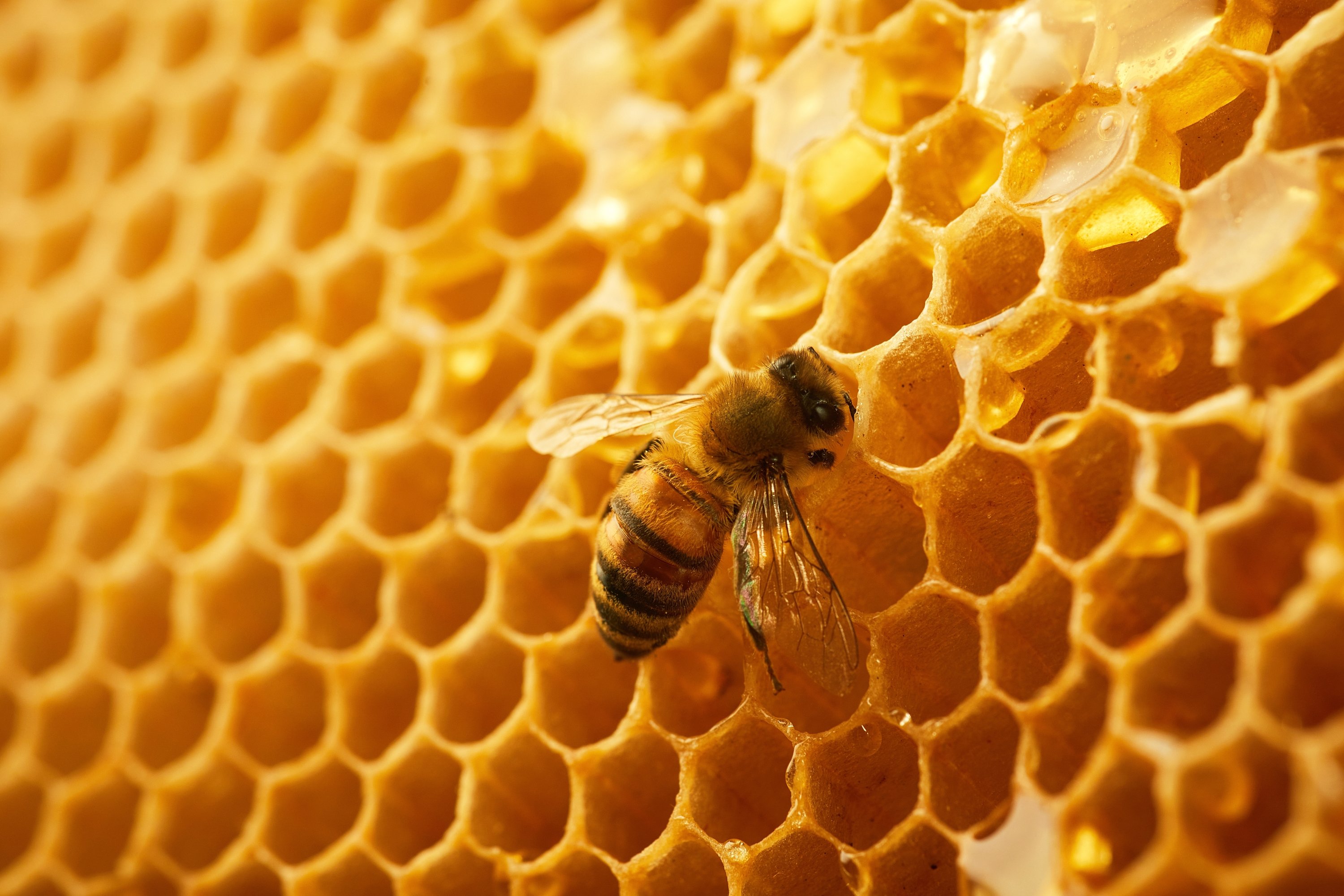
Most of a honeybee nest is built from wax secreted by the female workers and shaped into neat hexagonal cells, with some cells used to store food and others to rear offspring. But colonies also build a third kind of chamber for future queens, resembling peanut shells that hang downward from the comb. Long noticed by beekeepers as signs of swarming or queen replacement, they were often treated as passive containers.
"Our study shows it is actually an active, highly engineered 'smart incubator,'" Wang said.
The study focused on a species called the western honeybee.
According to the researchers, the chamber built for the future queen offers a set of physical and chemical conditions that may help push development of the larva in a royal direction. This wax is softer, melts at a higher temperature and releases a different chemical "perfume."
The softer walls may give the growing larva room to expand, while the scents could act as hormonal triggers, the researchers said. Even with royal jelly, Wang said, larvae exposed to worker-cell wax showed poorer queen development and much higher mortality, suggesting they need the "smell and feel" of royal wax to survive and transform.
The researchers also found that the bees that build the queen cells had unusually high thoracic temperatures and distinct gene activity.
"To mold this special, high-melting-point wax, these young bees have to turn their bodies into tiny 'living furnaces,' heating their thoraxes to over 39 degrees Celsius (102 degrees Fahrenheit), like running a fever," Wang said.
Wang said that these bees are not a permanently specialized caste, but "ordinary, flexible young workers" taking on a temporary emergency job, with short-term shifts in gene expression that help them process the wax. Wang called them "the ultimate multitaskers" because, while building queen cells, they keep performing everyday hive tasks such as sharing food with nestmates and inspecting other cells.
What surprised Wang most was that the "deeply rooted dogma" of nutritional determinism - the idea that feeding a larva royal jelly is the one and only secret to making a queen - was incomplete.
The study, however, does not yet identify the precise aspect of the wax at play.
Wang said the next step is to find the molecular switch: "Which specific chemical scent or physical touch actually tells the queen larvae's DNA, 'You are the queen.'"
Similar effects may exist in other social insects, Wang added. Termite mounds and wasp paper nests may do more than shelter their occupants and the intricate wax nests of stingless bees could hide similar secrets regarding how colonies control their development.
Beyond the biology, the work could eventually help beekeepers breed healthier queens, said Boris Baer, professor of pollinator health at the University of California, Riverside, and one of the study's leaders.
Queen production is central to modern beekeeping and healthy queens are needed to maintain healthy colonies, Baer said. Managed honey bees pollinate more than 80 major agricultural crops and Baer said better understanding how colonies naturally produce high-quality queens could help support more resilient bee populations at a time when beekeepers in the United States and elsewhere are reporting substantial colony losses.
To Wang, the findings underscore the honeybee colony as a "superorganism," with bees collectively shaping one ordinary larva to become their future mother. As he put it: "Eating well is important, but living in the perfect home is what truly changes your destiny."