Daily Sabah logo

Politics
Diplomacy Legislation War On Terror EU Affairs Elections News Analysis
TÜRKİYE
Istanbul Education Investigations Minorities Expat Corner Diaspora
World
Mid-East Europe Americas Asia Pacific Africa Syrian Crisis Islamophobia
Business
Automotive Economy Energy Finance Tourism Tech Defense Transportation News Analysis
Lifestyle
Health Environment Travel Food Fashion Science Religion History Feature Expat Corner
Arts
Cinema Music Events Portrait Reviews Performing Arts
Sports
Football Basketball Motorsports Tennis
Opinion
Columns Op-Ed Reader's Corner Editorial
PHOTO GALLERY
JOBS ABOUT US RSS PRIVACY CONTACT US
© Turkuvaz Haberleşme ve Yayıncılık 2025

Daily Sabah - Latest & Breaking News from Turkey | Istanbul

  • Politics
    • Diplomacy
    • Legislation
    • War On Terror
    • EU Affairs
    • Elections
    • News Analysis
  • TÜRKİYE
    • Istanbul
    • Education
    • Investigations
    • Minorities
    • Expat Corner
    • Diaspora
  • World
    • Mid-East
    • Europe
    • Americas
    • Asia Pacific
    • Africa
    • Syrian Crisis
    • Islamophobia
  • Business
    • Automotive
    • Economy
    • Energy
    • Finance
    • Tourism
    • Tech
    • Defense
    • Transportation
    • News Analysis
  • Lifestyle
    • Health
    • Environment
    • Travel
    • Food
    • Fashion
    • Science
    • Religion
    • History
    • Feature
    • Expat Corner
  • Arts
    • Cinema
    • Music
    • Events
    • Portrait
    • Reviews
    • Performing Arts
  • Sports
    • Football
    • Basketball
    • Motorsports
    • Tennis
  • Gallery
  • Opinion
    • Columns
    • Op-Ed
    • Reader's Corner
    • Editorial
  • TV
  • Life
  • Health
  • Environment
  • Travel
  • Food
  • Fashion
  • Science
  • Religion
  • History
  • Feature
  • Expat Corner

Hansel, Gretel-style: Researchers develop cement from food waste

by Associated Press

TOKYO Jun 03, 2022 - 12:29 pm GMT+3
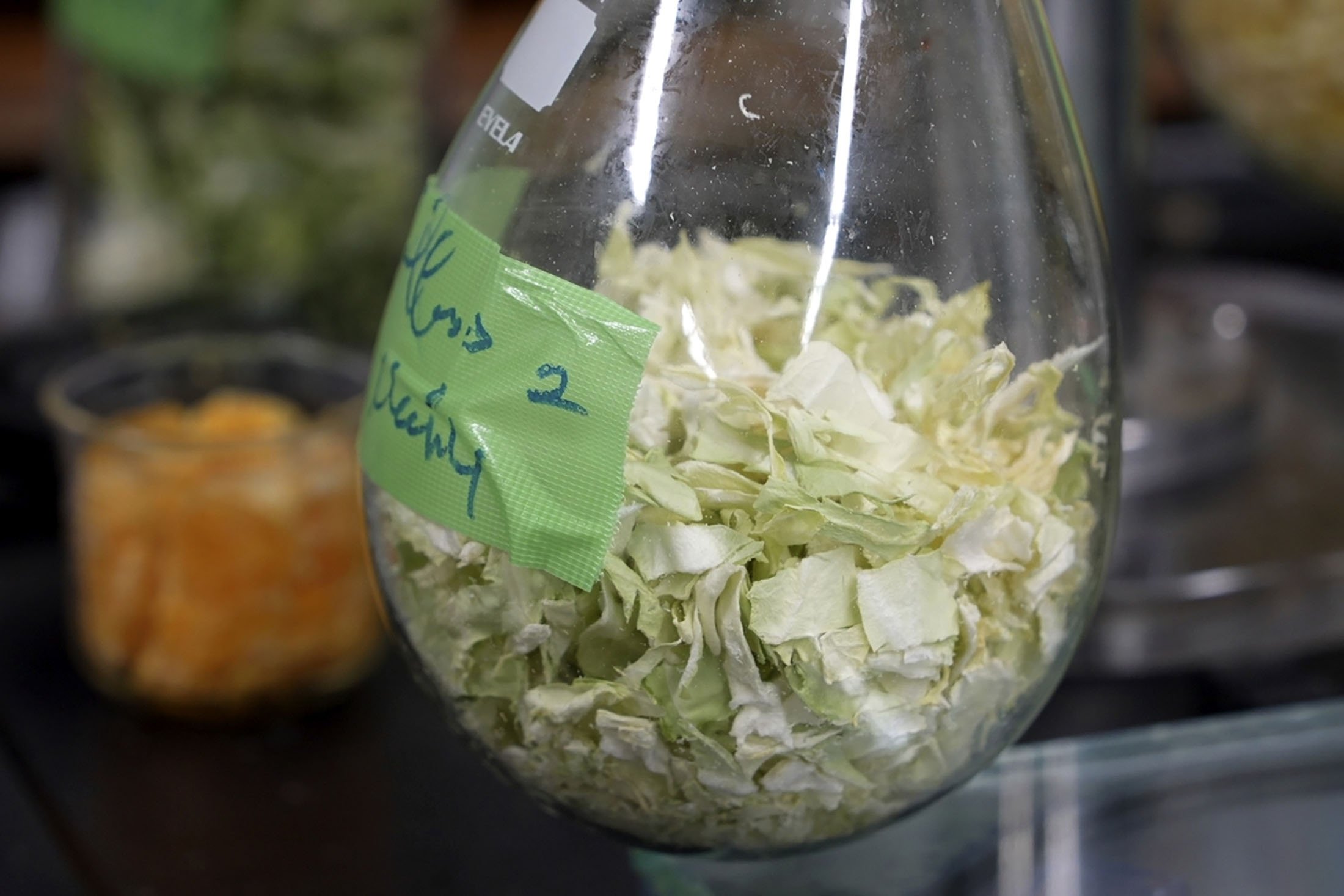
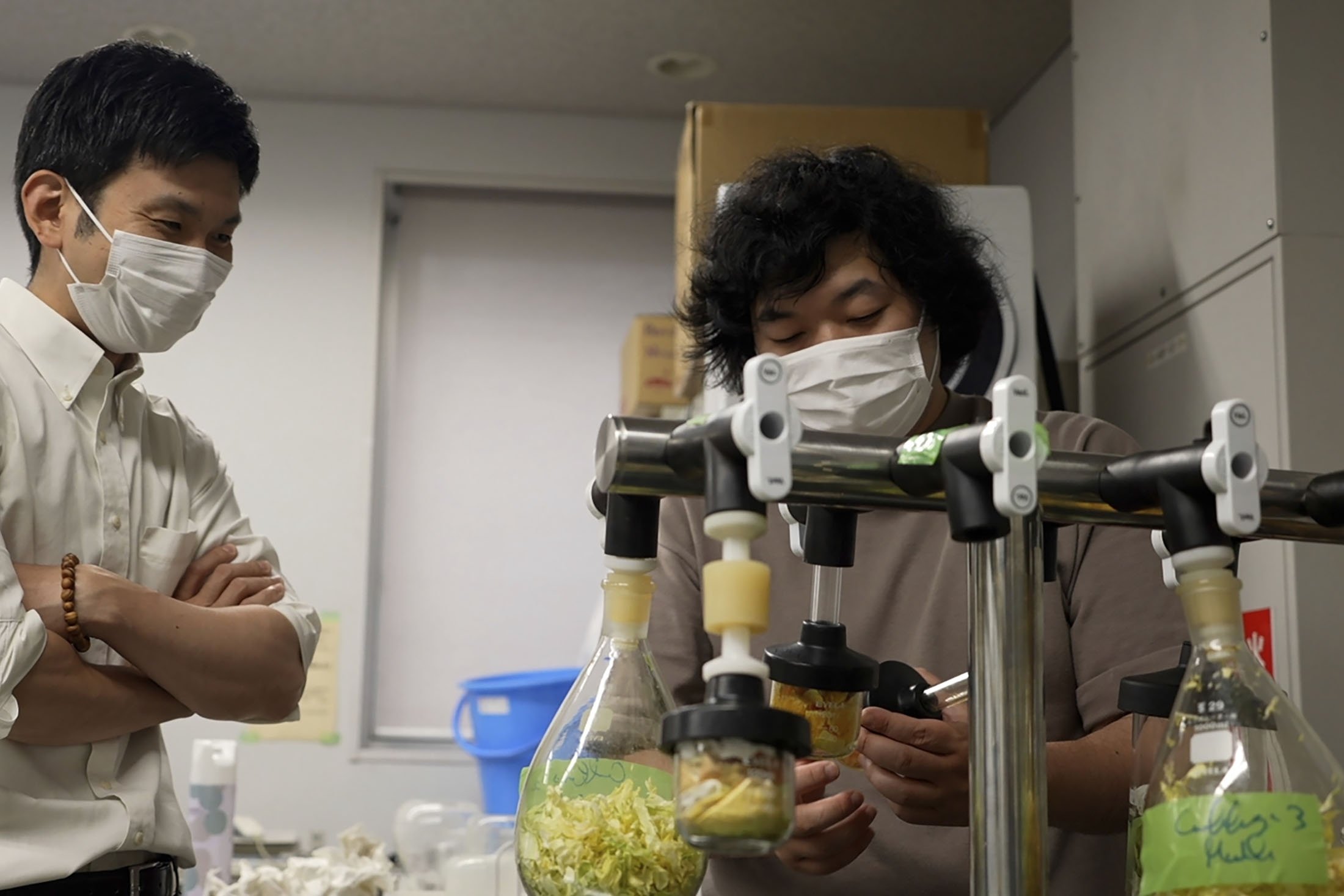
Chinese cabbage is seen being dried in a glass flask at the Tokyo University laboratory, Tokyo, Japan, May 26, 2022. (AP Photo)
by Associated Press Jun 03, 2022 12:29 pm

In the near future, edible gingerbread houses may no longer be the stuff of dreams and fairy tales as researchers at Tokyo University – namely Kota Machida and Yuya Sakai – have developed a technology straight out of Hansel and Gretel that can transform food waste into potentially edible "cement" for construction use.

It's the world's first process for making cement entirely from food waste. The researchers say the tensile, or bending, strength of their product is nearly quadruple that of ordinary concrete.

Machida and Sakai say they hope to help reduce global warming, alleviating problems related to wasted food materials that emit methane when they rot while buried in landfills.

Sakai, an associate professor of Industrial Science, developed the technology while researching sustainable materials that could replace cement-based concrete. Cement production accounts for 8% of the world’s carbon dioxide emissions, according to the think tank Chatham House.
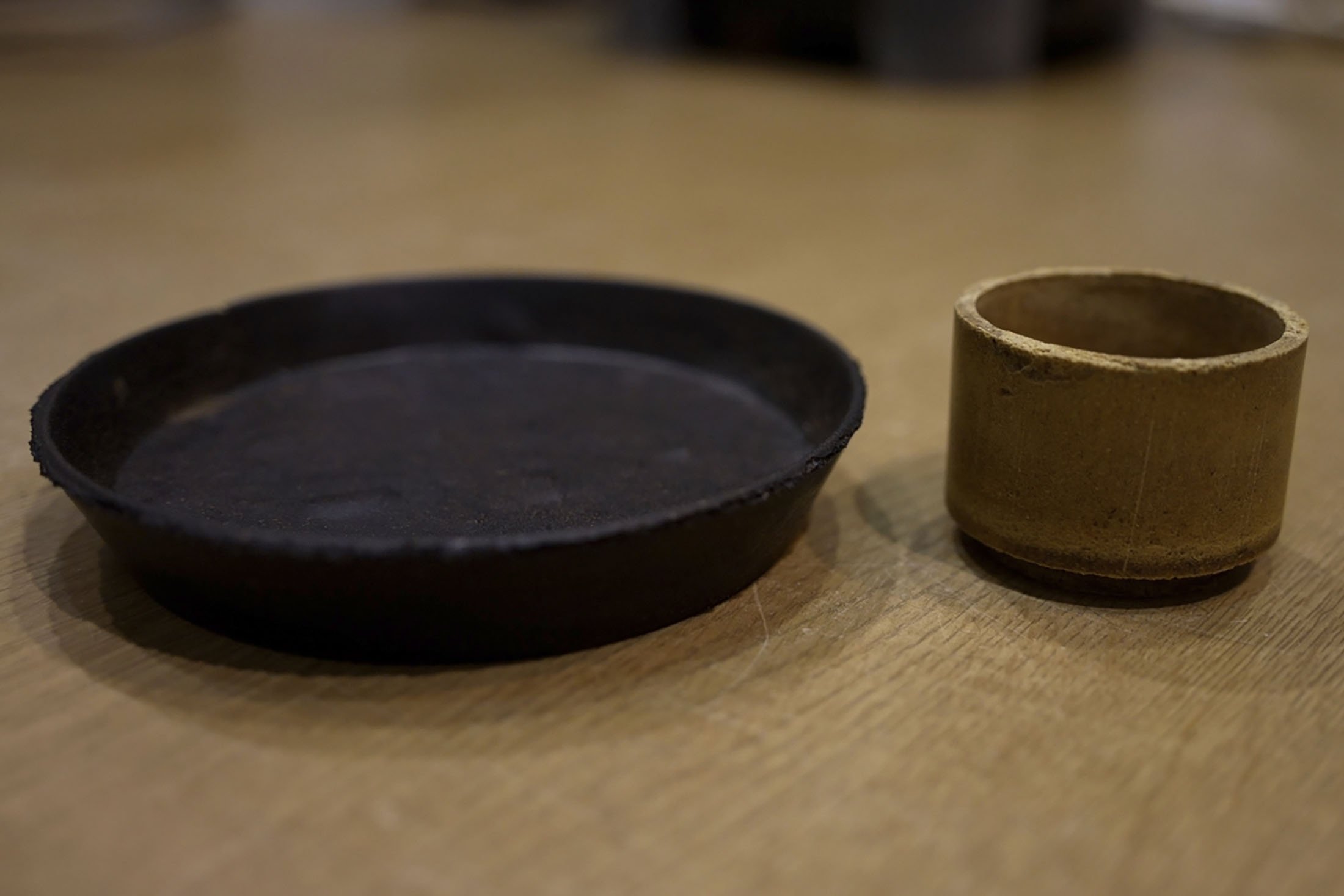
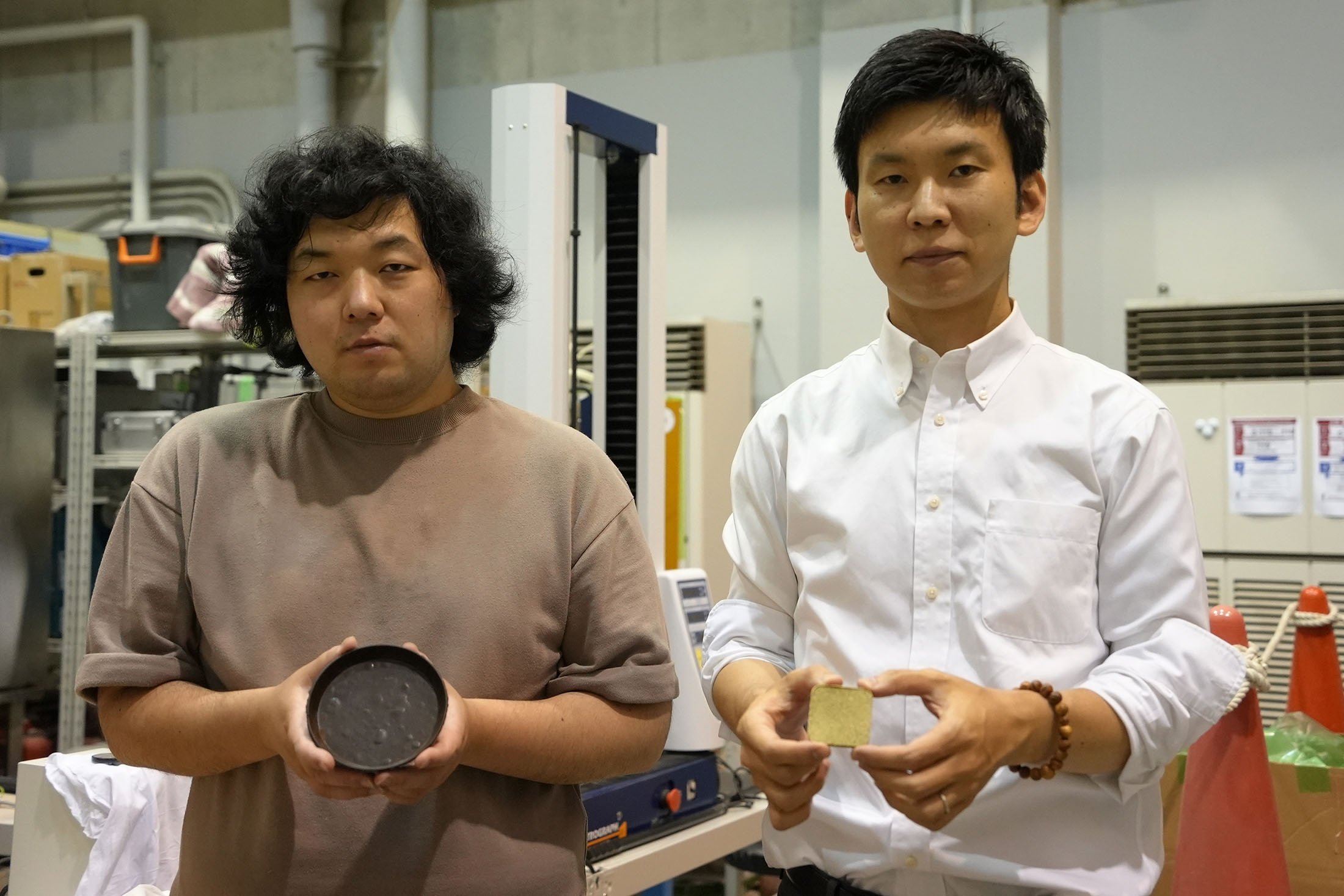
A plate and cup made from food cement are seen at the Tokyo University laboratory, Tokyo, Japan, May 26, 2022. (AP Photo)
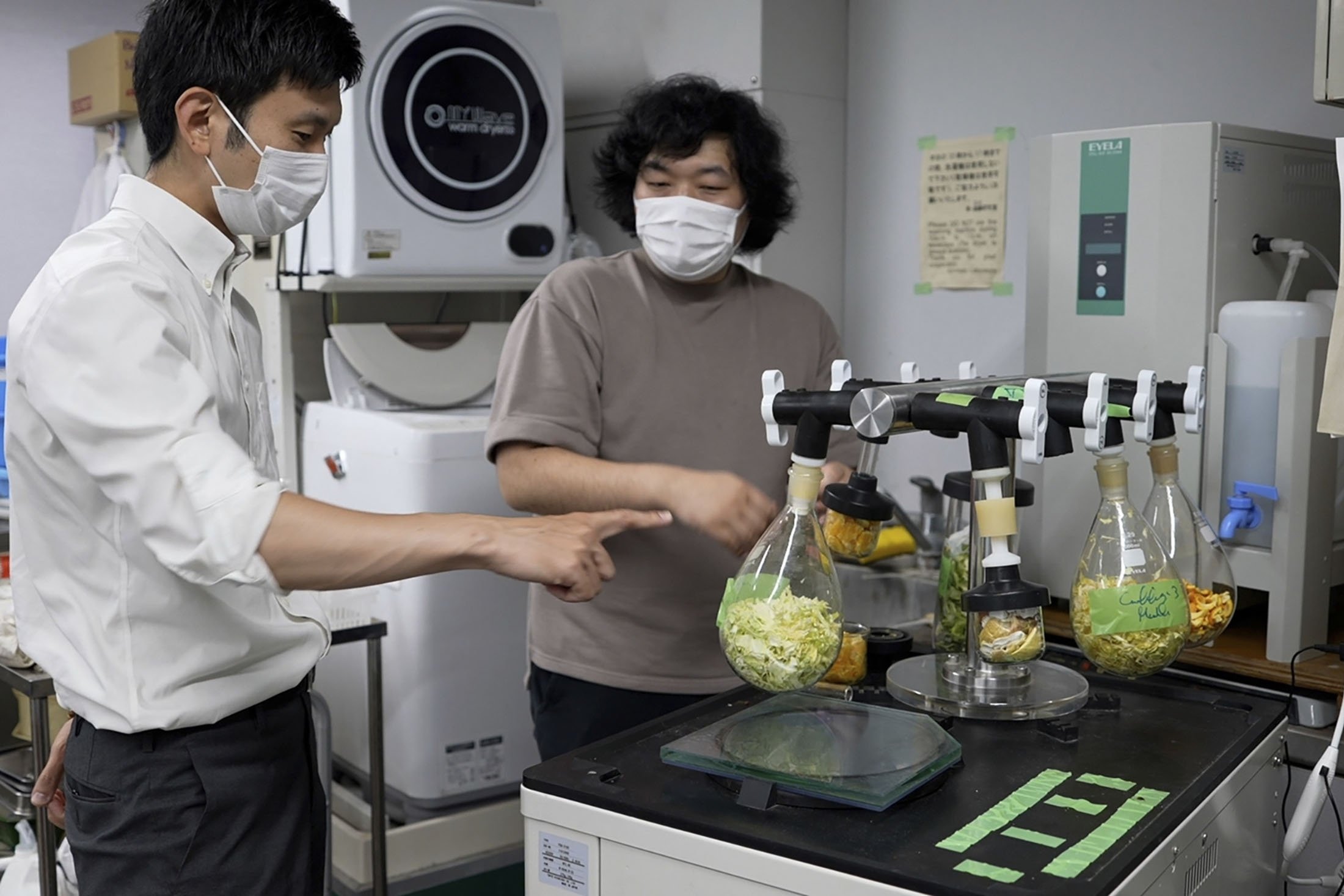
Tokyo University researchers Yuya Sakai (L), and Kota Machida, inspect the dried vegetables and fruit peels before pulverizing them into particles at their university laboratory in Tokyo, Japan, May 26, 2022. (AP Photo)

He first developed a way to make concrete by subjecting pulverized wood particles to heat compression. The three-step process of drying, pulverization, and compression was done using simple mixers and compressors the researchers say can be bought on Amazon.

Sakai, with his student Machida, decided to do the same thing with food waste. Previous trials using food waste to make cement required plastics to be mixed in to get the materials to stick together.

After months of failures, they realized they could get the cement to bind by adjusting the temperature and pressure used.

"The most challenging part was that each type of food waste requires different temperatures and pressure levels," Sakai said.
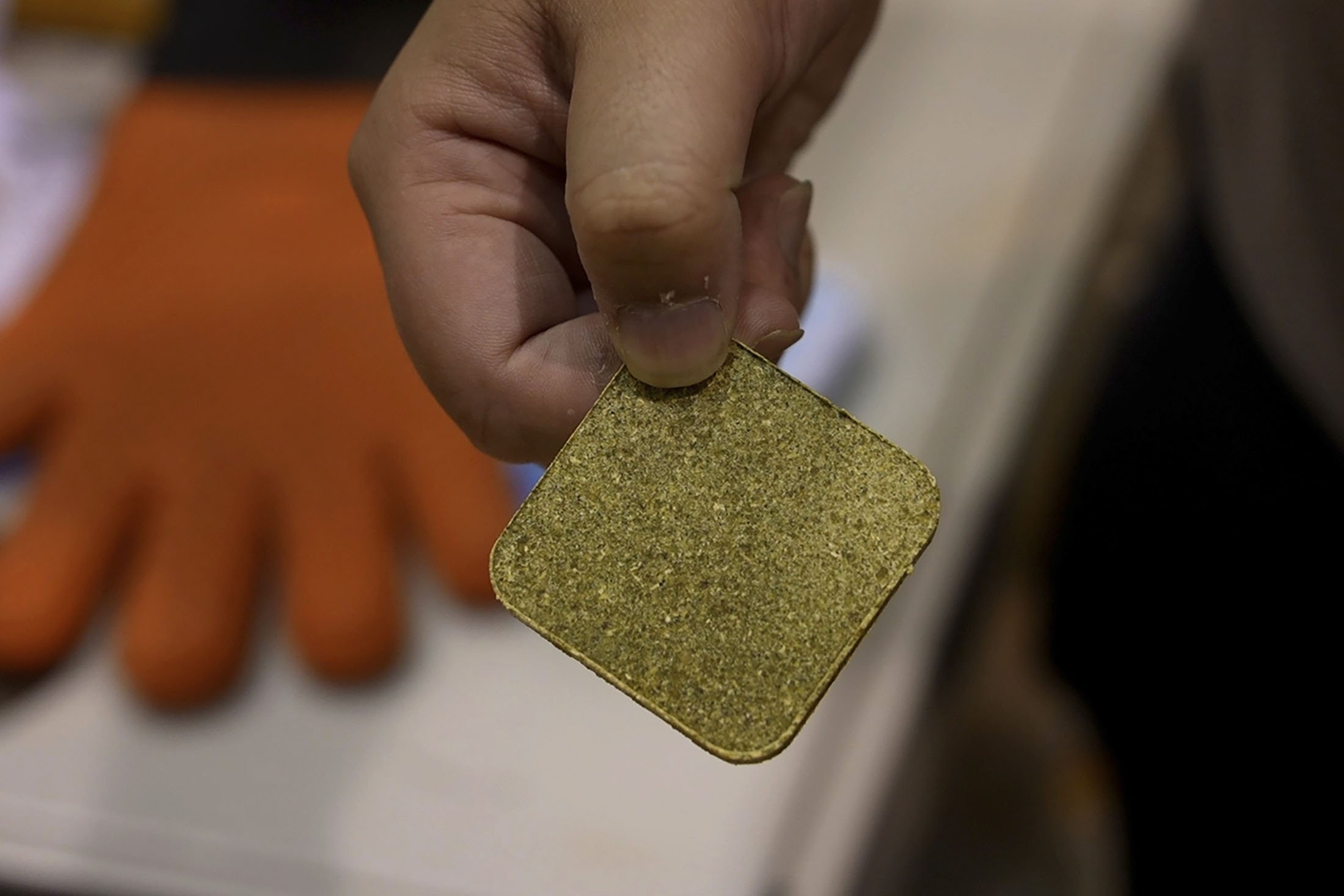
Food cement made out of dried cabbage at the Tokyo University laboratory, Tokyo, Japan, May 26, 2022. (AP Photo)
Tokyo University researchers Yuya Sakai (L), and Kota Machida, inspect the dried vegetables and fruit peels before pulverizing them into particles at their university laboratory in Tokyo, Japan, May 26, 2022. (AP Photo)

Other experiments in using food waste in construction have mainly focused on using stuff such as coffee grounds or bio-waste ashes as filler in regular concrete.

Sakai and Machida say they have successfully made cement using tea leaves, orange and onion peels, coffee grounds, Chinese cabbage and even lunchbox leftovers.

They've adjusted flavors with different spices and found the colors, scent and taste of the cement can be quite appealing. To be able to eat the material, a person would need to break it into pieces and boil it, Sakai said.

To make the cement waterproof and protect it from being eaten by rodents and other pests, it might be coated with Japanese lacquer.

Food waste is a huge problem in Japan and worldwide. Japan produced around 5.7 million tons of edible food waste in 2019 and the government aims to reduce that around 2.7 million tons by 2030.
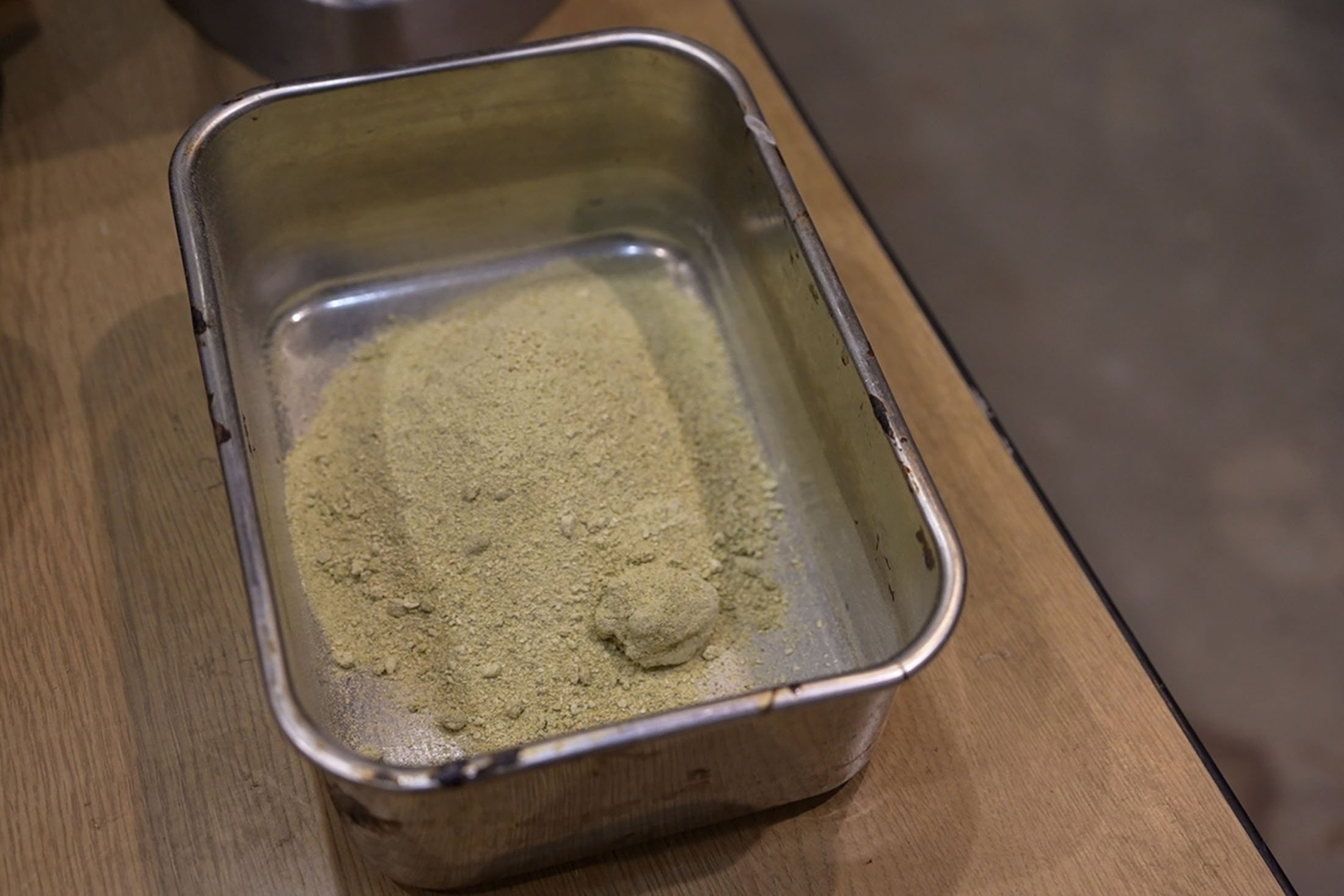
Particles of dried cabbage that were pulverized in a mixer are seen at the laboratory of Tokyo University in Tokyo, Japan, May 26, 2022. (AP Photo)
Tokyo University researchers Yuya Sakai (R), and Kota Machida pose for photos with products they made out of "food cement" at their laboratory in Tokyo, Japan, May 26, 2022. (AP Photo)

Machida started a company called Fabula Inc. last year with two of his childhood friends. They are working with other companies to make cups, cutlery, and furniture out of food cement.

Sakai says the process could be used to make edible makeshift housing for disasters.

"For example, if food cannot be delivered to evacuees, they could eat makeshift beds made out of food cement," he said.

The food cement can be reused and is biodegradable, so it can be buried when it is no longer needed.

"Our ultimate hope is that this cement replaces plastic and cement products, which have worse environmental impacts," said Machida.


  • shortlink copied
  • KEYWORDS
    environment global warming houses construction cement sector food waste
    The Daily Sabah Newsletter
    Keep up to date with what’s happening in Turkey, it’s region and the world.
    You can unsubscribe at any time. By signing up you are agreeing to our Terms of Use and Privacy Policy. This site is protected by reCAPTCHA and the Google Privacy Policy and Terms of Service apply.
    No Image
    Azerbaijan enters Aghdam, a city devastated by Armenian occupation
    PHOTOGALLERY
    • POLITICS
    • Diplomacy
    • Legislation
    • War On Terror
    • EU Affairs
    • News Analysis
    • TÜRKİYE
    • Istanbul
    • Education
    • Investigations
    • Minorities
    • Diaspora
    • World
    • Mid-East
    • Europe
    • Americas
    • Asia Pacific
    • Africa
    • Syrian Crisis
    • İslamophobia
    • Business
    • Automotive
    • Economy
    • Energy
    • Finance
    • Tourism
    • Tech
    • Defense
    • Transportation
    • News Analysis
    • Lifestyle
    • Health
    • Environment
    • Travel
    • Food
    • Fashion
    • Science
    • Religion
    • History
    • Feature
    • Expat Corner
    • Arts
    • Cinema
    • Music
    • Events
    • Portrait
    • Performing Arts
    • Reviews
    • Sports
    • Football
    • Basketball
    • Motorsports
    • Tennis
    • Opinion
    • Columns
    • Op-Ed
    • Reader's Corner
    • Editorial
    • Photo gallery
    • DS TV
    • Jobs
    • privacy
    • about us
    • contact us
    • RSS
    © Turkuvaz Haberleşme ve Yayıncılık 2021