Sharks are the most feared predators in the sea, and their survival hinges on fearsome teeth that regrow throughout their lives. But changes in the ocean's chemistry could put those weapons at risk.
That is the takeaway from a study performed by a group of German scientists who tested the effects of a more acidic ocean on sharks' teeth. Scientists have linked human activities including the burning of coal, oil and gas to the ongoing acidification of the ocean.
As oceans become increasingly acidic, sharks' teeth could become structurally weaker and more likely to break, the scientists found. That could change the big fishes' status at the top of the ocean's food chain, they wrote.
The ocean will not become populated with toothless sharks overnight, said the study's lead author, Maximilian Baum, a marine biologist at Heinrich Heine University Düsseldorf. But the possibility of weaker teeth is a new hazard to sharks that already face pollution, overfishing, climate change and other threats, Baum said.
"We found there is a corrosion effect on sharks' teeth,” Baum said. "Their whole ecological success in the ocean as the rulers of other populations could be in danger.”
The researchers, who published their work in the journal Frontiers in Marine Science, performed their study as ocean acidification has become an increasing focus of conservation scientists.
Acidification occurs when oceans absorb more carbon dioxide from the air, the National Oceanic and Atmospheric Administration has said. The ocean is expected to become almost 10 times more acidic than it currently is by the year 2300, the German scientists wrote.
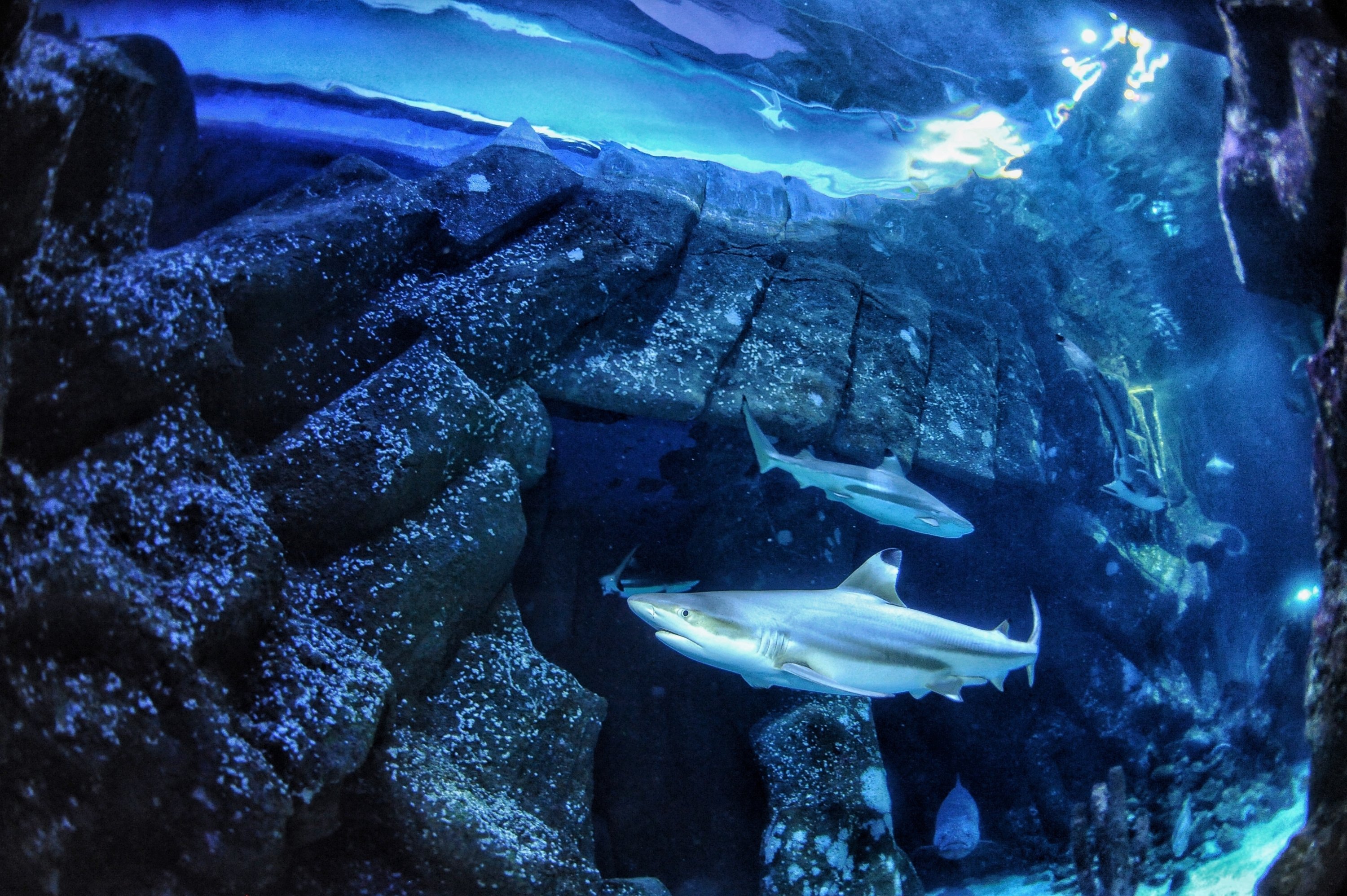
The scientists performed their study by collecting more than 600 discarded teeth from an aquarium that houses blacktip reef sharks, a species of shark that lives in the Pacific and Indian oceans and typically grows to about 5.5 feet (1.7 meters) long. They then exposed the teeth to water with the acidity of today and the projected acidity of 2300.
The teeth exposed to the more acidic water became much more damaged, with cracks and holes, root corrosion and degradation to the structure of the tooth itself, the scientists wrote.
The results "show that ocean acidification will have significant effects on the morphological properties of teeth,” the scientists wrote.
Shark teeth are "highly developed weapons built for cutting flesh, not resisting ocean acid,” Baum said. Sharks will go through thousands of teeth in a lifetime, and the teeth are critical for allowing sharks to regulate populations of fish and marine mammals in the oceans.
Many sharks are also facing extinction jeopardy, as more than a third of shark species are currently threatened with extinction according to the International Union for Conservation of Nature. Thankfully, sharks have a number of factors that can help them stave off the negative effects of ocean acidification, said Nick Whitney, senior scientist at the Anderson Cabot Center for Ocean Life at the New England Aquarium.
Whitney, who was not involved in the study, said the scientists' work on the shark teeth was sound. However, because shark teeth develop inside the mouth tissue of sharks, they will be shielded from changes in ocean chemistry for a time, he said.
And history has taught us that sharks are survivors, Whitney said.
"They've been around for 400 million years and have evolved and adapted to all kinds of changing conditions,” he said.
Ocean acidification could be a concern, but overfishing remains the biggest threat to sharks, said Gavin Naylor, director of the Florida Program for Shark Research at the Florida Museum of Natural History.
Naylor and others cautioned that ocean acidification is indeed going to pose many threats to the ocean beyond just sharks. Ocean acidification is expected to be especially harmful to shellfish such as oysters and clams because it will make it more difficult for them to build shells, NOAA has said.
It could also make fish scales weaker and more brittle. It's tough to say now whether that could ultimately benefit the sharks that feed on them, Naylor said.
For now, ocean acidification can't be disregarded as a threat facing sharks, Baum said. Some shark species could come close to extinction in the coming years and ocean acidification could be one of the factors causing that to happen, he said.
"The evolutionary success of sharks is dependent on their perfectly developed teeth,” Baum said.