Daily Sabah logo

Politics
Diplomacy Legislation War On Terror EU Affairs Elections News Analysis
TÜRKİYE
Istanbul Education Investigations Minorities Expat Corner Diaspora
World
Mid-East Europe Americas Asia Pacific Africa Syrian Crisis Islamophobia
Business
Automotive Economy Energy Finance Tourism Tech Defense Transportation News Analysis
Lifestyle
Health Environment Travel Food Fashion Science Religion History Feature Expat Corner
Arts
Cinema Music Events Portrait Reviews Performing Arts
Sports
Football Basketball Motorsports Tennis
Opinion
Columns Op-Ed Reader's Corner Editorial
PHOTO GALLERY
JOBS ABOUT US RSS PRIVACY CONTACT US
© Turkuvaz Haberleşme ve Yayıncılık 2025

Daily Sabah - Latest & Breaking News from Turkey | Istanbul

  • Politics
    • Diplomacy
    • Legislation
    • War On Terror
    • EU Affairs
    • Elections
    • News Analysis
  • TÜRKİYE
    • Istanbul
    • Education
    • Investigations
    • Minorities
    • Expat Corner
    • Diaspora
  • World
    • Mid-East
    • Europe
    • Americas
    • Asia Pacific
    • Africa
    • Syrian Crisis
    • Islamophobia
  • Business
    • Automotive
    • Economy
    • Energy
    • Finance
    • Tourism
    • Tech
    • Defense
    • Transportation
    • News Analysis
  • Lifestyle
    • Health
    • Environment
    • Travel
    • Food
    • Fashion
    • Science
    • Religion
    • History
    • Feature
    • Expat Corner
  • Arts
    • Cinema
    • Music
    • Events
    • Portrait
    • Reviews
    • Performing Arts
  • Sports
    • Football
    • Basketball
    • Motorsports
    • Tennis
  • Gallery
  • Opinion
    • Columns
    • Op-Ed
    • Reader's Corner
    • Editorial
  • TV
  • Life
  • Health
  • Environment
  • Travel
  • Food
  • Fashion
  • Science
  • Religion
  • History
  • Feature
  • Expat Corner

Return of blue cow group: Latvia's symbolic colored cows are back

by French Press Agency - AFP

KALVENE, Latvia Jan 05, 2022 - 1:28 pm GMT+3
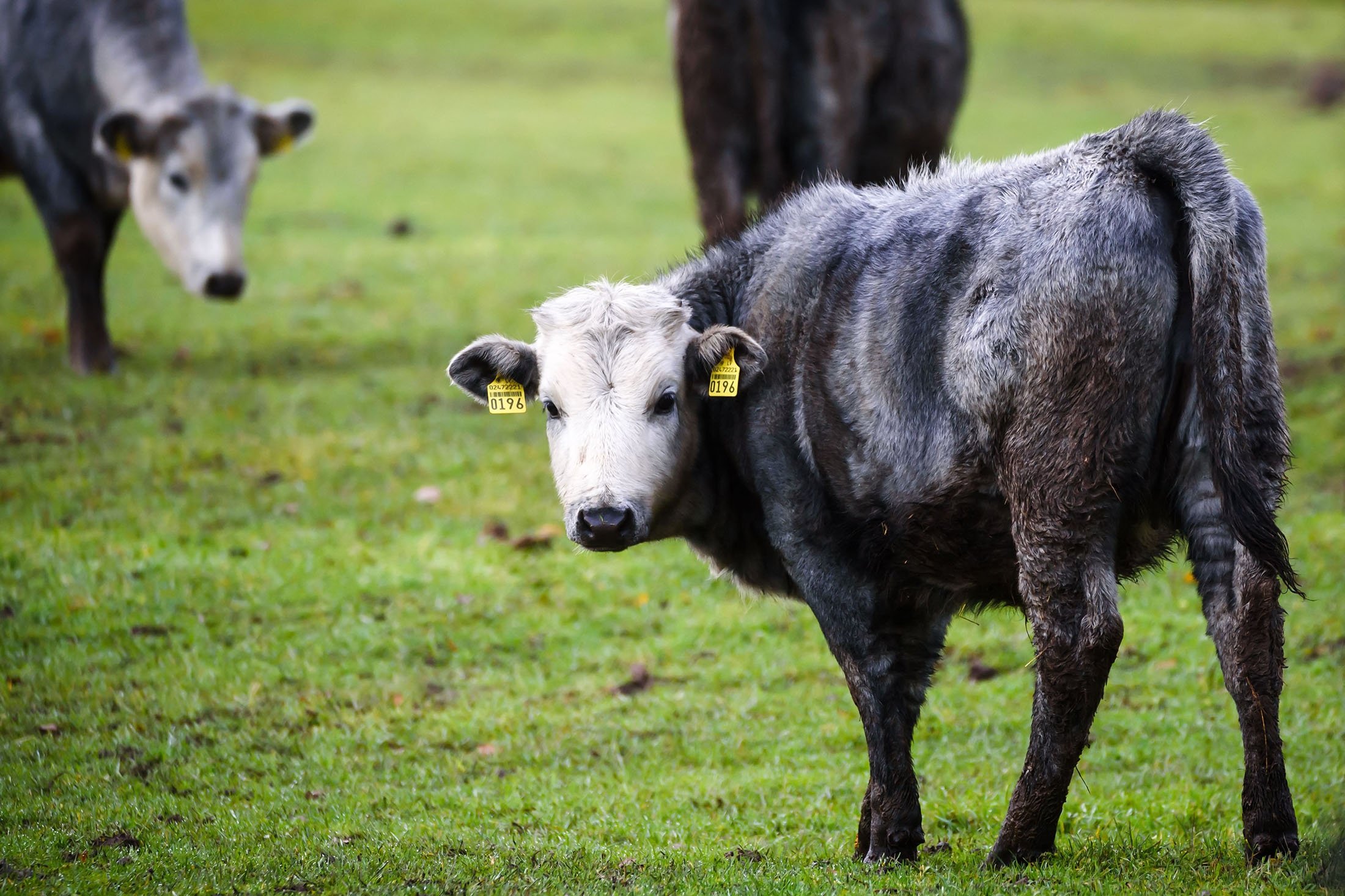
A calf of the Latvian blue cow breed grazes on a pasture at Riga Zoo's affiliate Ciruli in Kalvene, Latvia, Nov. 13, 2021. (AFP Photo)
by French Press Agency - AFP Jan 05, 2022 1:28 pm

Light blue or dark ultramarine cows were once a novelty in Latvia, then they were even rarer to spot, but today those colored hides may again be glimpsed grazing on the Latvian countryside among the regular brown, black or white spotted cattle.

The unique and hardy breed, driven to near extinction during the Soviet era, has made a comeback over the last few decades as an unlikely symbol of Latvian national identity.

"Their worst days are over," said Arnis Bergmanis, head of the Ciruli animal park in the village of Kalvene, which serves as a breeding facility for the cattle.

"Blue cows are unique and wonderful. I'm glad we can help them thrive," he told Agence France-Presse (AFP) while examining a baby calf.
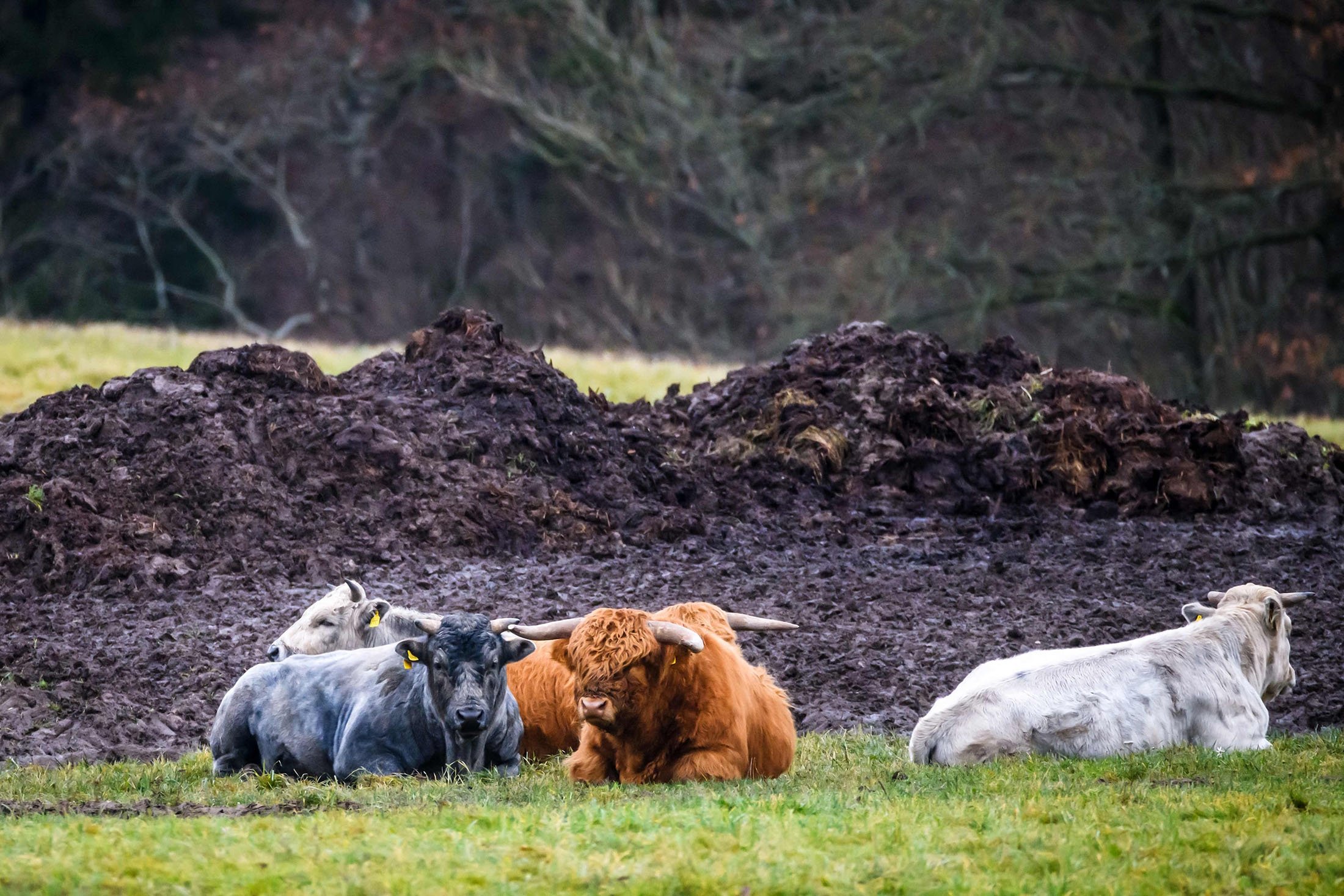
A Latvian blue cow (L) rests next to Highland cows at a pasture of Riga Zoo's affiliate Ciruli in Kalvene, Latvia, Nov. 13, 2021. (AFP Photo)

In 2000 there were only 18 blue cows in Latvia, but today they number around 1,500 – thoroughbreds as well as hybrids.

Originally found only on the Baltic coast in the Kurzeme region, they are increasingly popular in central areas too.

"We are happy to help every new farmer or guesthouse owner get their own special blue cow," Bergmanis said.

Rural innkeepers acquire the cattle as a tourist attraction, while farmers include a token blue cow in their herd for its strong maternal instinct.

"If a calf of any colour loses its mother or gets separated, the blue cow will take the calf and raise it as its own," Bergmanis said.
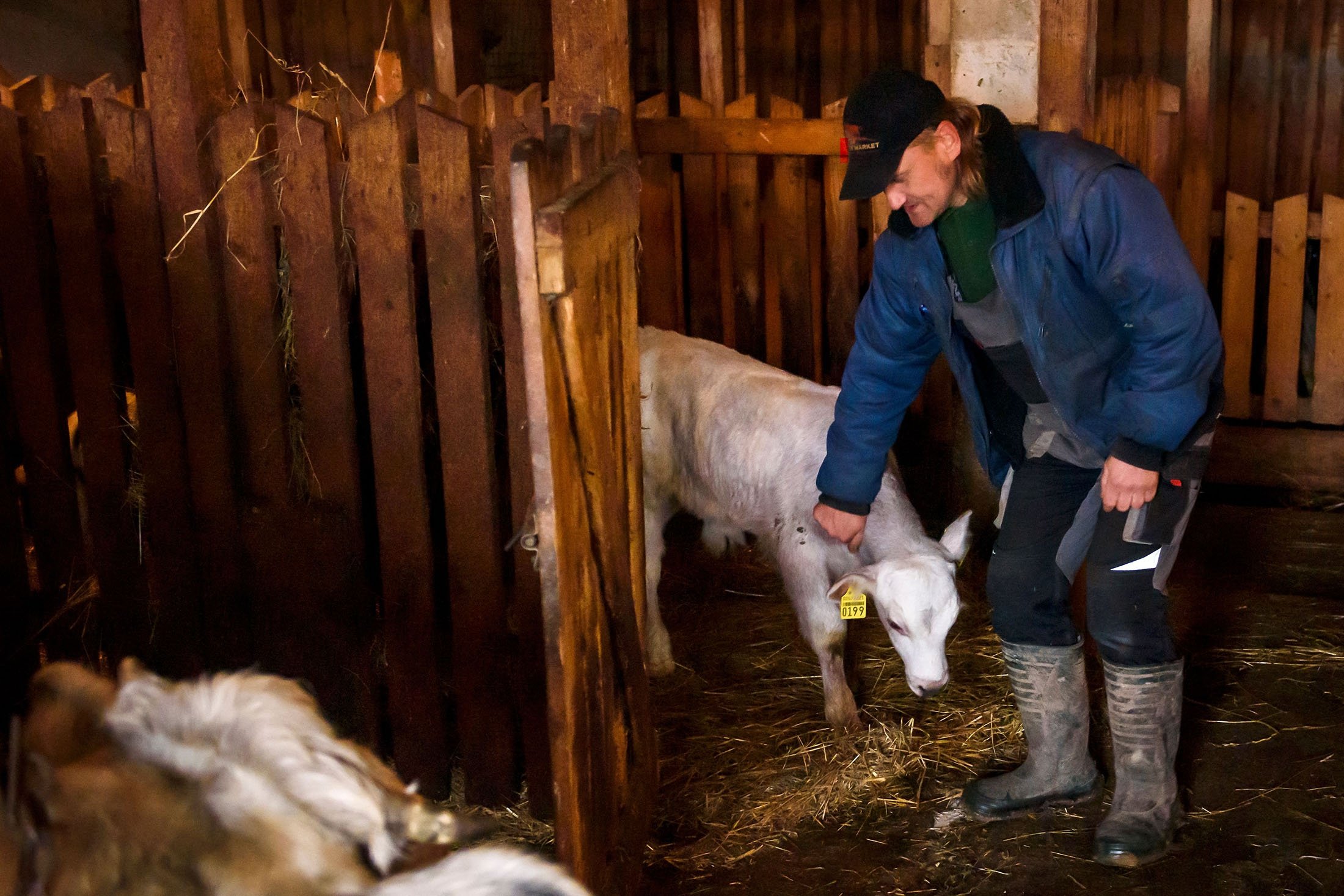
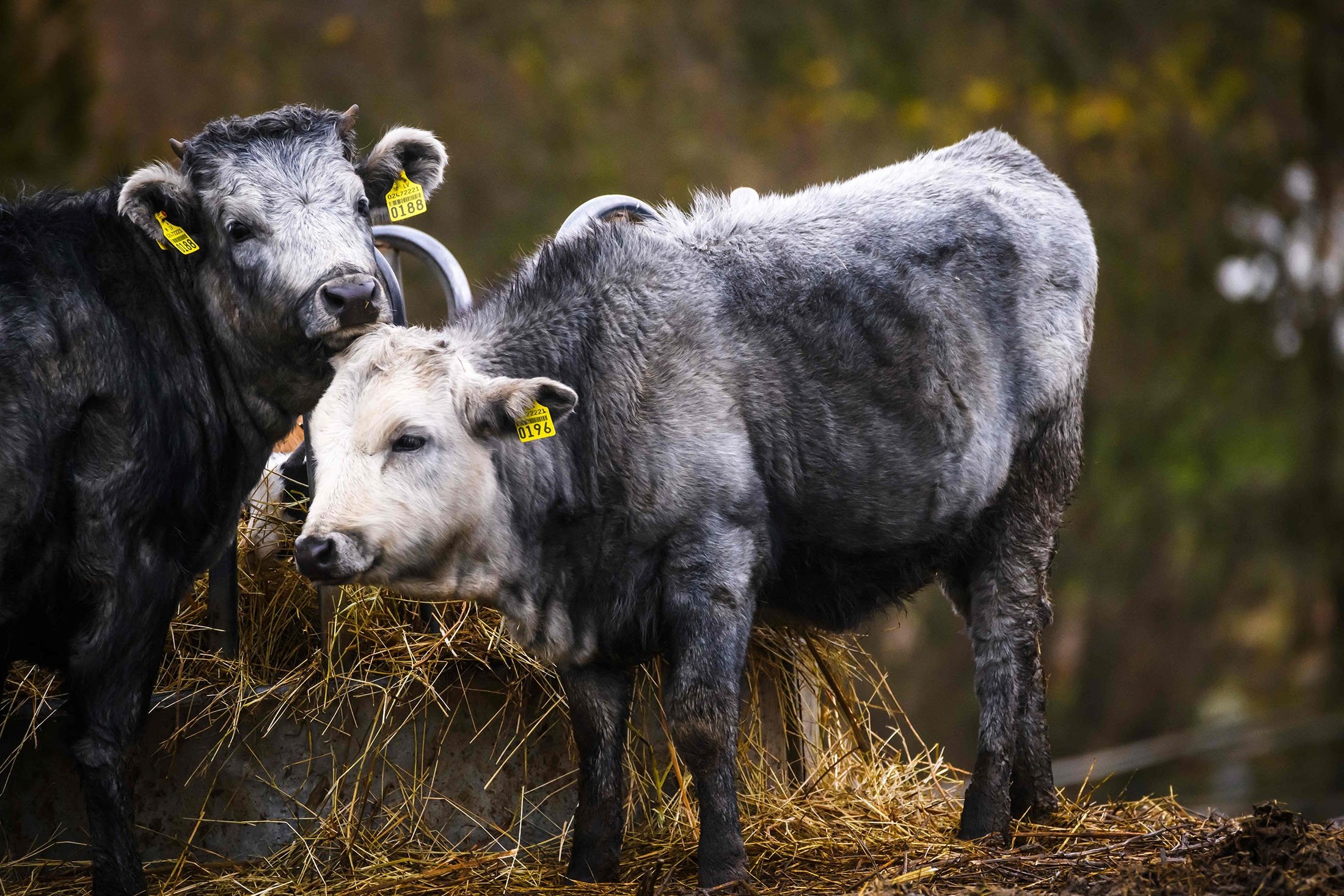
Arnis Bergmanis, head of Riga Zoo's affiliate Ciruli, holds a newborn calf of the Latvian blue cow breed in Kalvene, Latvia, Nov. 13, 2021. (AFP Photo)
Latvian blue cows are seen at Riga Zoo's affiliate Ciruli in Kalvene, Latvia, Nov. 13, 2021. (AFP Photo)

Cultural symbol

Blue cows evolved on the coast, where they led a spartan lifestyle, able to subsist on bush branches and dune grass – fodder considered inedible by other cattle.

Legend has it that they get their colour from the sea, though in fact they are born almost beige. Their coat soon turns blue however and gets darker with the years.

The pigment also influences the muscular tissue, producing beef that is exceptionally dark, though their numbers have always been too low for meat sales on a mass scale.

When the communists came to power under the Soviet occupation, they put an emphasis on mass production of beef and dairy. They favored more generic cattle, causing the blue cow to almost go extinct.

But theater, of all things, saved the day.

Following the highly popular 1970s play "The Blue One" by Latvian playwright Gunars Priede, the special cattle returned to public consciousness, becoming a symbol of vanishing national identity.

In 2006, farmers, scientists and enthusiasts founded the Blue Cow Association to safeguard the breed.

The government meanwhile offers special subsidies for owners of blue cows.
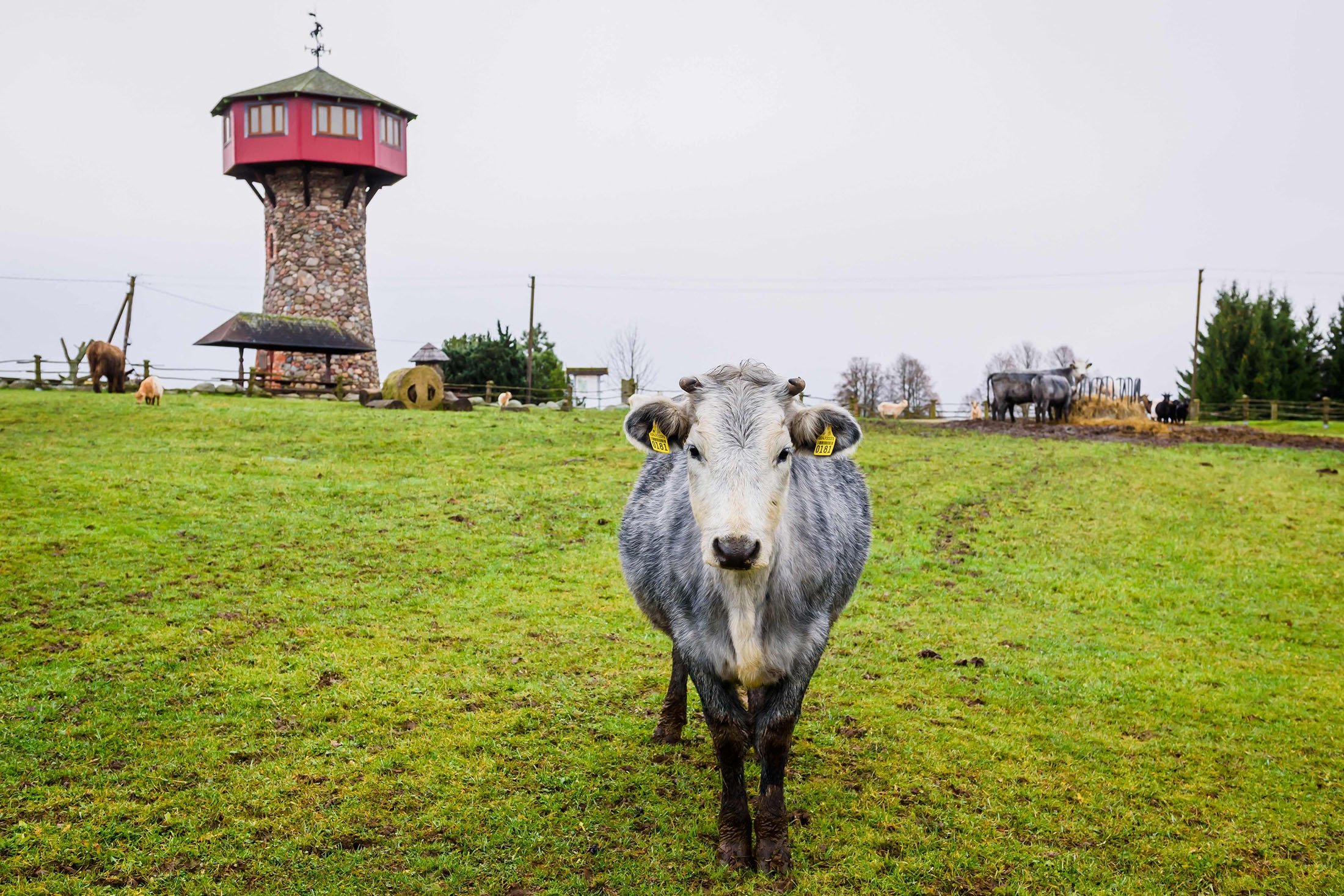
A Latvian blue cow grazes on a pasture at Riga Zoo's affiliate Ciruli in Kalvene, Latvia, Nov. 13, 2021. (AFP Photo)

'Strong, independent'

Blue cows provide less milk than your average cattle – around 5,000 liters (1,300 gallons) per cow per year compared to 8,000 for the Holstein breed – but the milk is healthier and more nutritious.

They also stand out for their ability to thrive in harsh conditions, according to Daiga Simkevica, head of the Blue Cow Association.

"The strong, independent and robust blue cow can live all year round outdoors, even during the winter frosts, which many other cattle breeds can't endure," she told AFP.

The Blue Cow Association organises seminars for farmers, keeps meticulous records to avoid inbreeding, works to keep the population growing and also does research on the cattle.

"In the future we hope to carry out full DNA analysis to identify those genes that are unique to the blue cow," Simkevica said.

"We've never had a blue cow catch the bovine leukosis virus, therefore we hope to identify genes that might benefit all other cows too."


  • shortlink copied
  • Last Update: Jan 05, 2022 4:28 pm
    KEYWORDS
    cows latvia cattle livestock
    The Daily Sabah Newsletter
    Keep up to date with what’s happening in Turkey, it’s region and the world.
    You can unsubscribe at any time. By signing up you are agreeing to our Terms of Use and Privacy Policy. This site is protected by reCAPTCHA and the Google Privacy Policy and Terms of Service apply.
    No Image
    Dia de Muertos: Day of the Dead celebrations 2021
    PHOTOGALLERY
    • POLITICS
    • Diplomacy
    • Legislation
    • War On Terror
    • EU Affairs
    • News Analysis
    • TÜRKİYE
    • Istanbul
    • Education
    • Investigations
    • Minorities
    • Diaspora
    • World
    • Mid-East
    • Europe
    • Americas
    • Asia Pacific
    • Africa
    • Syrian Crisis
    • İslamophobia
    • Business
    • Automotive
    • Economy
    • Energy
    • Finance
    • Tourism
    • Tech
    • Defense
    • Transportation
    • News Analysis
    • Lifestyle
    • Health
    • Environment
    • Travel
    • Food
    • Fashion
    • Science
    • Religion
    • History
    • Feature
    • Expat Corner
    • Arts
    • Cinema
    • Music
    • Events
    • Portrait
    • Performing Arts
    • Reviews
    • Sports
    • Football
    • Basketball
    • Motorsports
    • Tennis
    • Opinion
    • Columns
    • Op-Ed
    • Reader's Corner
    • Editorial
    • Photo gallery
    • DS TV
    • Jobs
    • privacy
    • about us
    • contact us
    • RSS
    © Turkuvaz Haberleşme ve Yayıncılık 2021